Colourised pictures

Old photographs colourised
to bring them to life

Although colour photography dates back to the 19th century, the majority of photographs in Jerripedia were taken on monochrome film, and either printed in black and white, or tinted in sepia. Many attempts were made over the years to hand tint monochrome images, both for commercial purposes and by amateur artists. Few of these were particularly realistic. Although examples will be found throughout this website, we have deliberately removed the colour tint from many to produce a clearer, sharper image.
From the early days of programs such as Photoshop, which automated image manipulation, computer technology has developed to the stage at which any monochrome photograph can be turned into a colour picture, the results depending on the skill of the user.
We have created this page to showcase some of the best examples of colourised photographs of Jersey subjects

Rod Ferbrache
2023 saw the emergence in Facebook groups of a series of colourised Jersey images, the work of Guernseyman Rod Ferbrache. Unless otherwise stated, he was responsible for the examples on this page.
He describes the process he uses:
- "I import a photograph into Adobe Lightroom. I make any exposure changes and crops at this stage. I then export it into Topaz software. This renders any faces clearer and greatly defined. It then goes into Photoshop where I use the beta version of restoration to take care of any scratches, creases, et cetera. I then use the replacement brush and with my Wacom tablet and pen colour in the entire photograph manually. I then reimport back into light room for any final tweaks."

-
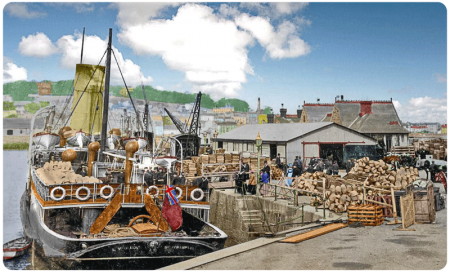 Guernsey Harbour
 -
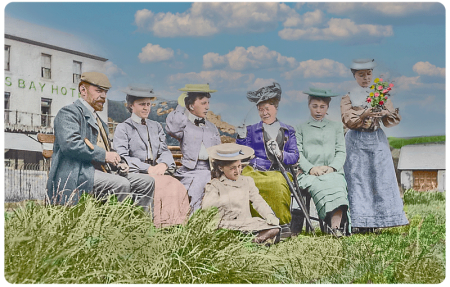 Outside St Brelade's Bay Hotel
 -
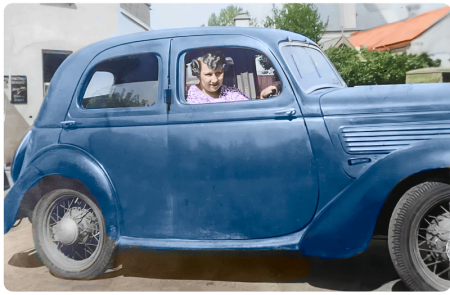 Dorothy Dobin at the wheel of a new Ford Popular outside the Wimbledon Hotel in 1934
 -
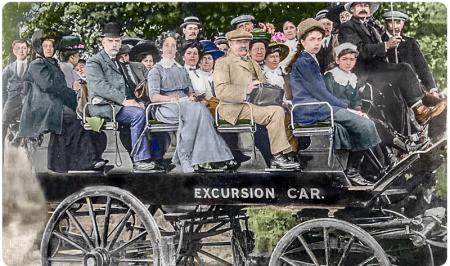 A large 19th century horse-drawn excursion car
 -
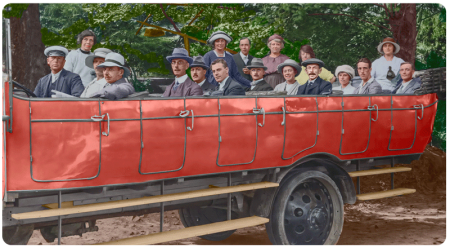 A motorised charabanc outing
 -
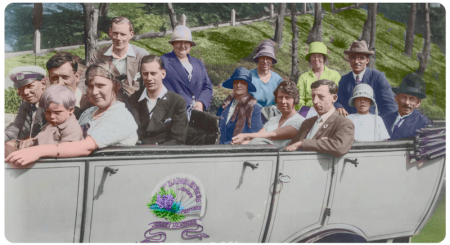 Another charabanc outing
 -
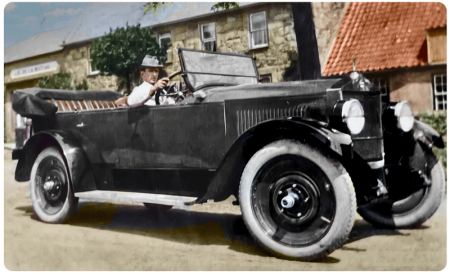 Frank Dobin in his American Moon car, a copy of a Rolls Royce, in front of Rosedale, Gorey Village in the 1920s. He ran a nearby garage
 -
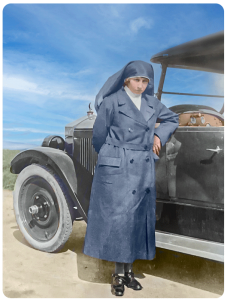 District nurse Dorothy Dobin in 1920
 -
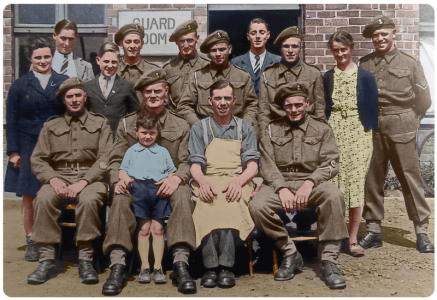 The liberators and the liberators. British troops join locals for a group photograph in May 1945
 -
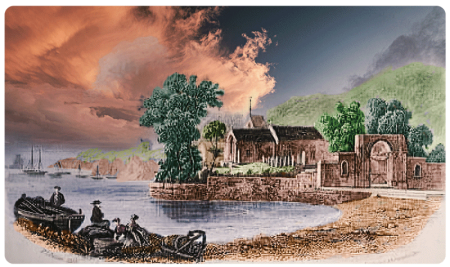 A 19th century print of St Brelade's Church transformed
 -
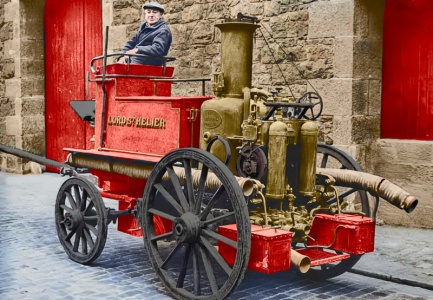 An early St Helier fire engine
 -
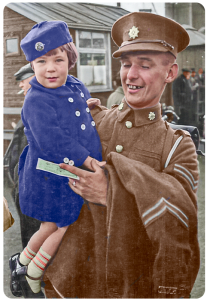 An unknown soldier greeted by his daughter when he returned home on leave during the Great War
 -
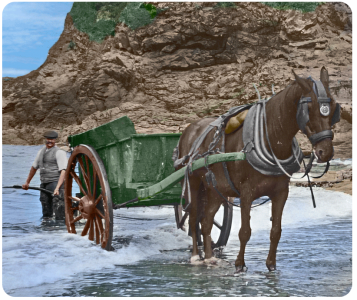 Detail from collecting vraic at Greve de Lecq
 -
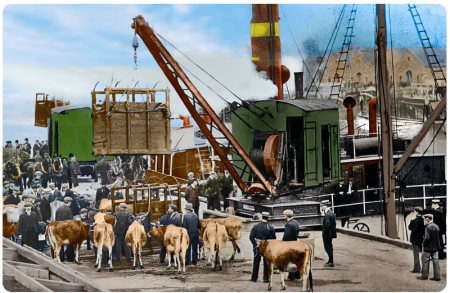 Cattle being loaded for export at St Helier Harbour
 -
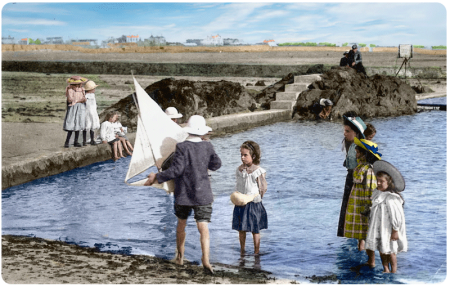 Havre des Pas Pool
 -
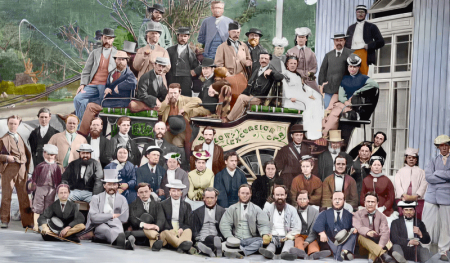 19th century excursion passengers gathered for a group photograph at Greve de Lecq
 -
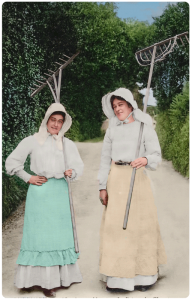 Hay makers