Green Street
From Jerripedia
Jump to navigationJump to search
Green Street

Jersey's first high rise block - La Collette Flats - just completed in 1964 [1]
This street leading from the town centre to the south coast was perhaps best known in the 20th century for Jersey's first two high-rise blocks of flats, La Collette Flats at the southern end and The Cedars at the other

A JMT bus outside the sheds the company took over from the Jersey Eastern Railway

-
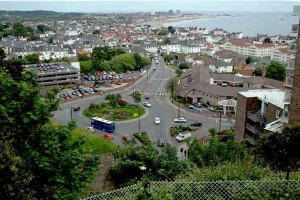 The roundabout in 2006
 -
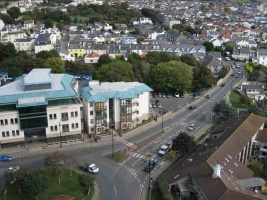 The Green Street roundabout
 -
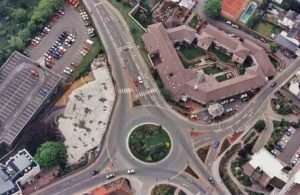 Green Street roundabout
 -
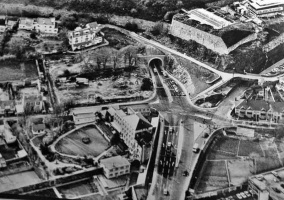 The junction with Route du Fort before the roundabout was constructed
 -
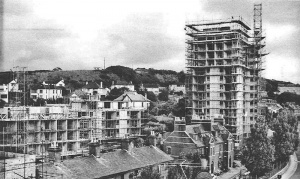 The flats under construction in 1963
 -
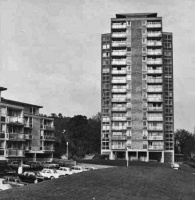 La Collette Flats, Green Street
 -
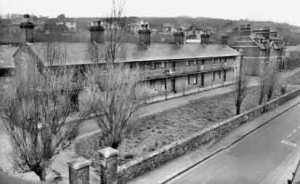 The former Married Quarters in Green Street
 -
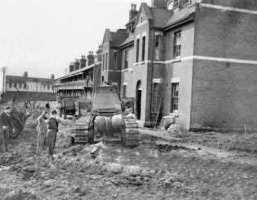 The former Married Quarters in Green Street
 -
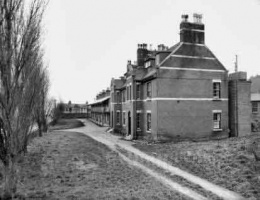 The former Married Quarters in Green Street
 -
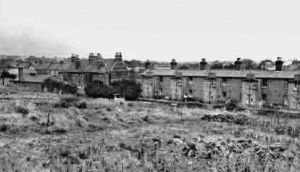 The former Married Quarters in Green Street
 -
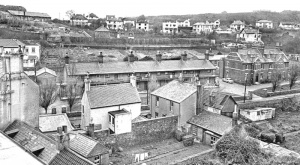 The Married Quarters in 1961 before demolition
 -
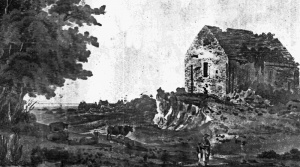 The Capelle des Pas in 1789
 -
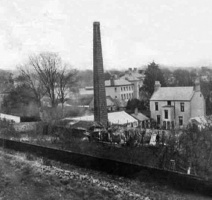 Rope Walk
 -
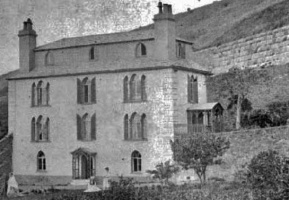 Gothic Villa
 -
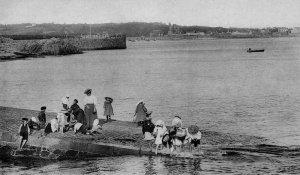 The slipway at the bottom of Green Street is the dividing line between the La Collette and Havre des Pas districts
 -
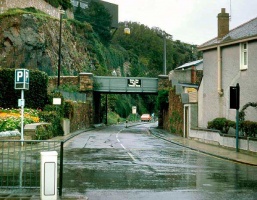 The entrance to Snow Hill Car Park in 1973
 -
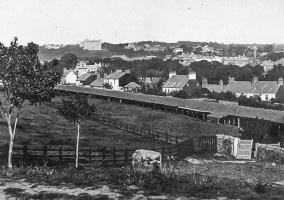 The former covered rope walk shows clearly in this picture
 -
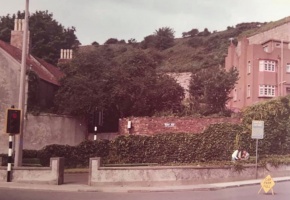 1969: Where the tunnel would soon emerge
 -
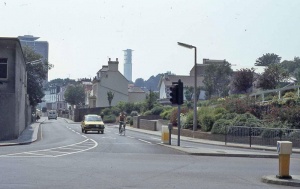
-
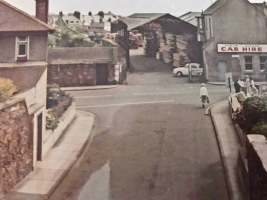 Snow Hill car park exit on to Green Street in the early 1960s, before the construction of Route du Fort and the large roundabout now in front of this exit
 -
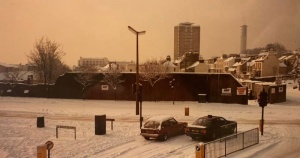 Demolition of The Limes, on the corner of Green Street and Route du Fort, in 1991
 -
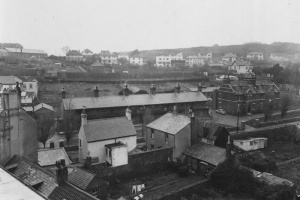 The former Married Quarters across the centre of this photograph were demolished to make way for modern housing
 -
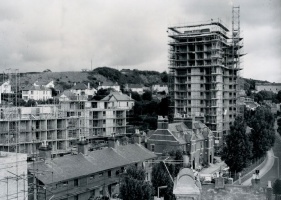 Jersey's first high rise block of flats under construction next to the Married Quarters


A well-preserved Victorian terrace
-
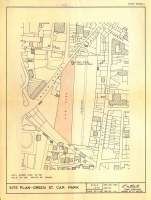 Plan of the car park. It was not, as some people believe, built on part of the adjoining cemetery, but on a separate field, which had been acquired by the Parish of St Helier from Caroline Charity Lempriere for £748 in 1859
 -
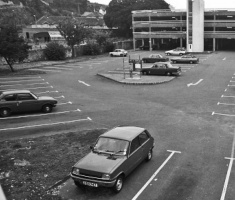 Jersey Evening Post photograph of the car park in 1980
 -
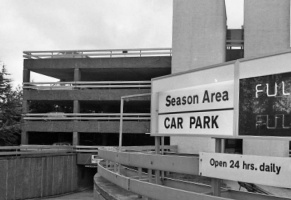 Jersey Evening Post photograph of the car park in 1980
 -
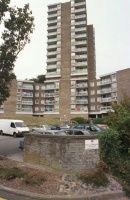 The Cedars
 -
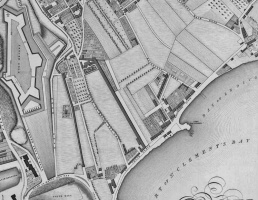 An early map
 -
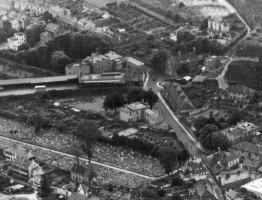 Before the Tunnel
 -
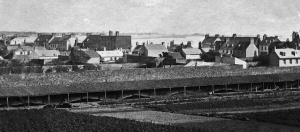 Rope walk
 -
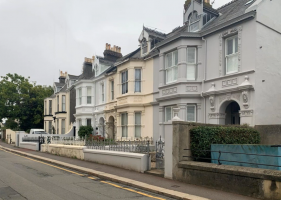 A Victorian terrace
 -
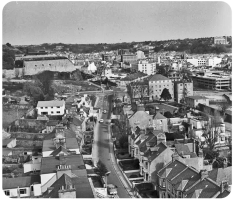 1960s aerial photograph
 -
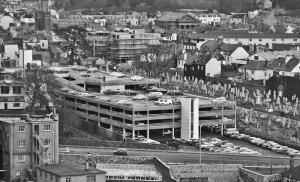 The car park
 -
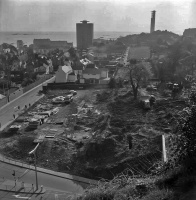 The site of the high rise Cedars development
 -
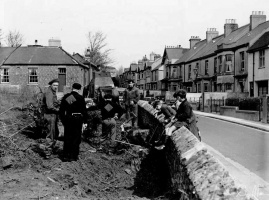 Married Quarters
 -
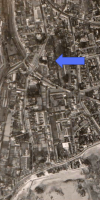 Aerial view of the Green Street area, with an arrow pointing to the field on which the car park was built
 -
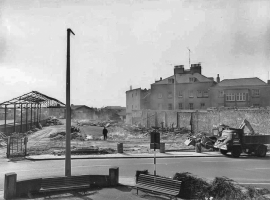 Railway sheds demolition
 -
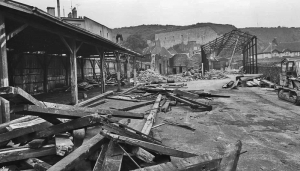 Railway sheds demolition
 -
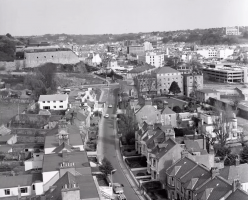
-
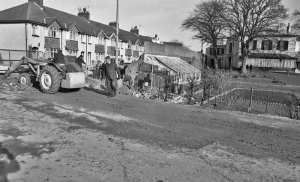 Car park site clearance
 -
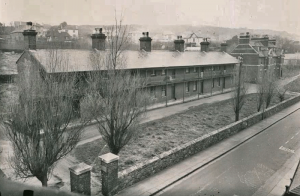 Married quarters
 -
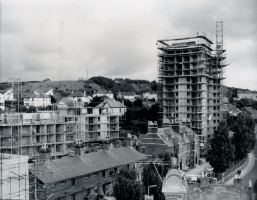 La Collette Flats
 -
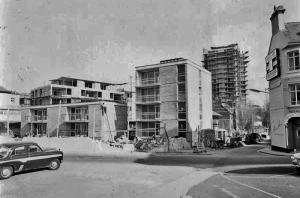 La Collette Flats
 -
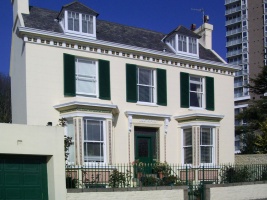 The Rest, 29 Green Street
 -
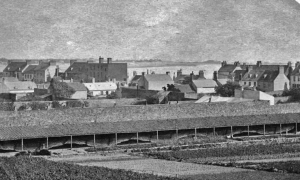 Rope walk
 -
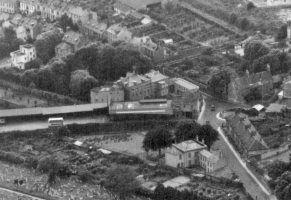 An aerial view of Green Street, running diagonally from the bottom right to the top left
 -
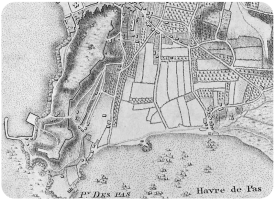 An early map shows Green Street running through fields down to the coast
 -
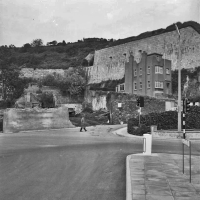 Before the tunnel and Route du Fort
 -
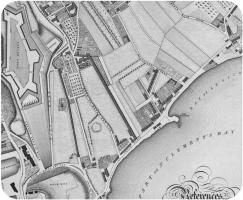 Two more maps ....
 -
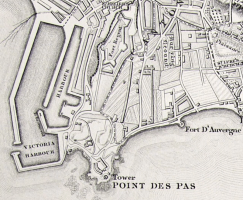 ... showing the area undeveloped
 -
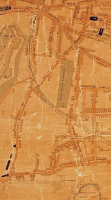 There is some development by the early 20th century but still large open spaces remain


The southern end of the street viewed from Paul Lakeman's drone. Visit his Facebook group for a large selection of photographs looking down on Jersey's coast. Photographs are available in return for a contribution to Jersey Hospice
Frederick Tennyson
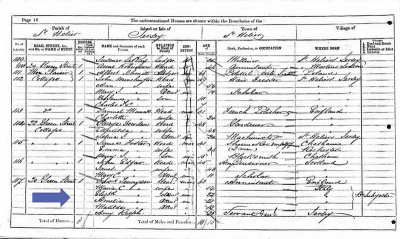
Frederick Tennyson (1807-1898), the elder brother of the famous poet Alfred Lord Tennyson, was a notable resident of the street in the second half of the 19th century. The 1861 census showed him living at No 20, with his Italian wife Maria, nee Giuilotti and daughters, Elizabeth, Amelia, and Matilda, who owned the property. Frederick was also an accomplished poet.
-
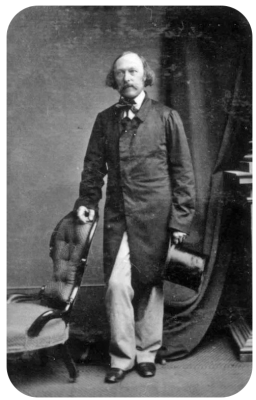 Frederick Tennyson, 1860, photographed by Mullins
 -
-
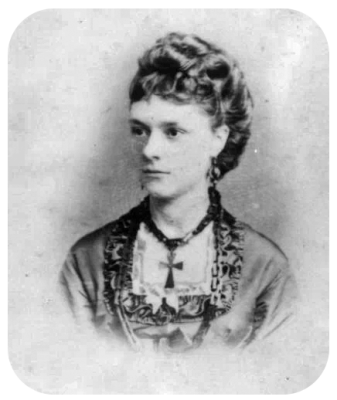 Matilda Tennyson, 1860, photographed by Mullins


Businesses
-
-
-
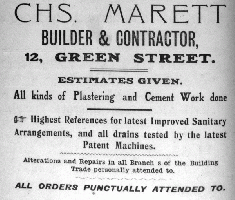
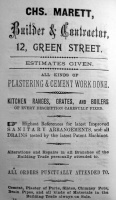 1905
1905 -
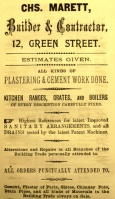
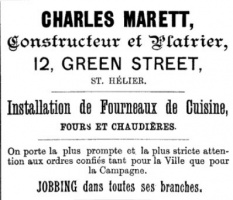 1887 advert from L'Almanach de la Gazette de Jersey


Notes and references
- ↑ In 1971 a committee of the Association of Jersey Architects provided the States Planning Office with an assessment of buildings of historic and architectural interest in the town of St Helier. This is what they had to say about La Collette Flats:
It is perhaps too early to give an accurate assessment of La Collette Flats. The development, which includes the first tower block built in the island, is an outstanding example of the 1960s style of architecture, using reinforced concrete on a scale not previously attempted.
The imaginative site layout, the bold sculptural treatment of the blocks and the consistency of detail all contribute to the success of the scheme. It is essential that the original concept is not subjected to minor alterations and adjustment which could ruin its appearance. The external works and landscaping are very much part of the design and must not be altered.