Grouville No 2 tower

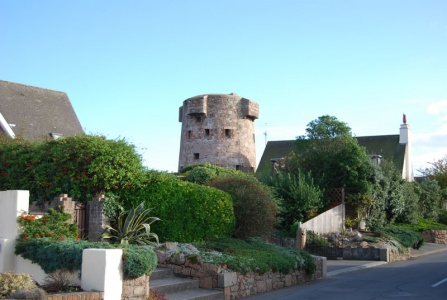
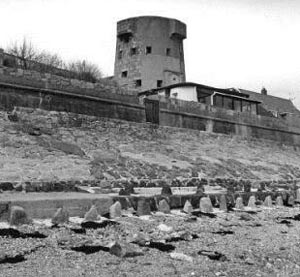
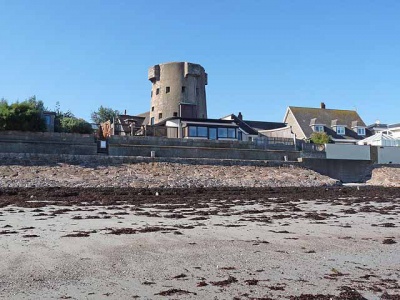
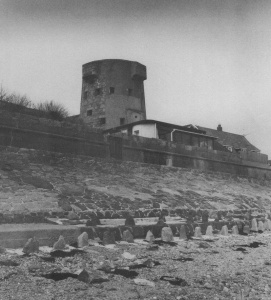
Grouville No 2, Keppel Tower

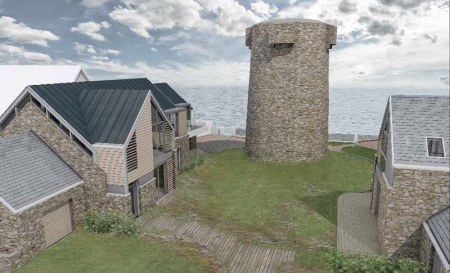
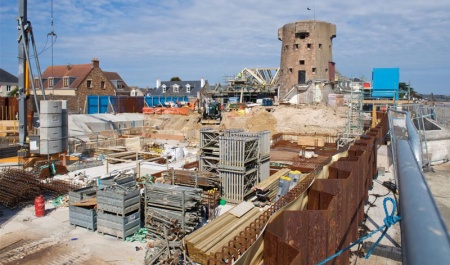
Keppel tower was the subject of a major planning controversy during the 2010s. Eventually a scaled-down development was approved, which separated the tower from its previous add-on buildings and allowed a ten-house development in the surrounding grounds

HER record
Built circa 1780s, the tower is significant as an integral part of a group of surviving Conway towers in Jersey that not only illustrates the changing political and strategic military history of the Island in the late 18th and 19th century, but represents a turning point in the history of defence strategy across Europe, and global trends in the history of war.
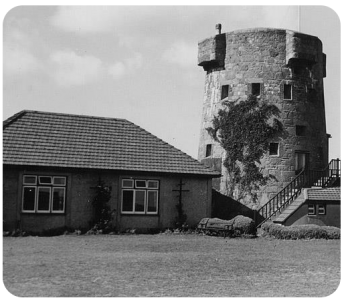
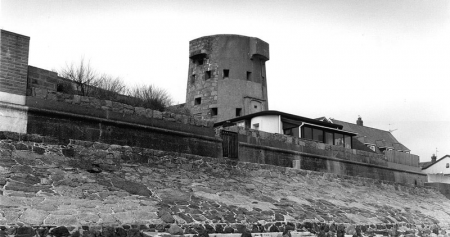
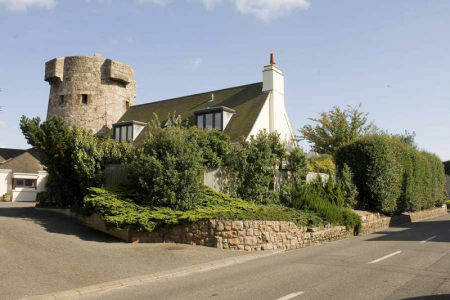
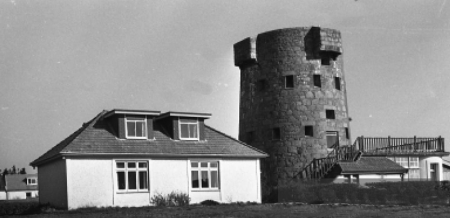
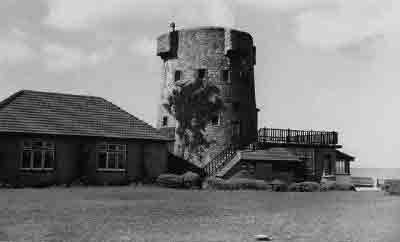
The interest of the tower is diminished by the addition of early-mid 20th century buildings and associated alterations.
Conway-pattern tower, circa 1782. Most probably named after the Earl of Albemarle, Governor of Jersey between 1761 and 1772, Conway's predecessor.
The Richmond map shows Grouville Bay with 5 Conway Towers constructed in the southern half of the bay - designated 1-5 from south to north. Put up for disposal to the States of Jersey by the War Department in 1896. Private dwelling constructed around tower early-mid 20th century.
Standard Conway Tower pattern. Round and tapered, built of regular squared and well-tooled blocks of granite. The upper floors are punctuated with musketry loopholes, with dressed granite doorway raised at first floor level. There are four machicolations at parapet level. Roof platform with masonry parapet. The tower has been cement rendered on its seaward face.
-
-
-
-
-
-
-
-
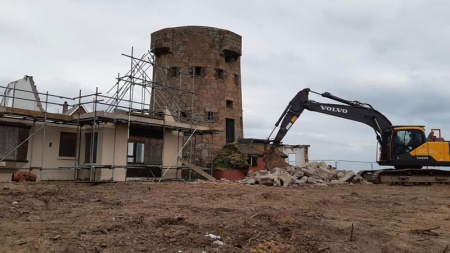 Demolition of buildings around Keppel Tower in 2020
 -
-
-
-
-
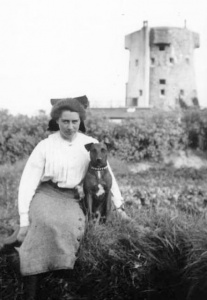 1906 photograph by Francis de Faye