Howard Davis Park

Howard Davis Park

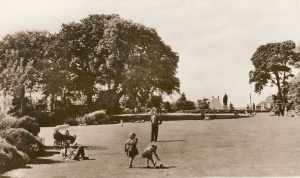
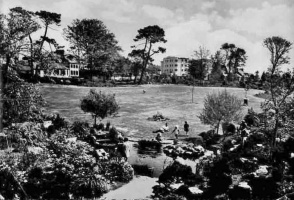
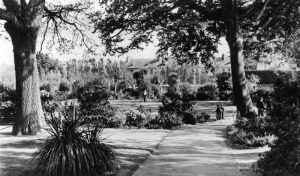
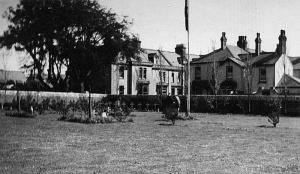
The park in 1951
The Howard Davis Park in St Helier was a gift to the island by one of its most generous benefactors, Thomas Benjamin Frederick Davis or T B Davis, as he is always known

Born at Havre des Pas, St Helier, Jersey on 25 April 1867, the son of Thomas Leopold Davis, a fisherman and ship's carpenter, and Jemima Vickers, T B Davis went to sea as a young man, survived a journey in a rowing boat after his ship ran aground, established a stevedoring business in South Africa and eventually returned to the island of his birth a rich man.
Promise kept
This allowed him to fulfil a promise made as a young boy, which is recounted in a delightful story in the memoirs of Jersey's wartime Bailiff Alexander Coutanche. Davis was in the choir at St Luke's Church and one Sunday he went looking for conkers with a friend, Walter Braithwaite, later a General, in the gardens of the neighbouring house, Plaisance. They were caught by the owner, Jurat Joshua George Falle, who let Braithwaite go with a letter asking his mother to punish him suitably, but confined Davis to his cellar cleaning boots, while he had lunch.
When he was eventually freed Davis, who had a colourful vocabulary for a young boy, told the Jurat:"One day I shall be a rich man. I shall buy your ...... house and I shall pull it down stone by ....... stone". True to his word, TB made his fortune overseas, returned to Jersey a very rich man, and bought Plaisance from Lily Falle, the Jurat's daughter. He had to leave for South Africa but instructed his friend Coutanche to ensure that the building was demolished and not a stone left standing. On his return he was less than pleased with the result, telling his friend "you have left the ...... cellar in which I was imprisoned. Get it out!"
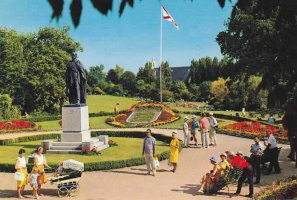
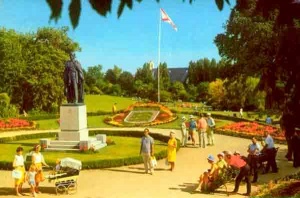
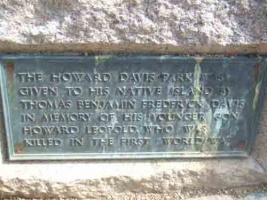
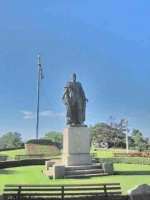
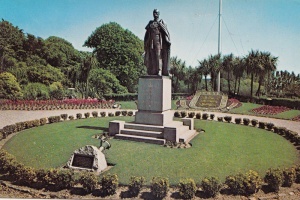
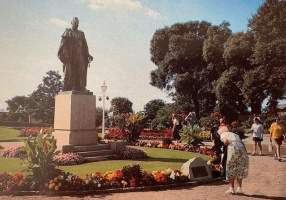
A great admirer of the monarchy and friend through their joint love of sailing of King George V, Davis had decided to give the grounds of Plaisance to the people of Jersey as a public park in memory of his son Howard, who lost his life in World War One, and to erect a statue of the King where the house had once stood.
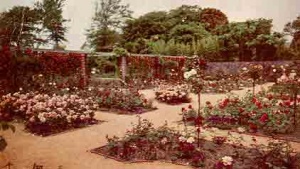
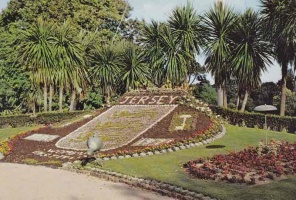
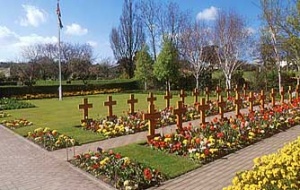
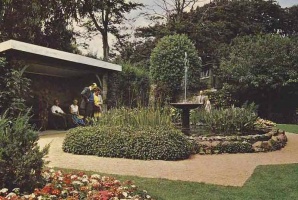
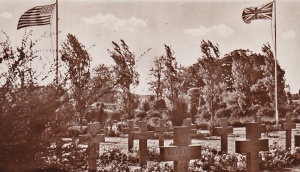
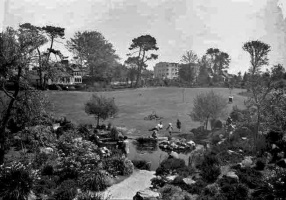
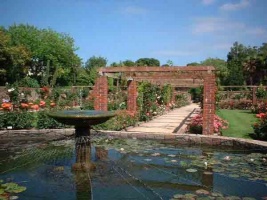
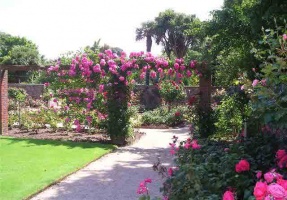
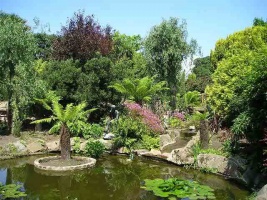
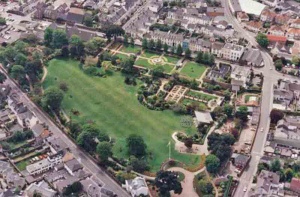
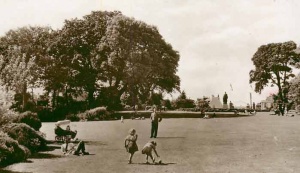
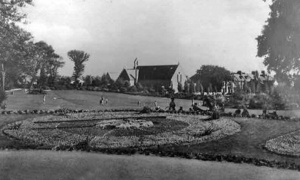
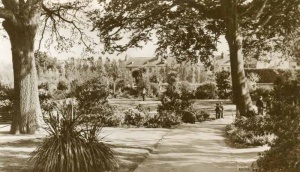
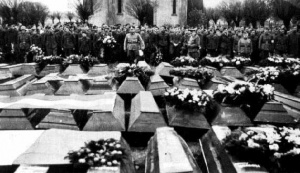
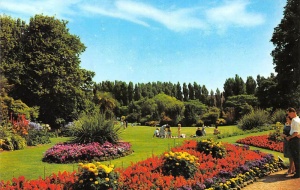
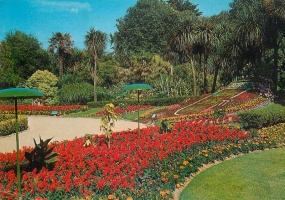
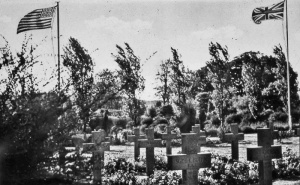
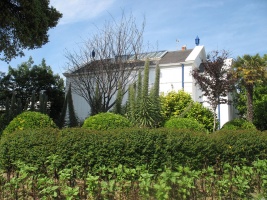
Today the gardens are among the most beautiful in the island, with sweeping lawns, mature trees, shrubs and flower borders. At the other end of the park next to St Luke's Church is a cemetery housing the graves of British and Allied Servicemen killed in World War 2, something of which Davis, who died in South Africa in 1942, would certainly have approved.
Property transactions
The property was ceded by Thomas Benjamin Frederick Davis to the Public of the Island of Jersey on 23 December 1937, through his representative on the Island Mr Edgar Aleck Dorey, as Mr Davis was based in South Africa. The property was formerly the grand house with extensive grounds known as Plaisance, which had belonged to Miss Albina Falle, the sister of Lord Portsea.
Under the terms of an agreement dated 20 July 1937, entered into between Miss Falle, John Edward Le Huquet, Deputy Greffier of the States, and authorised for and on behalf of the States, Miss Falle agreed to sell her property to the Public for £25,000.
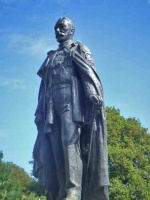
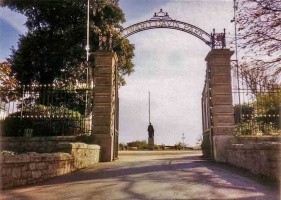
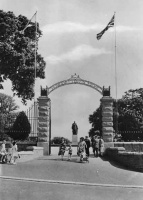
T B Davis wrote a letter to the States on 16 October 1936 saying that he wished to commission a bronze statue of King George V as a gift to the Island. Francis Doyle Jones was his preferred sculptor and his offer included the cost of a granite base and the statue's erection. The suggested site for it was the Royal Square. When the proposal went before the States it was met with applause, although some voiced the opinion that the new statue should not replace the current one. So it was agreed that the new statue would be placed at the main entrance to Howard Davis Park.
The park was officially opened by T B Davis on Saturday 30 September 1939.

2025 history
This history was written by Ian Ronayne and first published in the Jersey Evening Post
In 1938 the States had to decide what to do with a generous gift recently given to the island. It came from Thomas Benjamin Davis, better known simply as T B Davis. He was a classic example of the local boy made good. Born into humble circumstances at Havre des Pas in 1867, he had risen to become a wealthy, influential and very benevolent businessman.
In 1937 he offered £25,000 to the States. It was for purchasing Plaisance, an elegant Georgian house set in 25 vergées of expansive private gardens at the bottom of Mont Millais. Mr Davis wished to see the property become a public park, with apparently nothing wanted in return. In truth, however, it appears there was a motive behind this undeniable act of generosity.
Fit for the King
T B Davis had a fierce passion for competitive sailing. He owned and raced several yachts, including the impressive 41-metre Westward, in which he took on numerous opponents, including his friend King George V. In 1936 Mr Davis offered the Island a bronze statue of the late monarch, hoping it could stand in the Royal Square. The States accepted the gift, but demurred on the location. The Parade Gardens would be more suitable, a committee decided, standing at the western end overlooking Elizabeth Place.
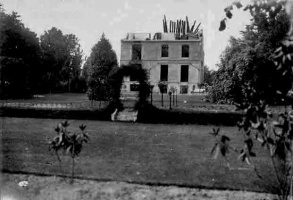
It seems that T B Davis did not approve of the plan. He wanted a more fitting location for the late King’s statue, such as a new public park created in the east of town. He decided that it should stand on the spot then occupied by Plaisance house. The property would have to be demolished.
States Members were sceptical. At a sitting on 9 July 1938, St Clement Deputy Thomas Blampied was firmly against the plan, claiming it would be a pity to demolish this fine old house when surely some other site could be found in the grounds for the statue. Deputy Edward Le Quesne of St Helier concurred. In his mind, demolishing the house “would be an act of vandalism”.
Jurat Philip Bree proposed a solution. Recognising the need to accommodate the generous benefactor’s wishes, he suggested the States form a special committee to consider the matter. It met for the first time on 30 August 1938.
Special committee
Chaired by Jurat Bree, the Plaisance Committee’s brief was to study, in its entirety, the question of the use of the property. This encompassed not only creating the park, but also erecting the statue and deciding whether to demolish Plaisance or not. To help determine the latter, the highly regarded States Engineer, Cyril Wise, prepared a preliminary report on the house’s condition.
It painted a gloomy picture: the property was in a far worse state than expected. When T B Davis declined a request to fund its restoration, the matter was settled. Plaisance would have to come down. Despite some grumbles of opposition, the States Assembly agreed on 16 September 1938 to the property’s demolition. The statue of George V would be erected in its place.

Constructing the park
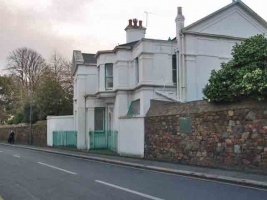
Work on pulling Plaisance down began shortly after, carried out by Charles Le Quesne Ltd, appointed contractor after a public tender process. The entire property was to be removed, except for a little hall standing close to Don Road that had been a billiard room.
Le Quesne received further associated work soon after. Under plans drawn up by the States Engineer, they constructed a new retaining wall along St Clement’s Road, including iron railings, for the sum of £169. They also created a grand new entrance for the park, with T B Davis meeting the £1,400 cost involved.
In the meantime, the Plaisance Committee turned to the business of creating a public park. They had already engaged the services of eminent landscape gardener James Colledge, known locally for laying out the beautiful gardens at Samarès Manor. For the remuneration of £100, Mr Colledge agreed to plan and oversee the park’s development.
The Committee also appointed a head gardener, Charles Lovett, who started on 1 November 1938, on a salary of £3 10s per week, free rental of an on-site cottage and two weeks annual holiday. He would oversee a deputy head gardener, assistant gardener and several others employed to develop and maintain the park.
Grand opening
After ten months intensive work, the new park was ready. International events conspired to dampen enthusiasm for its opening. While the world had not gone to war in 1938 over Czechoslovakia, the compromise Munich Agreement only postponed the inevitable. Hitler could not be restrained. The Second World War began in September 1939, the same month Howard Davis Park was opened.
The ceremony took place on a pleasantly warm late afternoon. The man whose generosity led to the park’s construction was present, along with the Island’s Lieut-Governor and Bailiff. Addressing them and the 700-strong crowd, T B Davis asked for two things in return for his gift: “Mrs Davis and I present Jersey with this park in memory of our son Howard who gave his life for the King in the Great War,” the 73-year-old philanthropist announced, “and I would ask all people who visit this park to respect his memory and do nothing that would not be in accordance with his wishes.
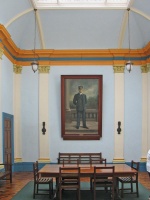
“I only make two requests, and I trust these will be granted by the representatives of our Island on behalf of the people. “First, that the little hall on the left of the entrance will be kept for all time for the housing of our son’s picture, which is to be installed there. “Second, that at no time will this park be built upon except for such building as may be necessary for a park or for the benefit of the people who use the park.”
Responding, the Bailiff, Alexander Coutanche, vowed: “You have asked that two conditions should be observed, and I have taken a careful mental note of these two conditions. I promise you that they shall be observed.”
Controversy over the use of the hall in 2024 means that whether the then Bailiff's promise has been kept is a controversial question hanging over Howard Davis Park in 2025.
Paintings
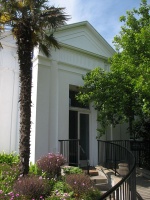
The Howard Davis Hall, as it is known today, was the original billiards room of Plaisance. Hanging in the hall are paintings of Howard Leopold Davis, Thomas Davis, his wife, and his sister as well as a painting of the famous yacht Westward in full sail.
-
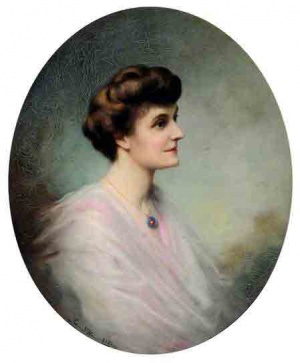 Mrs T B Davis
 -
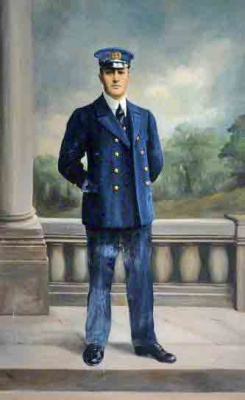 Howard Davis
 -
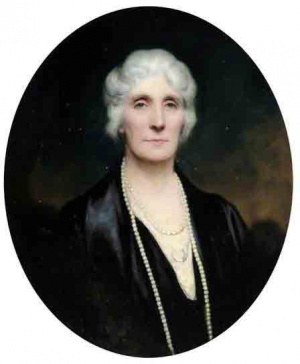 Miss B Davis
 -
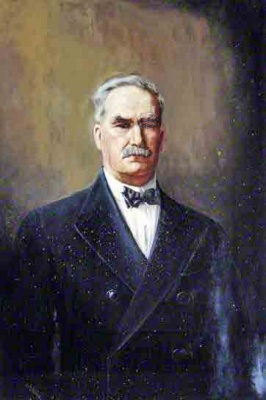 T B Davis


Picture gallery
1939 opening ceremony
Evening Post pictures


-
-
-
-
-
-
-
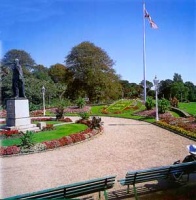 The statue and bedding displays at the entrance to the park
 -
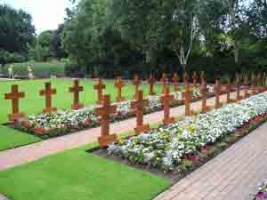 The military cemetery
 -
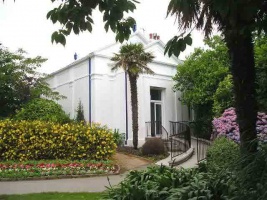 The memorial hall to Howard Davis
 -
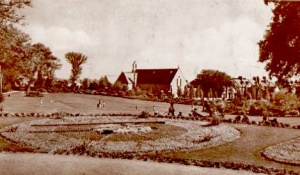
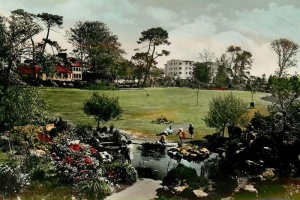 A 1948 tinted black and white photograph
 -
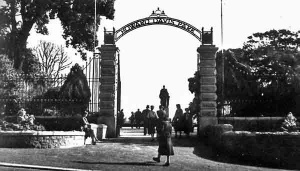 The entrance to the park
 -
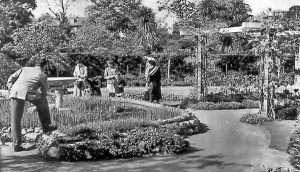 The rose garden
 -
-
-


.jpg)


-
-
-
-
-
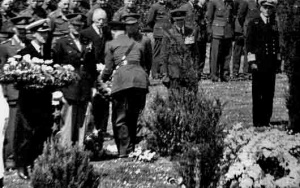 A burial ceremony in the military cemetery
 -
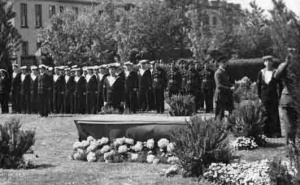 A burial ceremony in the military cemetery
 -
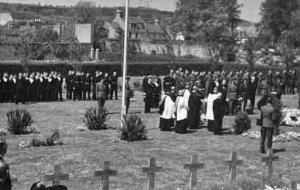 A burial ceremony in the military cemetery
 -
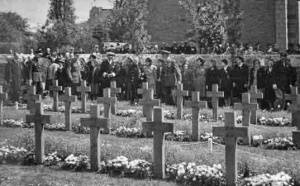 A burial ceremony in the military cemetery
 -
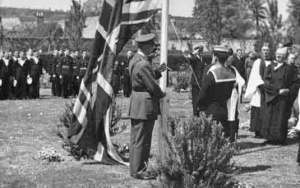 A burial ceremony in the military cemetery
 -
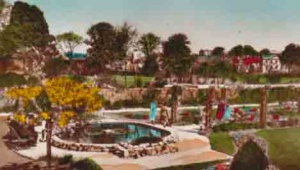 The rose garden
 -
-
-
-
-
-
-
-
-
-
-
-
-
-
-
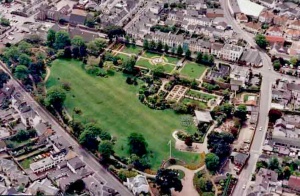
 Aerial view
 -
-
-
-
-
-
-
-
-
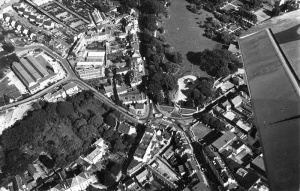 A view of the park from the air
 -
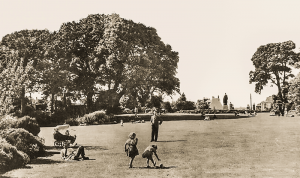
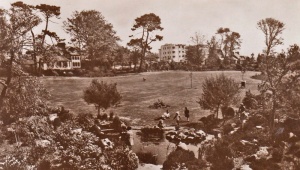 The park in its early years
 -
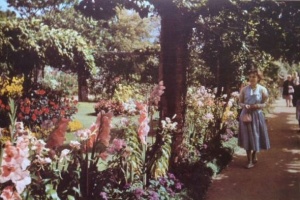
-
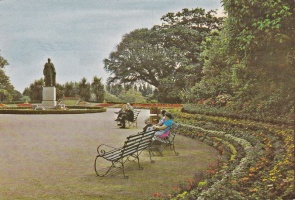 The park in the 1950s
 -
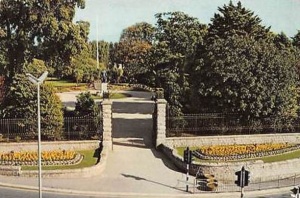 The entrance at the end of Colomberie
 -
-
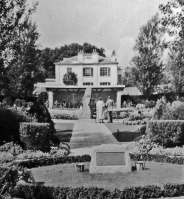 1954
1954 -
The cemetery
-
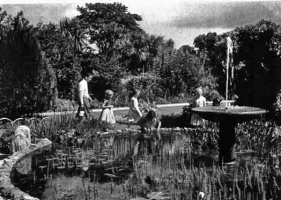
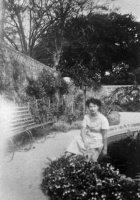 The park's pond in 1949
 -
-
-
-
-
-
-


Light shows
A popular attraction added in February in the 2020s has been the evening illuminations