Hunting

Hunting in Jersey

A meeting at St John's Hotel
From the Jersey Drag Hunt website

The original Jersey Drag Hunt was formed circa 1884, possibly making this hunt among the oldest in the British Isles. Tradition has it that the hunt was started by officers of the British army garrisons which were regularly stationed in the islands of Jersey and Guernsey. With no foxes in the island, a drag hunt was the only obvious answer.
The hunt was always well supported by serving officers, as well as the farming community, whose horses would be used on the farm and in the fields, as well as carrying their masters on hunting days. [1]
Thursdays and Saturdays
Originally hunting was held on a Thursday afternoon, to coincide with early closing, and a Saturday afternoon. That has changed in more recent times to fit in with modern life. The way of hunting, too, has changed over the years, even having a period in the 1920s when there were no hounds, which resulted in the hunt being more of a drunken “follow my leader” across the countryside, with the meet, check and “kill” usually being near, or indeed, at, a pub.
Agriculture has also had a strong impact on hunting in Jersey over the years, with the trends of crops restricting the use of land at certain times, together with dairy farming, which is now on the wane.
More recent times have seen the hunt kennels moved from Trinity Manor, where they were stationed for some 36 years, to new, purpose built kennels at Hatherleigh, St Mary, home of joint master Stephen Arthur. These new kennels were the result of an arduous but successful fundraising campaign by hunt members, and were designed by Mark Evans.
Foxhounds are drafted in from packs in the UK, more frequently from the Hampshire Hunt and the Surrey Union, but occasionally from other packs. This dispenses with the need for time consuming and costly breeding.
Saturdays and Wednesdays
Hunts are now held twice weekly on Saturday mornings and Wednesday afternoons, with the season running from early September until the end of February. Although Wednesday afternoons are not as well supported as Saturday mornings (due to work commitments), they are still very popular with the stalwarts, who claim that “a good Wednesday line” simply cannot be beaten.
Saturday hunting is open to all abilities and age groups, and jumping is usually optional. For those not wishing to take part on horseback, there is always a strong contingent of car followers. There are usually in the region of six couple of foxhounds leading the way across the countryside – quite a sight to behold on a crisp winter’s day.

Newspaper records
Gallery

Click on any image to see a larger version
-
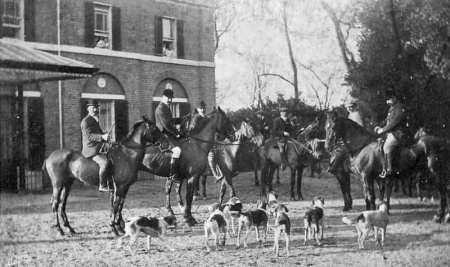 A meeting at Government House
 -
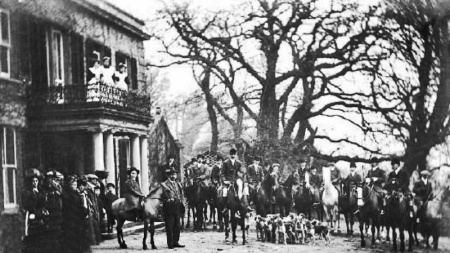 The hunt meets at Petit Menage, St Saviour
 -
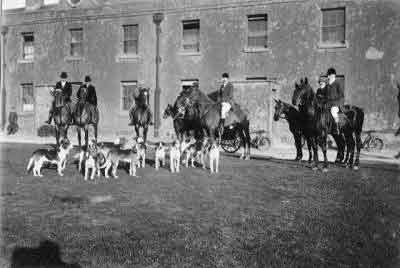 The hunt meets at St Peter's Barracks
 -
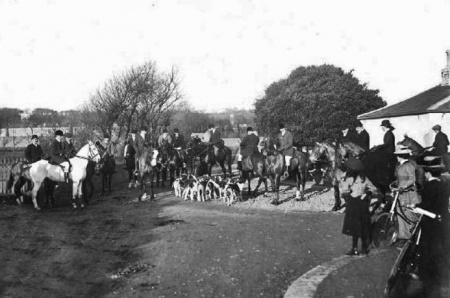 Horses and hounds ready for the chase
 -
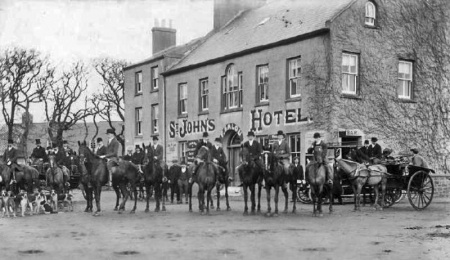 A meeting at St John's Hotel
 -
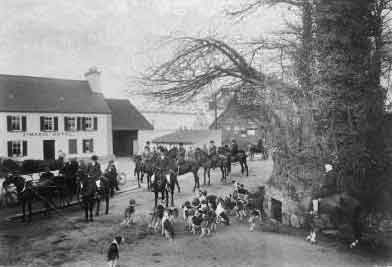 A meeting at St Mary's Hotel
 -
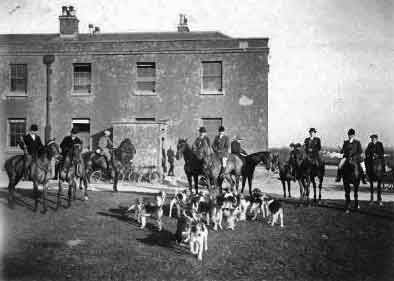 The hunt at St Peter's Barracks
 -
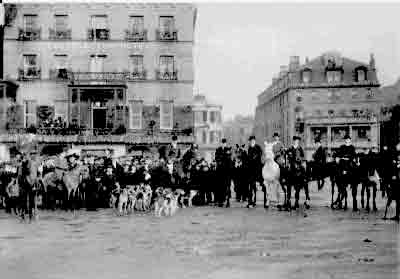 A meeting at the Weighbridge
 -
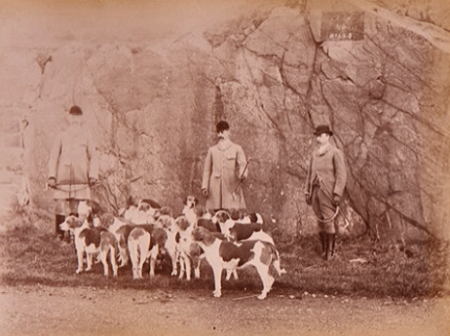
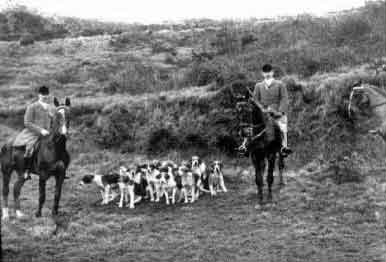 The pack
 -
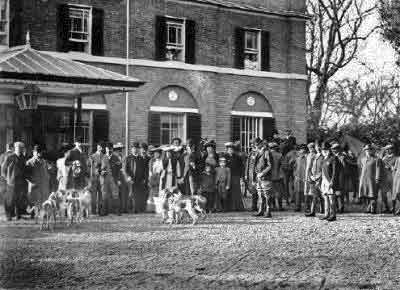 The hunt meets at Government House
 -
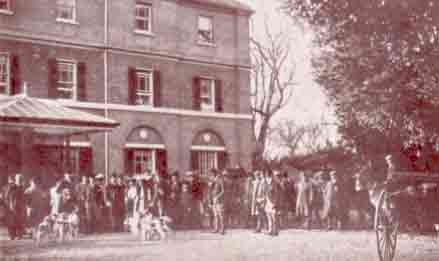 The hunt meets at Government House in 1905
 -
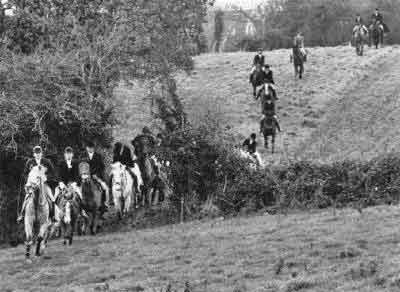 Through the fields
 -
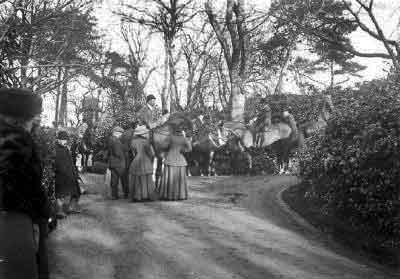 Crossing a lane
 -
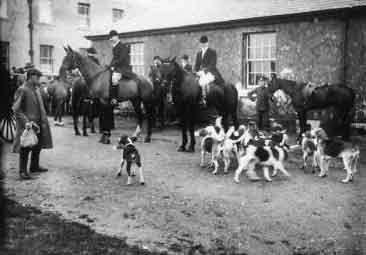 A hunt meeting in 1913 at St Peter's Barracks, photographed by Percival Dunham
 -
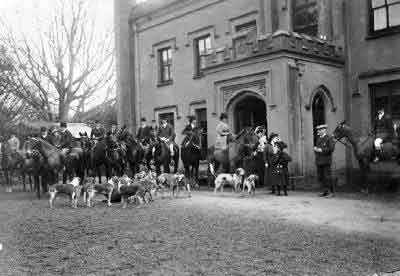 At Rosel Manor
 -
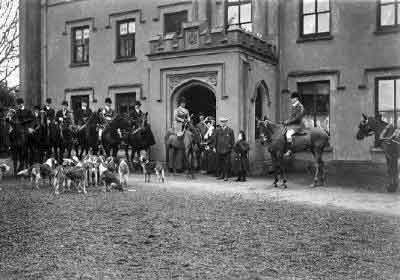 Rosel Manor
 -
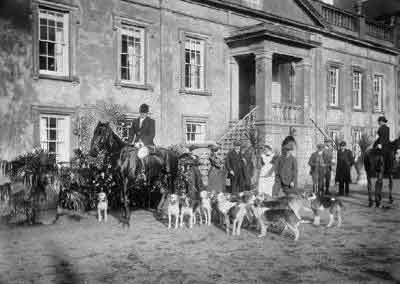 At St John's Manor
 -
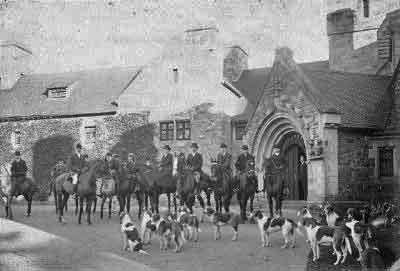 St Ouen's Manor


-
The hunt meets at St Peter's Barracks
-
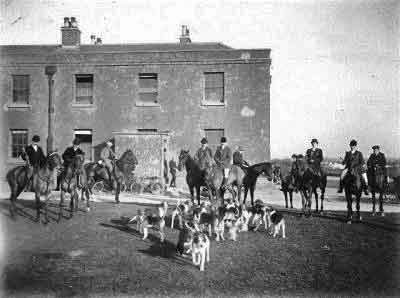 St Peter's Barracks
 -
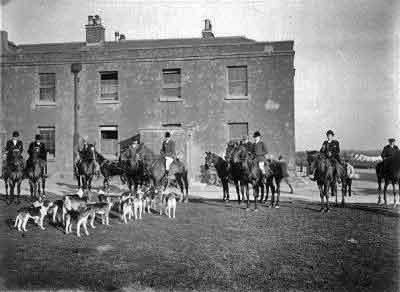 St Peter's Barracks
 -
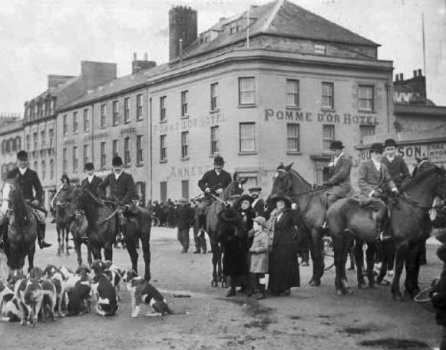 The hunt meets at the Weighbridge
 -
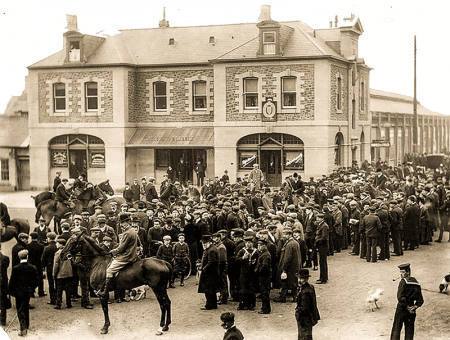 The Weighbridge
 -
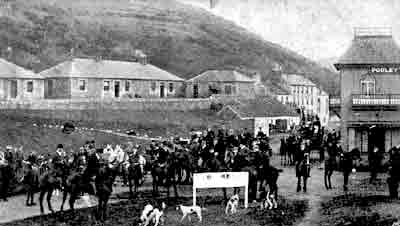
-
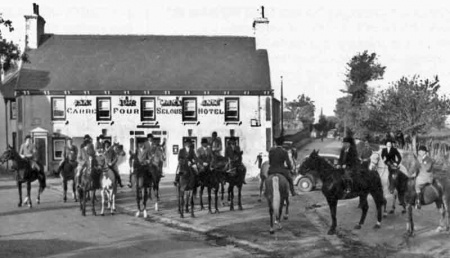 The hunt meets at Carrefour Selous, St Lawrence
 -
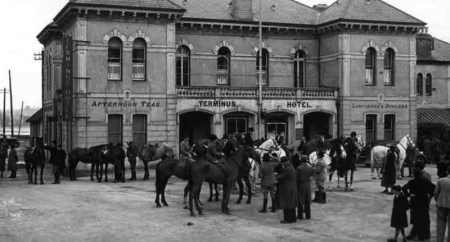 The hunt in front of the former St Aubin railway terminus
 -
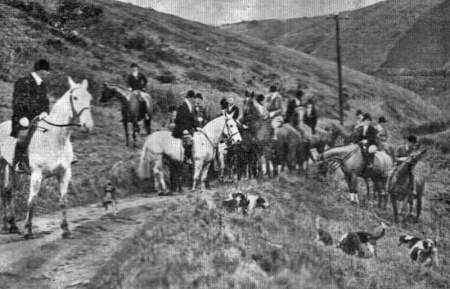 At Mourier Valley
 -
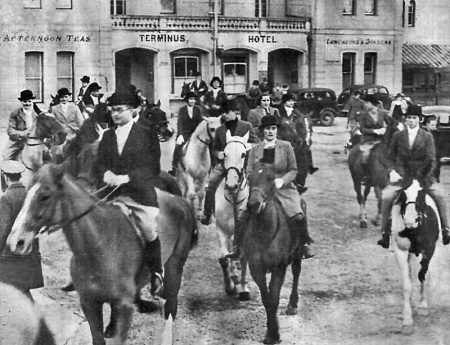 St Aubin
 -
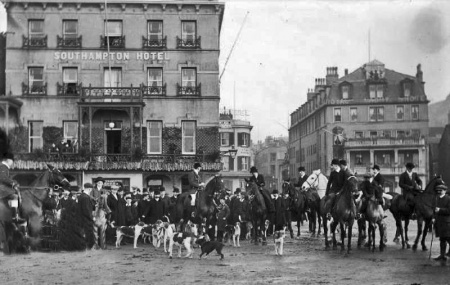 A meeting outside the Southampton Hotel at the Weighbridge
 -
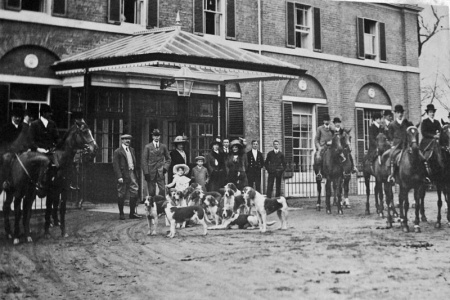 The Jersey Drag Hunt at Government House in 1911
 -
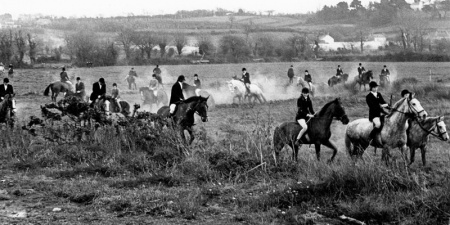 The Hunt in Grouville
 -
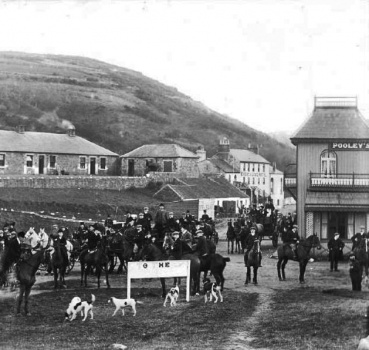 The hunt meets at Greve de Lecq
 -
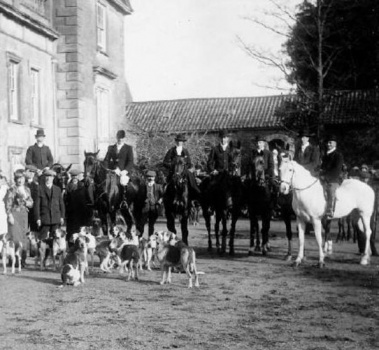 St John's Manor
 -
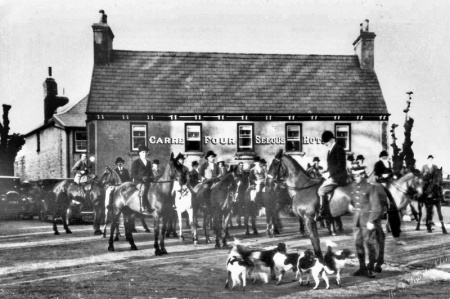 Carrefour Selous
 -
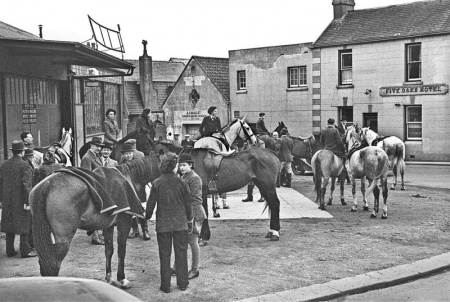 Opposite the old Five Oaks Hotel
 -
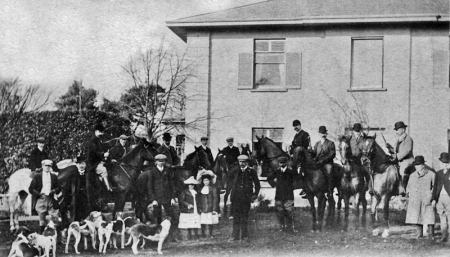 A meet at Bon Air in 1905
 -
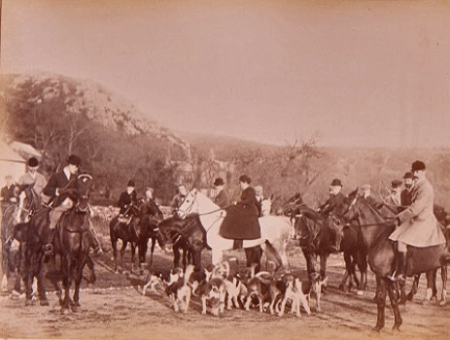
-
-
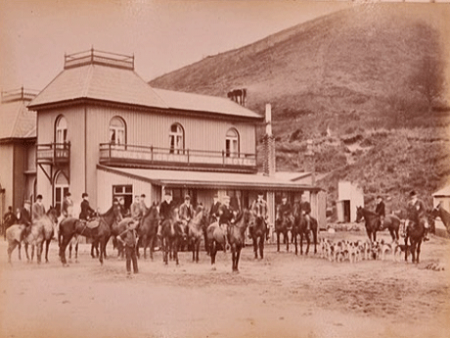 Greve de Lecq
 -
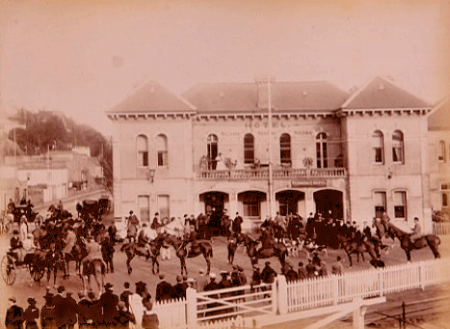 St Aubin


Notes and references
- ↑ See the link to an 1848 newspaper report on this page which suggests that a pack may have been established several decades earlier