Jersey Airways

Jersey Airways:
The history of Jersey's first airline
.jpg)
Jersey Airways' entire fleet of eight DH84 Dragons on the beach at West Park in 1934
Jersey Airways, formed in 1933, started operations from the beach at West Park, before the opening of Jersey's new airport in 1937. Operations ceased in 1940 and resumed after the war, until the company was compulsorily nationalised in 1947, to form part of British European Airways
Jersey Airways was formed in 1933 with a capital of £120,000 by local businessmen Bill Thurgood and L T H Greif, and farmer J A Peree.
Thurgood had owned a motor bus company in Ware, Hertfordshire, before selling it and moving to Jersey. He experienced a very rough boat crossing and vowed that nothing would make him repeat the experience – so he started an airline company to avoid that happening. He had noticed how wide and flat St Aubin’s Bay was and thought that he could cheaply run a plane service from the Island to mainland Britain.
The first commercial flight took place on 18 December, with a passenger service from Jersey to Portsmouth. The airline had its first maintenance base at Portsmouth Airport, and moved to Southampton Airport in 1935. The first flights from Heston (with a special bus connection from London) to Jersey began on Sunday 28 January 1934, flights from Southampton began in March, and a service to Paris operated during summer 1934. In its first full year, Jersey Airways carried 20,000 passengers, using a fleet of eight DH 84 Dragons, each capable of carrying eight passengers.

Holding company
On 1 December 1934, Channel Islands Airways was registered as a holding company for Jersey Airways and its subsidiary Guernsey Airways, which had been formed a week earlier. Shares were bought by the Great Western Railway and the Southern Railway. This allowed expansion, and six four-engined DH 86s and two DH 89 Dragon Rapides were introduced in 1935 to replace the Dragons. A service to Rennes, in France, operated from 8 January 1935 to 29 March. A Plymouth-Jersey service began in April 1936, and to Exeter, Dinard and Shoreham in 1938.
Despite the difficulties of operating from the beach, with a flight schedule at the mercy of the tides, the airline prospered and was counted among the most successful in the British Isles. Such was the demand for flights at peak holiday periods that it was not uncommon for all eight of the airline's fleet to be on the beach at the same time.
Operations were not without their complications, however, because any mechanical problems resulted in aircraft having to be manhandled up the West Park slipway to be worked on on dry land, safe from the incoming tide. No aircraft were damaged by the waves but the coach used as an improvised waiting room for departing passengers was caught by the incoming tide and damaged beyond repair after being submerged beneath the waves.
By 1935 Bill Thurgood was looking to expand his aviation business, launching United Airways, which was to operate between Heston, Blackpool, the Isle of Man and Carlisle.
Flights moved from the beach to the new Airport in 1937, and business was booming when war and the German Occupation brought everything to a halt. Following the liberation Channel Islands Airways resumed scheduled services in June 1945 using ex-RAF Dragon Rapides. Jersey Airways and Guernsey Airways flights then terminated at Southampton and at Croydon.
The company looked on the airports in Jersey and Guernsey very much as their own, but gradually they had to face competition from other airlines operating charter and then scheduled services.
Route applications
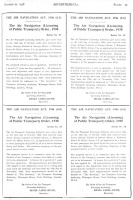
An indication of Jersey Airways' pre-war ambitions is the fact that they applied on 14 October 1938 to the Air Transport Licensing Authority for permission to operate four major routes (see picture in gallery below).
They wanted a daily service to Southampton; a daily service to London via Southampton and Portsmouth; a weekly service to Exeter and a bi-weekly service to Brighton.

Jersey Airways fleet 1933-1940
| Type | Registration | Name |
|---|---|---|
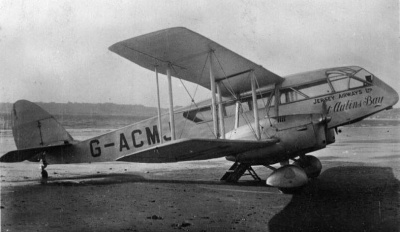
| DH84 | G-ACMC | St Brelade's Bay |
| DH84 | G-ACMJ | St Aubin's Bay |
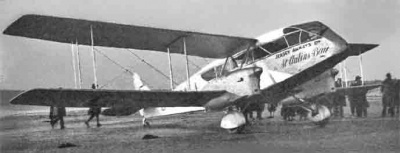
| DH84 | G-ACMO | St Ouen's Bay |
| DH84 | G-ACMP | St Clement's Bay |
| DH84 | G-ACNG | Portelet Bay |
| DH84 | G-ACNH | Bouley Bay |
| DH84 | G-ACNI | Bonne Nuit Bay |
| DH84 | G-ACNJ | Rozel Bay |
| DH86 | G-ACYF | Giffard Bay |
| DH86 | G-ACYG | Grouville Bay |
| DH86 | G-ACZN | St Catherine's Bay |
| DH86 | G-ACZO | Ouainé Bay |
| DH86 | G-ACZP | Belcroute Bay |
| DH86 | G-ACZR | La Saline Bay |
| DH89 | G-ADBV | St Ouen's Bay II |
| DH89 | G-ADBW | (unnamed) |
This is the only complete online set of photographs showing all the De Havilland biplanes flown by Jersey Airways from 1933 until operations ceased in 1940. Although all the aircraft names are usually shown in the style 'Belcroute Bay', etc, they can also seen, at one time, to have borne the names in the style 'The Belcroute Bay', and this particular aircraft can also be seen with the name 'The Belcroute'.
It is notable that 'Ouainé Bay' was always spelt wrongly (it should have been Ouaisné Bay), and the error is further compounded on a postcard, on which it is described as 'Quainé Bay'.
-
 St Brelade's Bay
 -
 St Aubin's Bay
 -
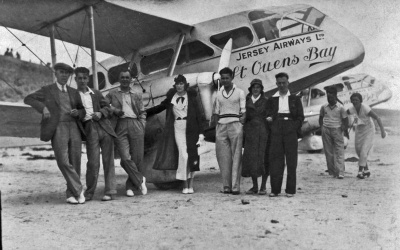 St Ouen's Bay
 -
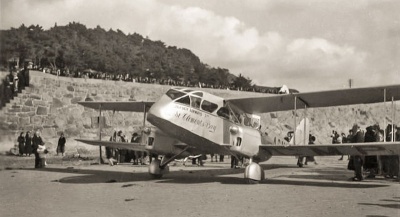 St Clement's Bay, which crashed into Bristol Channel on 22 July 1935 while approaching Cardiff Airport. All three on board were killed
 -
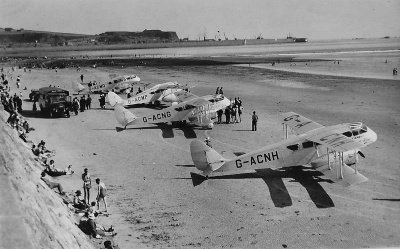 Portelet Bay and Bouley Bay in the foreground
 -
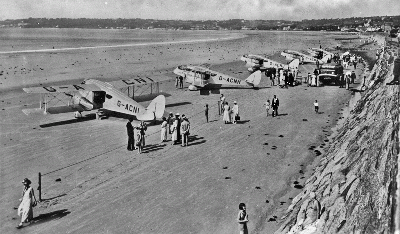 Bonne Nuit Bay in the foreground
 -
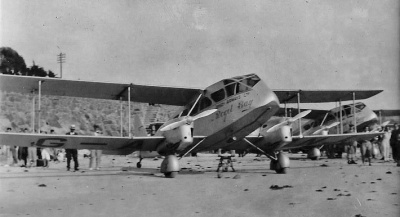 Rozel Bay
 -
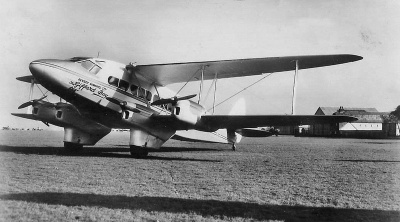 Giffard Bay, the first of the four-engine DH86 Express, to enter service. With an elongated nose, the operational aircraft was a far more beautiful aircraft than the DH84 Dragon, or even its own prototype
 -
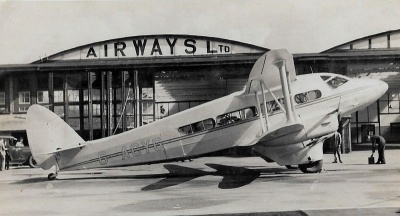 Grouville Bay
 -
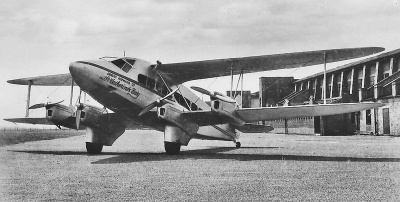 St Catherine's Bay
 -
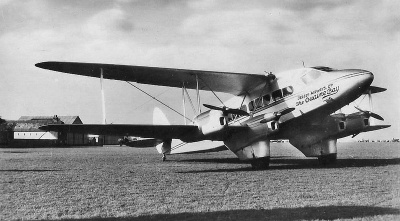 Ouaine Bay
 -
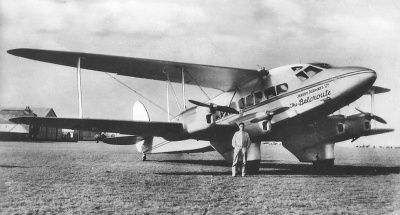 Belcroute Bay
 -
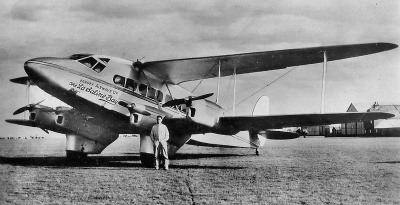 La Saline Bay
 -
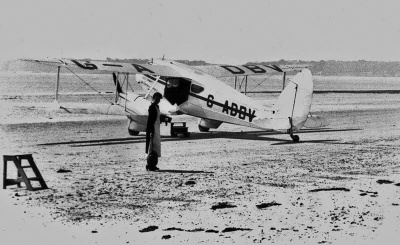 St Ouen's Bay II
 -
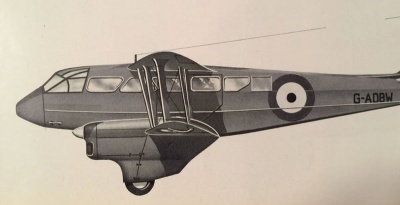 A drawing of the mysterious DH89, G-ADBW, which was not in service for long enough to be given a name and of which no photographs are known
 -
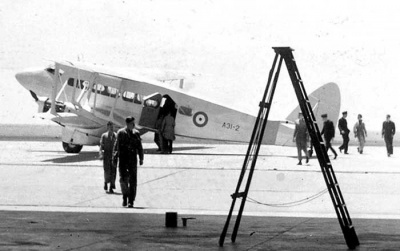 Giffard Bay in Royal Australian Air Force colours
 -
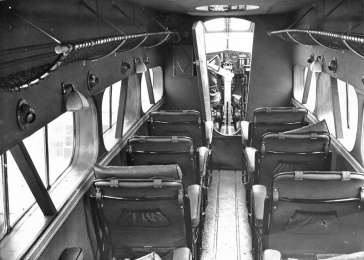 DH 86 cabin in 1935


Nationalisation
In 1947 the Labour government nationalised the UK airlines, including Jersey Airways, to form British European Airways (BEA). The Channel Islands authorities resisted this move, feeling that it was unacceptable to be dictated to by the British Government, who had no legal jurisdiction over the islands. However, it was made plain that flights from the Channel Islands would not otherwise be allowed to land in England, so they bowed to the inevitable, and the airline staff, the eight Dragon Rapides and their routes all became a part of BEA on 1 April 1947.
The States did manage to retain ownership of their airport, but were pressured into expensive repairs to the damage left behind by the Germans and then into upgrading facilities to meet the post-war demands for flying.
- ''Flight'' magazine reports of Jersey Airways operations
- Giffard Bay's maiden flight from Heston
- DH 95 Flamingo, Jersey Airways lead the way with a new aircraft in 1939
- Jersey Airways back to business after the war
Click on any image to see a full-size version
-
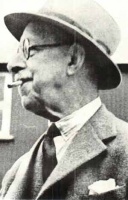 J A Perree, one of the airline's founders
 -
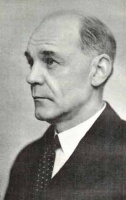 Director W D Roberts
 -
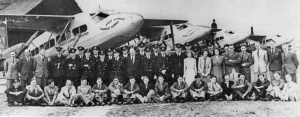 Jersey Airways staff at Heston before the war
 -
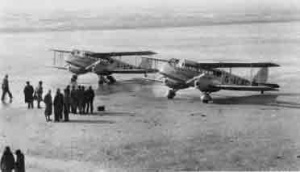 DH84 Dragons in 1933
 -
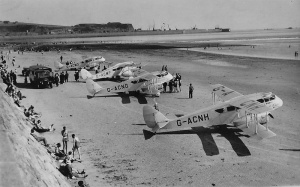 Four DH84 Dragons on the beach at West Park
 -
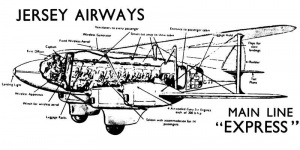 Jersey Airways DH89Express
 -
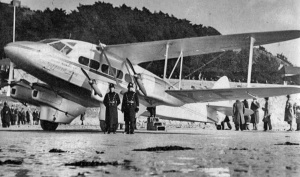 Police guard the newly arrived Giffard Bay
 -
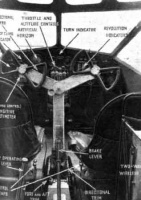 The cockpit of Giffard Bay
 -
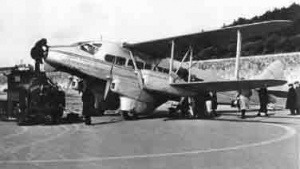 A Jersey Airways DH86 in 1935
 -
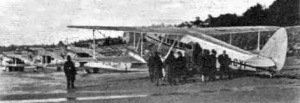 Jersey Airways' new, faster aircraft, the Giffard Bay
 -
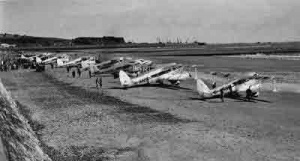 Jersey Airways planes on the beach
 -
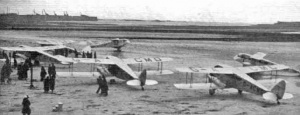 Six DH Dragons on the beach at Easter 1936
 -
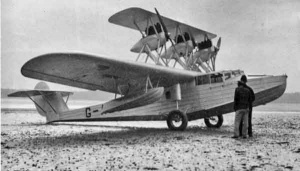 A Windover amphibian was used between Jersey and Guernsey by Jersey Airways
 -
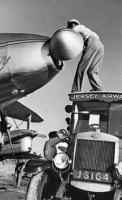 Luggage is unloaded at West Park
 -
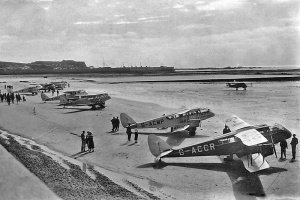 An airport on the beach
 -
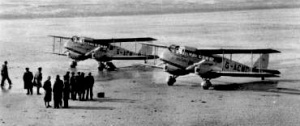 Planes on the beach at West Park
 -
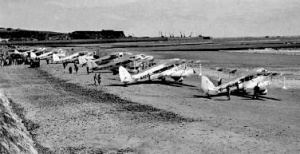 Planes on the beach at West Park
 -
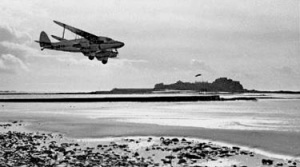 Landing on the sands at West Park
 -
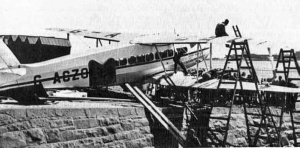 August 1935: Following problems with a beach landing in August 1935, the aircraft Ouaine Bay is dismantled on the slipway at West Park
 -
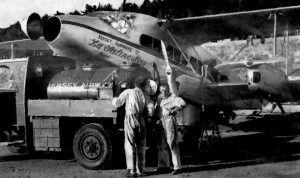 Refuelling at West Park in 1936
 -
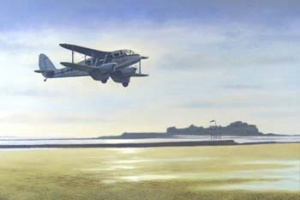 Taking off from the beach
 -
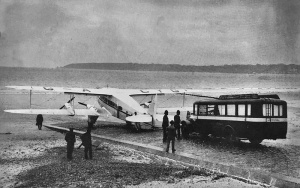 The 'ticket office' at West Park in the early 1930s
 -
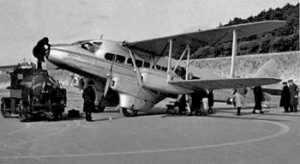 DH86 on the beach
 -
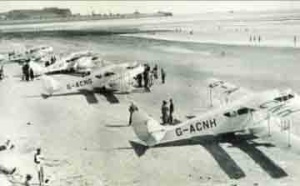 Planes on the beach at West Park in 1936
 -
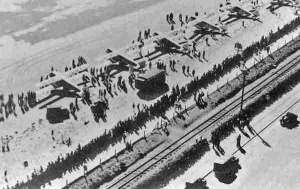 Six of seven planes lined up on the beach at West Park ready to depart, showing just how busy Jersey's seaside 'airport' became in the mid-1930s. Jersey Airways had eight planes in their fleet at the time, so presumably this photograph was taken from the eighth. The coach which served as a waiting room for departing passengers was caught by the rising tidy soon afterwards and damaged beyond repair
 -
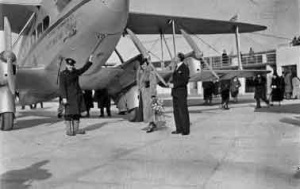 Alexander Coutanche and his wife in front of a DH 86
 -
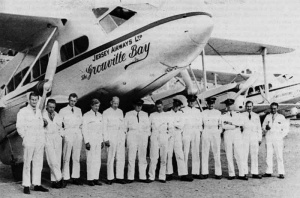 Jersey Airways crew in 1937
 -
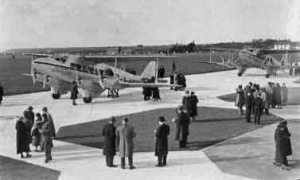 Jersey Airport opening day in 1937
 -
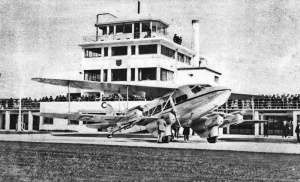 Airport opening day
 -
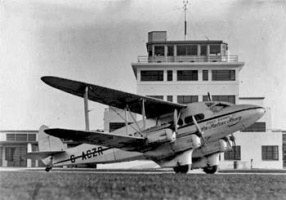 A DH 86 at the Airport in 1937
 -
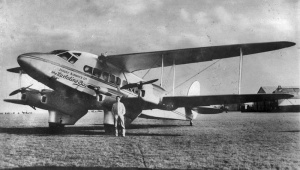 La Saline Bay
 -
 The DH95 Flamingo
 -
 DH95 Flamingo en route to Heston
 -
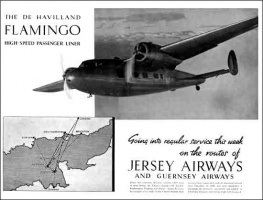 Promoting the superb new Flamingo airliner in 1939
 -
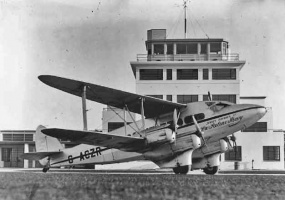 File:AirportBiplane.jpg
 -
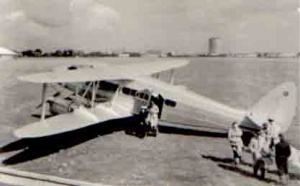 Passengers on a Jersey Airways flight alight at Heston in 1938
 -
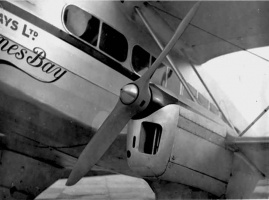 The ill-fated St Catherine's Bay which crashed in 1938
 -
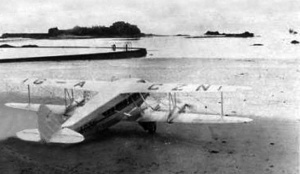 St Catherine's Bay
 -
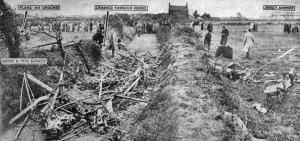 The scene after the 1938 fatal crash on the approaches to Jersey Airport
 -
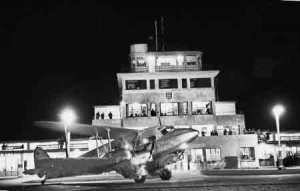 A night-time arrival in 1938
 -
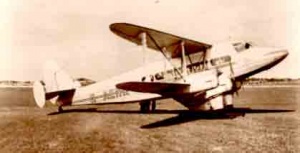 A DH86b operated jointly by Jersey Airways and Guernsey Airways
 -
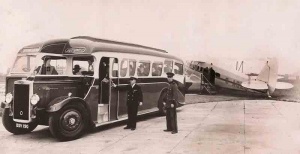 A posh coach met passengers at Heston
 -
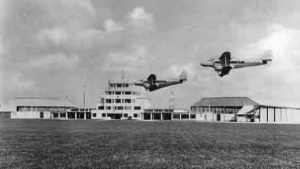 Two de Havilland aircraft land together from the south at Jersey Airport
 -
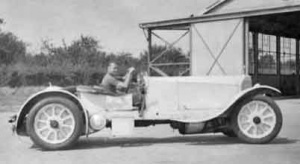 B A Blythe of Jersey Airways at Heston
 -
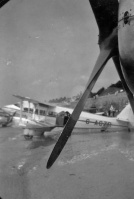 A view of the beach 'aerodrome' from a newly arrived aircraft
 -
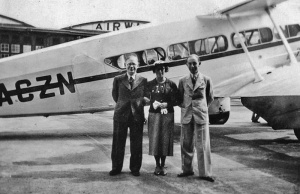 Passenters await a flight at Eastleigh in 1935
 -
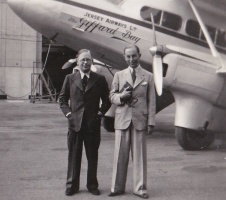 Passengers in front of Giffard Bay at Eastliegh in 1935
 -
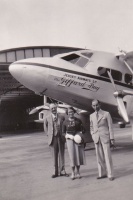 Eastleigh in 1935
 -
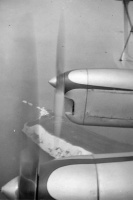 Passing over the Needles en route for Jersey
 -
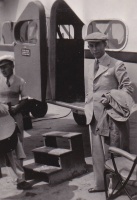 A smart passenger disembarks in Jersey
 -
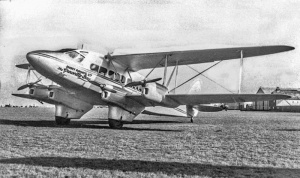 G-ACYG, DH-86 Grouville Bay, probably at Heston in the late 1930s
 -
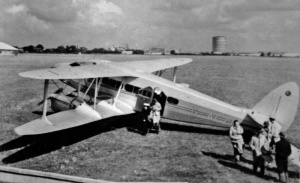 At Heston in the 1930s
 -
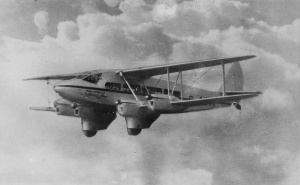
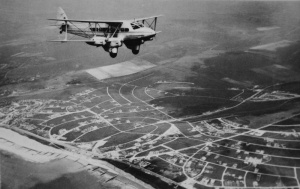 A Jersey Airways biplane crossing the South Coast of England in the 1930s
 -
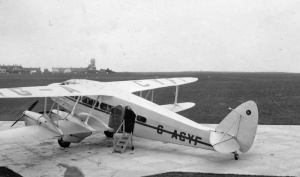 G-ACYF at the Airport on 17 July 1937 ...
 -
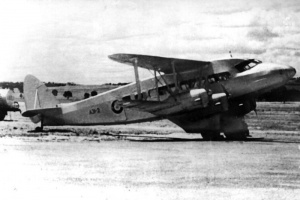 ... and with the Australian Air Force during the war
 -
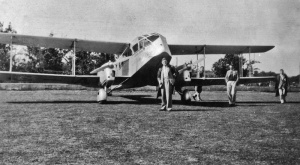
-
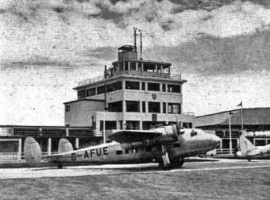
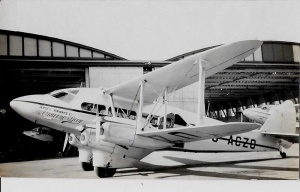
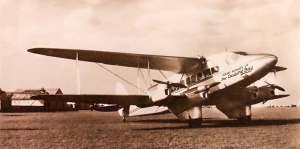 DH 86 Express Ouaine
 -
-
-
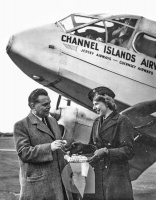 Holiday camp owner and Jersey resident Billy Butlin was a frequent flyer with Jersey Airways
 -
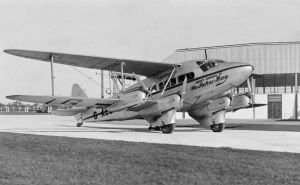 G-ACZR - Ouaisne Bay


.jpg)


Airmail
Eleven weeks after Jersey Airport was officially opened in March 1937 the Post Office was prepared to trust Jersey Airways with carrying mail between the island and the UK, with the risk of it being washed away in a beach landing that went wrong now in the past. Letters to be carried in both directions were stamped the previous night ready for an early morning departure on 1 June


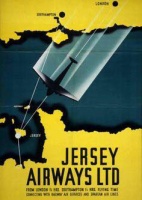
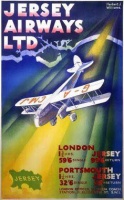
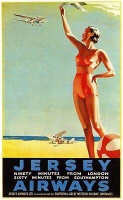
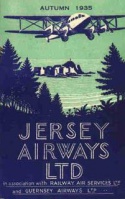
Timetables, posters and other advertising material
-
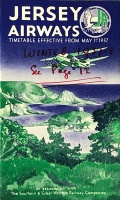 1937 timetable - the year the Airport opened
 -
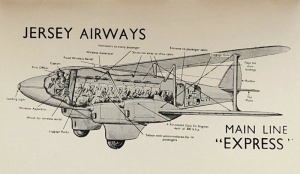 1937 timetable
 -
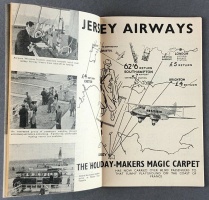 1937 timetable
 -
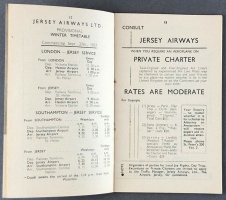 1937 timetable
 -
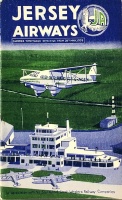 1938 timetable
 -
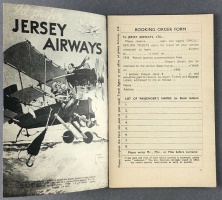 1938 timetable
 -
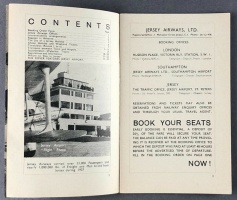 1938 timetable
 -
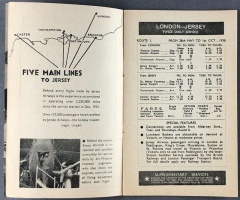 1938 timetable
 -
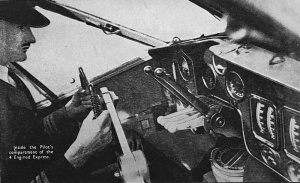 1938 timetable
 -
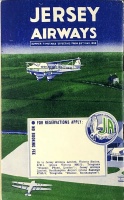 1938 timetable
 -
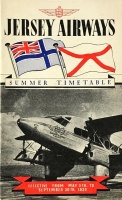 1939 timetable
 -
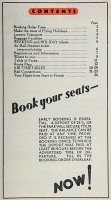 1939 timetable
 -
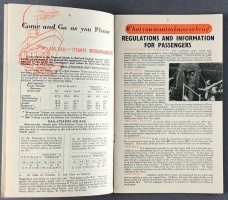 1939 timetable
 -
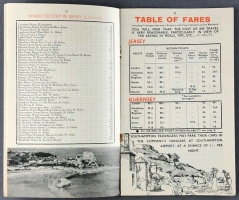 1939 timetable
 -
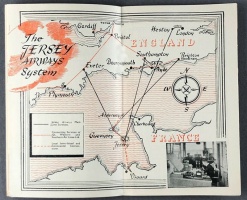 1939 timetable
 -
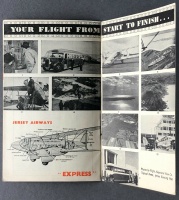 1939 timetable
 -
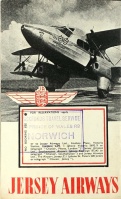 1939 timetable
 -
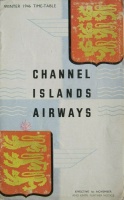 1946 timetable
 -
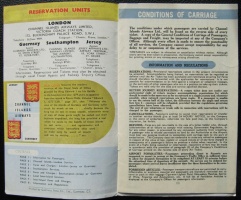 1946 timetable
 -
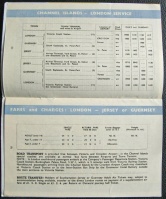 1946 timetable
 -
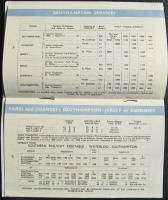 1946 timetable
 -
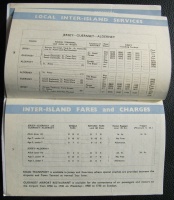 1946 timetable
 -
 1946 timetable
 -
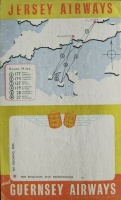 1946 timetable
 -
-
-
-
-
-
-
-
-
-
-
-
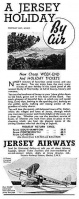
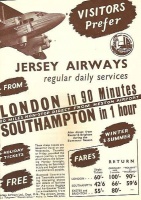 Jersey Airways advertisement
 -
 Luggage tag
 -
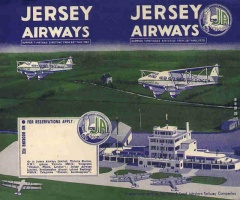 1937 brochure
 -
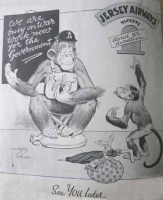 Jersey Airways cartoon
 -
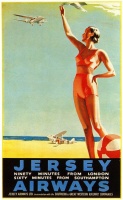
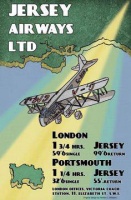
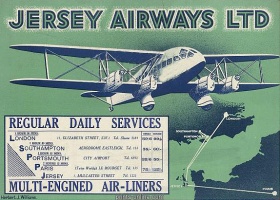
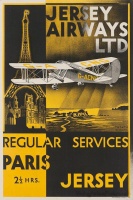
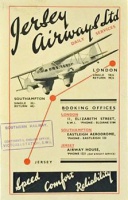
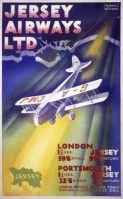
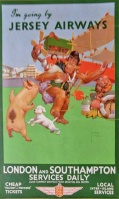 Jersey Airways poster
 -
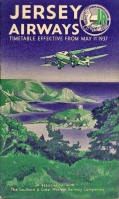 Jersey Airways 1937 timetable
 -
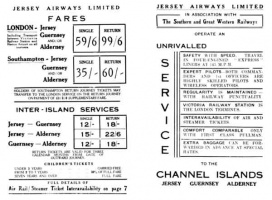 Jersey Airways fares
 -
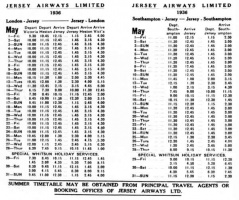 A timetable for beach operations
 -
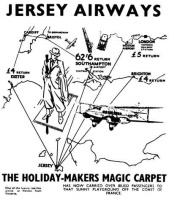 Services resumed after the war
 -
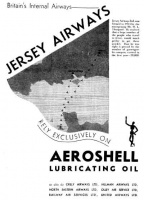 Shell promoting Jersey Airways in a 1935 Flight magazine advertisement
 -
Back in business after the War
-
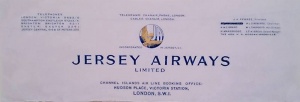 The company was ahead of its times in many respects, including the use of a coloured letterhead
 -
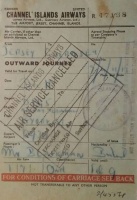 A Channel Island Airways ticket
 -
 Jersey Airways licence applications in 1938
 -
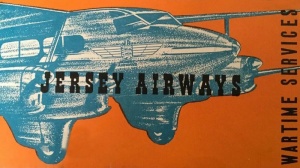 Advertising card
 -
 Poster
 -
-
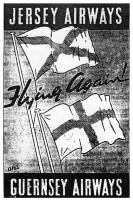 1945
1945 -
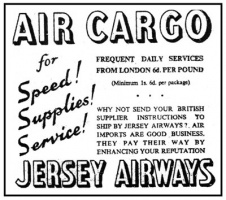 1945
1945