Kempt Tower

Kempt Tower

One of the true Martello Tower designs, this is the second most northerly surviving tower in St Ouen's Bay

History from Jersey Heritage conservation statement


The States of Jersey ordered that work commence on the construction of new coastal defences on 3 March 1832 and a series of towers of the English Martello pattern was built. Part of the proposals for St Ouen’s Bay was for a three-gun tower to the rear of the New North Battery.
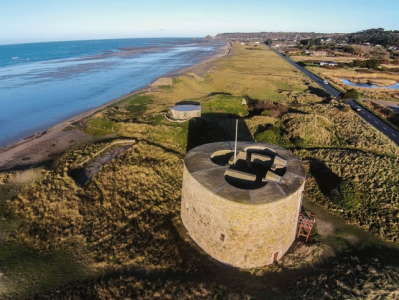
Kempt Tower, the largest example of a Martello constructed in Jersey, was built in 1834 to the standard English East Anglian cam-shaped pattern and designed to mount one 24-pounder gun and two 24-pounder short guns. It is named after Sir James Kempt, the then Master of the Ordnance, who had been one of Wellington’s Generals at the Battle of Waterloo. Also sometimes known as the La Grosse Tour and St Ouen's No 2.
A report by Lieut-Colonel Lewis and Lieutenant-Colonel Sinclair on 28 October 1835, records that Kempt Tower Battery was armed with three 24-pounder guns, and the tower with a single 24-pounder gun.
The building is shown on the 1849 map of Jersey by Hugh Godfray as “Kemp Tower or Grosse Tour’’
Kempt Tower maintained a military role into the mid-19th century, as evidenced by a Royal Engineers report in January 1848, which records three 32-pounder guns mounted at the tower. After 1850 Jersey was no longer regarded as a ‘fortress island’ as hostilities with France abated, and the coastal towers declined into obsolescence. A letter by Lieut-Governor Douglas on 10 November 1860 observed that Kempt, Lewis and L’Etac Towers required much internal repair before they could be occupied: “they have been left in a most neglected position for many years”.
In June 1902 the War Department approached the States to enquire if they would be interested in purchasing a number of the vacant coastal fortifications. Agreement was reached a few years later but an exact sale date for Kempt Tower has not been established. A letter from the War Office to the Royal Engineer Office in Jersey in February 1909 refers to Kempt Tower as no longer being War Department property.
German Occupation
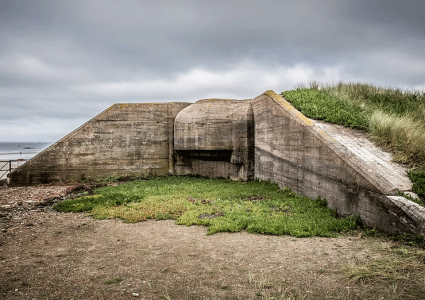
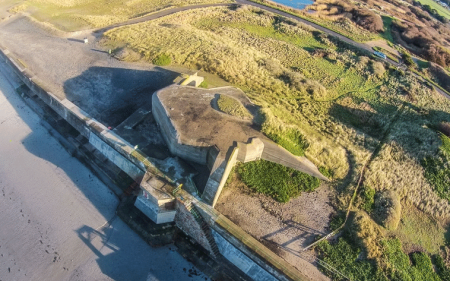
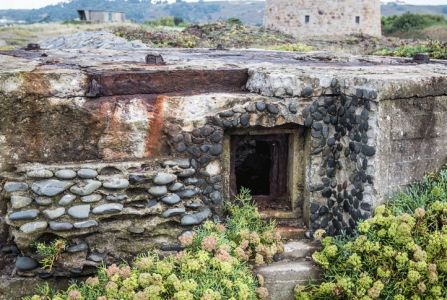
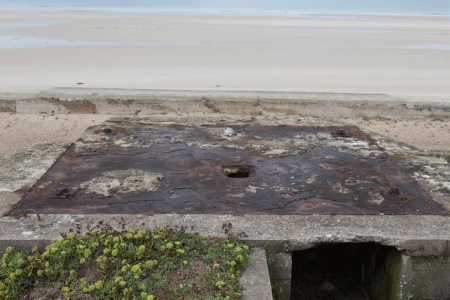
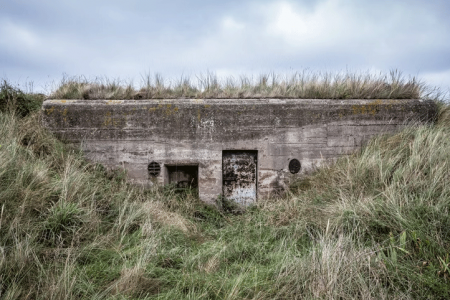
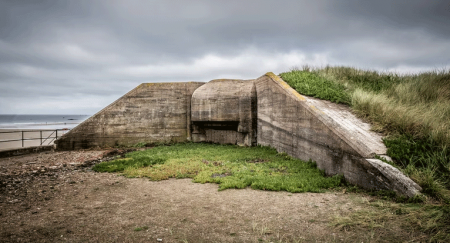
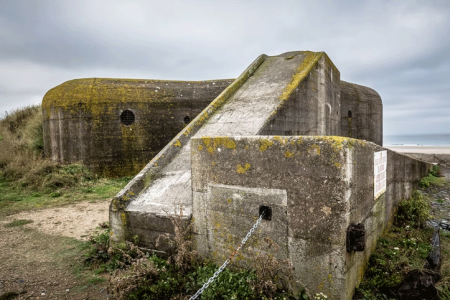
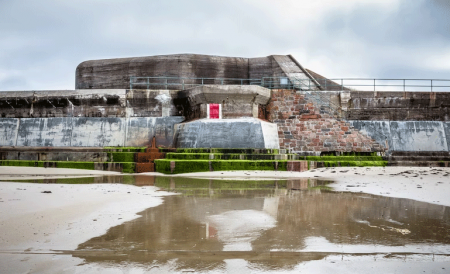
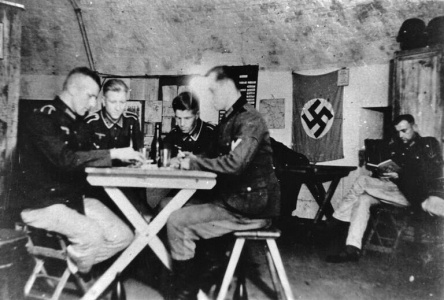
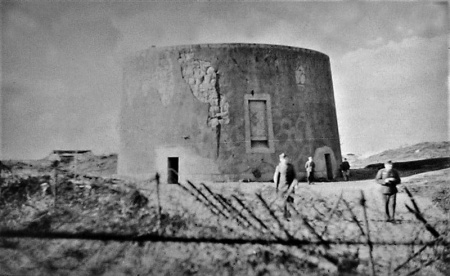
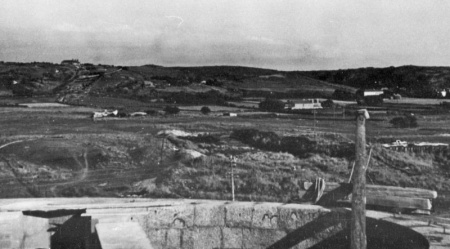
During World War Two St Ouen's Bay was considered as the most likely beach for an Allied landing. The German occupying forces constructed a large number of defensive structures throughout the area including the modification and reuse of earlier fortifications, whose strategic position and robustness of construction again proved to be of military value. The Germans adapted Kempt Tower, replacing the original radial oak joist floors with steel and concrete, inserting a defendable ground floor entrance, and subdividing the roof-top gun deck. Various other positions were constructed nearby, including an anti-tank sea wall, a casemate for beach defence gun, machine gun positions, searchlight shelters and personnel shelters.
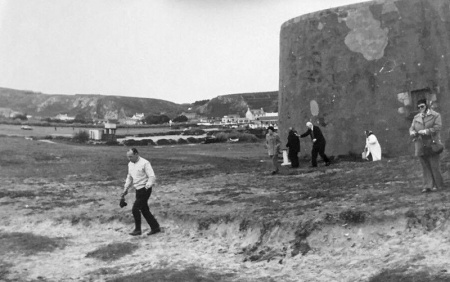
Between 1985 and 2010, Kempt Tower was used as a visitor interpretation centre to explain the natural environment of St Ouen’s Bay. It continues to be owned by the States and is now administered by Jersey Heritage, who have refurbished the tower as a holiday let.

HER entry
The tower and battery are significant as an integral part of a group of surviving military defences in Jersey that illustrates the changing political and strategic military history of the Island, and global trends in the history of war, in the late 18th and early 19th century through to the Second World War.
It is the largest of the series of towers of the English martello pattern built in Jersey between 1831 and 1837. The tower was built to a design approved by the Board of Ordnance and is a good example of the power of the 'engineering architecture' characteristic of work by the Royal Engineers in the 19th century.
The highest standards of construction were achieved by the supervising RE Officers and Jersey contractor Jean Gruchy and his stonemasons.
The tower substantially retains its completeness and architectural integrity as an early nineteenth century martello tower with the structure close to its original form and physical context. It is strategically sited and can still be read in terms of its strategic defence value as originally conceived. The stone battery similarly retains its integrity.
French invasion
There was an attempted invasion of the Island in 1779. A party of Frenchmen led by the Prince of Nassau arrived in St Ouen's Bay but was prevented from landing by the militia artillery under the charge of the Rector of St Ouen, Sire du Parcq, who brought the guns to a favourable position under fire from the hostile fleet. The attack highlighted the need for more fortifications in the area and the map of Jersey engraved by William Faden, Geographer to the King, in 1781 shows the gun batteries, redoubts and entrenchments raised along the coast, including the New North Battery on the site of Kempt Tower.
By 1830 most of the defences of Jersey had fallen into disrepair as both the States and the Board of Ordnance were reluctant to spend money on their upkeep. King William IV inquired as to the state of Jersey's coastal defences in 1831 and a report was commissioned from Lieut-Colonel Lewis, the Commanding Engineer in Jersey. A chain of batteries and coastal defence towers (known as Conway towers) already existed in locations where a risk of enemy landing was present, but the report found that with the advent of steam-powered naval vessels able to hold their position close to the shore, even in areas previously protected by reefs, new measures would be necessary on parts of the coastline now exposed to the risk of bombardment.
Largest martello tower
The States ordered that work commence on the construction of new coastal defences on 3 March 1832 and a series of towers of the English martello pattern was built. Part of the proposals for St Ouen's Bay was for a three-gun tower to the rear of the New North Battery. Kempt Tower, the largest example of a Martello constructed in Jersey, was built in 1834 to the standard English East Anglian cam-shaped pattern and designed to mount one 24-pounder gun and two 24-pounder short guns.
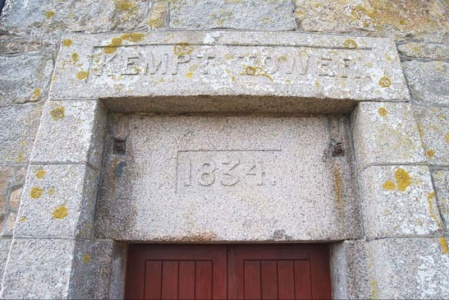
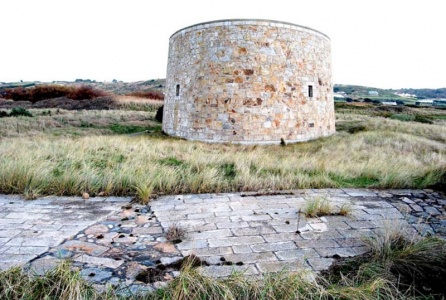
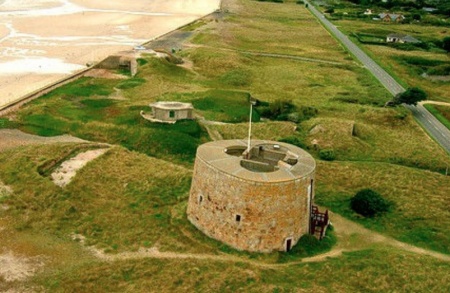
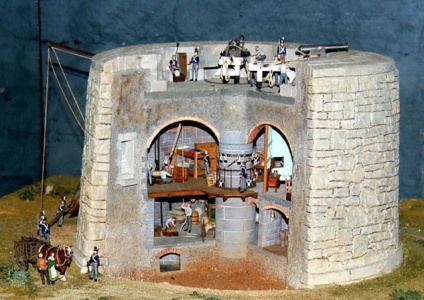
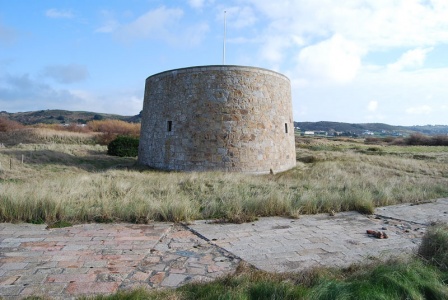
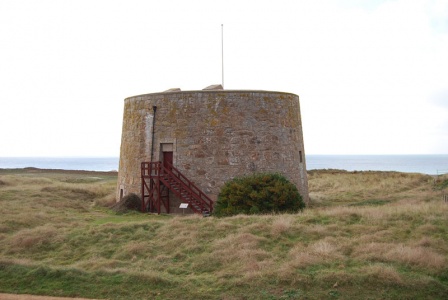
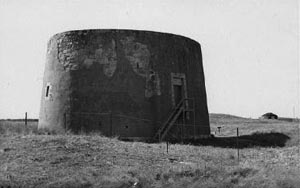
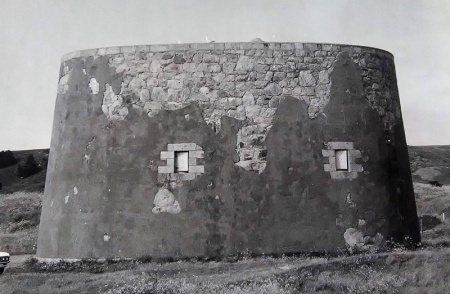
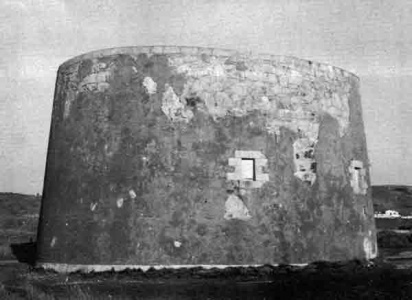
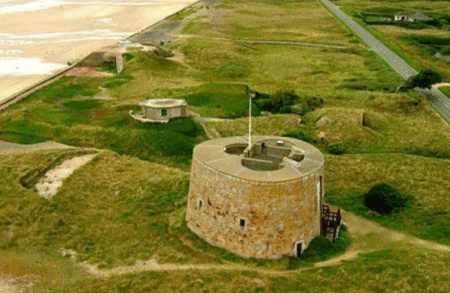
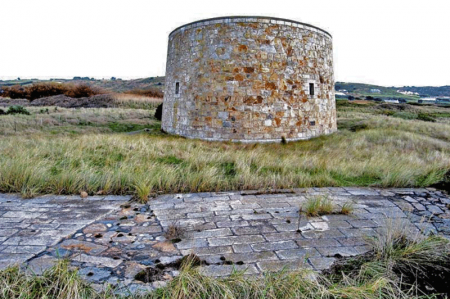
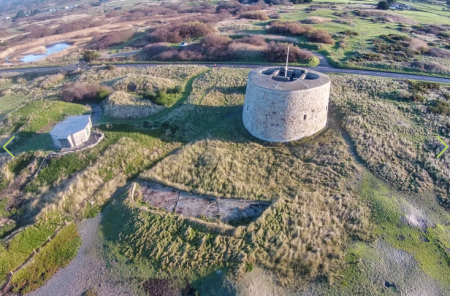
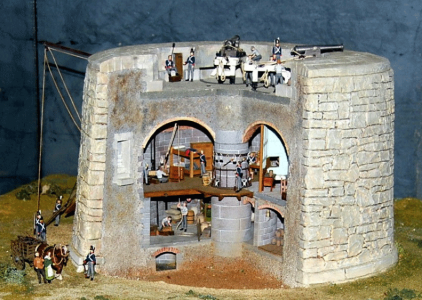
Kempt Tower is a fine example of the largest, English east-coast pattern Martello - designed primarily for mounting artillery on a roof platform. It is cam-shaped in plan with a characteristic squat and robust profile - the tower measuring 54 ft in diameter and 35 ft in height. It has noticeably battered, very thick, outer walls of exposed Jersey granite (originally rendered) with very few openings - limited to small windows lighting the upper accommodation level and a raised first floor entrance. This has a dressed granite surround inscribed KEMPT TOWER with 1834 datestone - the doorway facing away from the direction of attack and with a specially profiled threshold to enable the entrance ladder to be withdrawn from above.
A ground floor doorway and single window at magazine level - both in dressed granite - were inserted by the Germans in 1941. The roof deck, with its very broad encircling parapet wall, was originally designed to mount three guns and is supported on a brick vault. This construction differs from the English Martello towers, which are usually entirely constructed of brick, except for certain dressings.
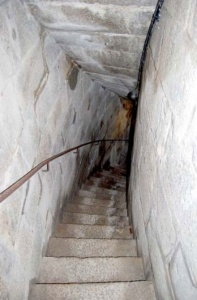
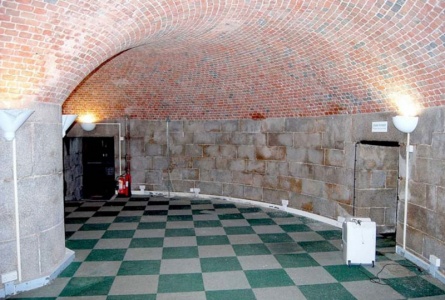
The roof deck is subdivided by concrete walls inserted in 1941, and the floor level has been raised with modern paving laid over. A pair of stairs accesses the roof deck from the main floor below. Access to roof level is via a pair of granite stairs set entirely within the thickness of the external wall.
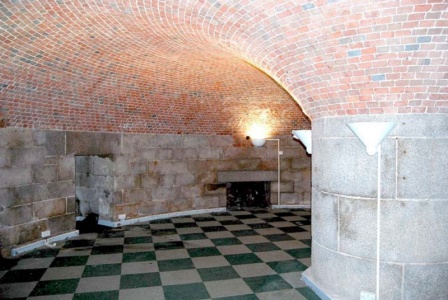
The inserted German floor raised the original floor height, reducing the amount of clearance for the doorways, fireplaces and windows - with the exception of the main entrance, which retains its original level as it steps down from the room. The roof platform is supported off the central pillar and brick vault below.
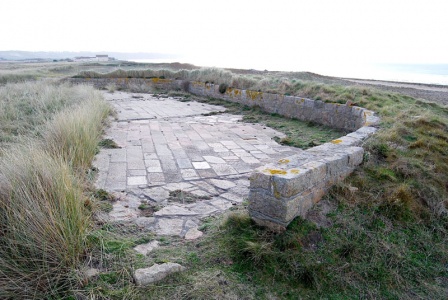
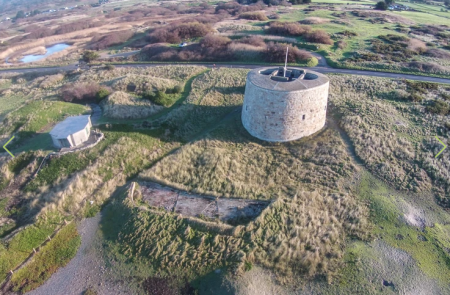
The 1834 layout is still evident with 3 semi-circular positions within the broad masonry parapet to house the traversing guns, and various integral storage niches. German works include a concrete capping to the parapet, and concrete partition walls, which subdivide the gun deck. Post-war additions include a hood above both stair entrances and basic wooden doors. The roof deck level has also been raised with post-war concrete paving - the survival of the original granite paving being unclear. The adjacent New North Battery is constructed of granite, with a curved wall on the seaward side, behind which are three trapezoidal areas of paved stone - each designed to accommodate a single gun.
-
-
-
-
-
-
-
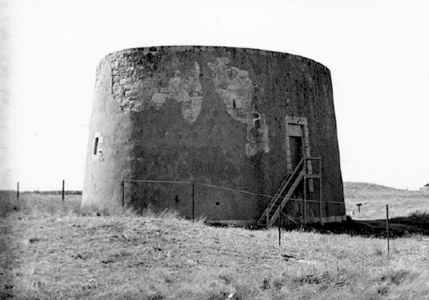 1939 picture by Emile Guiton
 -
-
-
-
-
-
-
-
-
 1977
1977 -
-
-
-
-
-
-
-
-
-
-
-
-


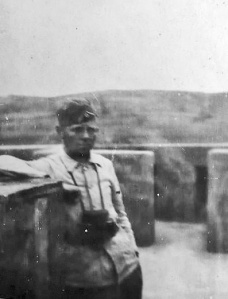
World War Two pictures
-
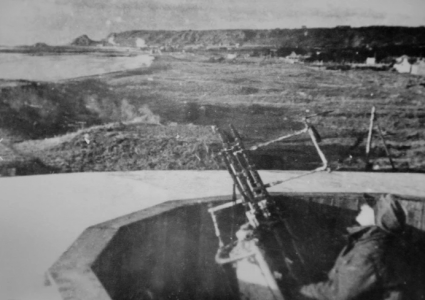
-
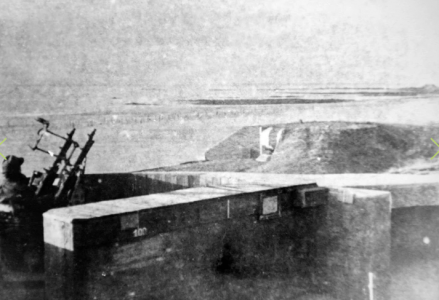
-
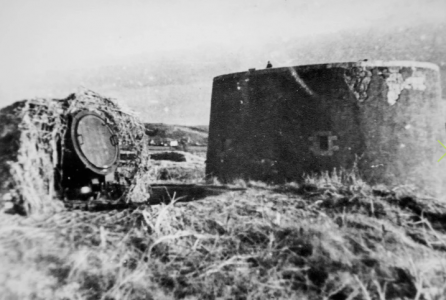
-
-
-
-
-
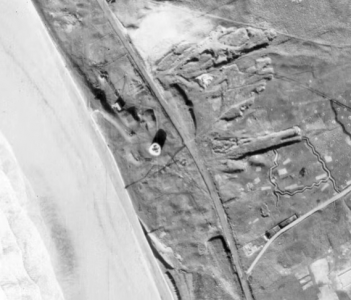 1944 aerial photograph


Holiday let pictures