La Motte Street

La Motte Street

Manoir de La Motte in 1958
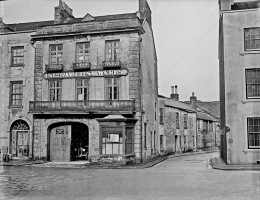
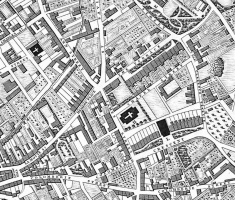
La Motte Street is one of the oldest streets in the town of St Helier, showing clearly on maps from as early as the 17th century. The road led from the end of Rue du Milieu (now Queen Street) at Carrefour de la Pompe de Haut (now Snow Hill) to Manoir de la Motte. The building was demolished in 1958 but there are conflicting views as to whether this was the original 15th century building or a later replacement. It may seem strange that there should have been a traditional Jersey country house on what is now a busy junction, but before La Motte Street was created, this was open countryside

Emile Guiton
Writing in the Annual Bulletin of La Société Jersiaise in 1959 Emile Guiton is quite clear that the house, which was then known as Manoir de Saint Helier, fell into disrepair and was demolished in the 15th century. He says that after it became a ruin the stones and timber were carted to Gorey Castle, and probably used in building the Harleston Tower. There was nothing left of the building of the 15th century.
Guiton says that it is not known when it was rebuilt, but it must have remained an open site on the eastern edge of the town for some time, before a new house, known variously as Manoir de la Motte, Maison la Motte, Manoir de Tehi, or Maison de Tehy, was built. This became the residence of the Lieut-Governor in the 18th century, and it was here that Moyse Corbet was famously captured by the French invaders on the day of the Battle of Jersey.

Edmund Nicolle
However, Edmund Nicolle, like Guiton a Secretary of La Société Jersiaise, wrote in his Town of St Helier published in 1931 that the property then in existence was of a construction consistent with a 15th century building, suggesting that it was rebuilt earlier than Guiton proposed.
- "In 1476 it belonged with its pigeon house and other manorial appurtenances to Raulin Lempriere, who in June of that year sold it to Perrotin Tehy. An authenticated copy of the deed of sale is to be found in the Public Registry and has been published by the Société Jersiaise. This fine granite front has, in recent years, sad to relate, been cemented over, whilst the interior has undergone modern embellishments, which have obliterated the distinctive features of this remarkable oldhouse; but a mere examination of the gables which are no less than 6 feet thick, the square tower with its stone staircase (now covered over with boards) and its small square windows shows clearly that the building is of early construction.
It would certainly appear to date from the commencement of the 15th century. The deed of sale is dated 1476, so that we cannot err in asserting that the house is five centuries old.

Joan Stevens
One of the greatest authorities on Jersey houses, Joan Stevens, suggests in Volume 1 of her Old Jersey Houses that it was between 1479 and 1481, after the sale by Lempriere to Tehy, that the manor was in ruins and the stones and wood removed to Mont Orgueil.
- "The house must have been rebuilt soon afterwards, though it is difficult to see what condition it was in when it was purchased by Tehy and came to be known by his name."
Important buildings
It is at the eastern end of the street, towards the junction with St James Street, Ann Street, Grosvenor Street and St Saviour's Road, that the buildings of the greatest historical importance were erected. The area forms part of the Fief du Buisson.
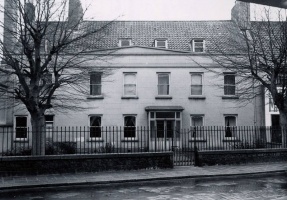
Before the street was developed, the north side consisted of open fields belonging to Manoir de Tehi and the south side belonged to Colomberie House on nearby Colomberie. In 1798 a large tract of land belonging to the Manoir's owner, Jean Brohier, was acquired by Jacques Hemery Additional fields were purchased from Thomas Pipon and Charles William Le Geyt and Jacques Hemery built a row of seven town houses, as homes for his late brother's six sons and one daughter.
This is Hemery Row, and five of the seven houses survive today. Four have had the original cement rendering removed to reveal the fine granite work beneath.
- A history of La Motte Street, a 2016 article based on a Jersey Archive presentation
- History of La Motte Street, a 2019 article based on a further Jersey Archive presentation. It largely duplicates information contained in other Jerripedia articles, but has been included as part of our policy to make these important Archive presentations easily available in the future

Click on any image to see a full-size version
-
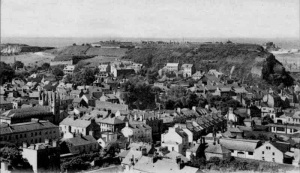 Looking down on the street (bottom centre) about 1900
 -
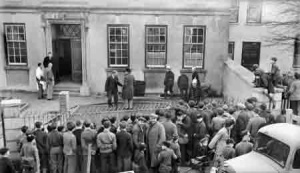 Fire in 1950
 -
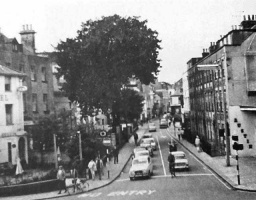 The street in the 1960s
 -
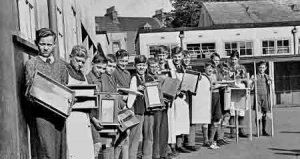 La Motte Street School 1939
 -
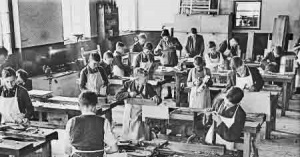 La Motte Street School 1939
 -
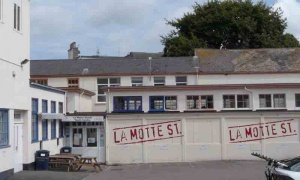 Youth Centre
 -
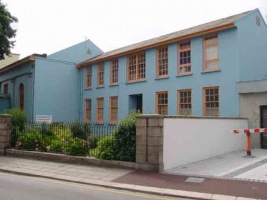 Youth Centre 2003
 -
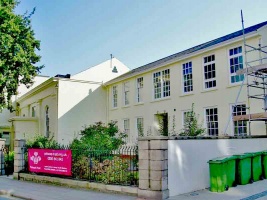 Youth Centre 2006
 -
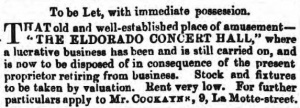
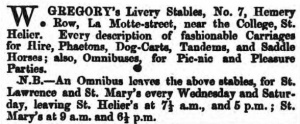
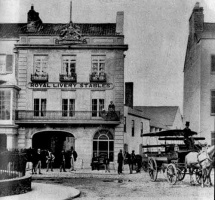 La Motte livery stables were at the end of Hemery Row on the corner of Ann Street
 -
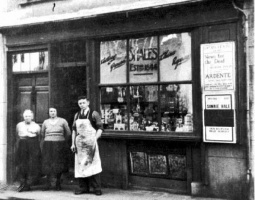 Shales, cutler, at No 14
 -
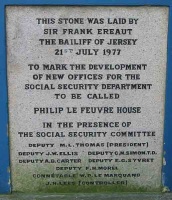
-
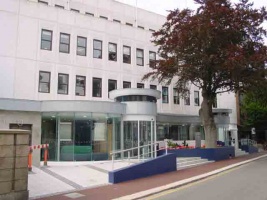 Social Security offices
 -
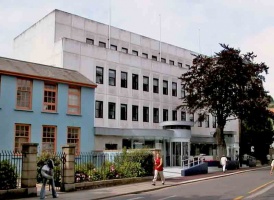 Social Security offices
 -
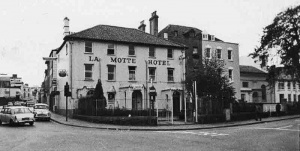 La Motte Hotel in 1969
 -
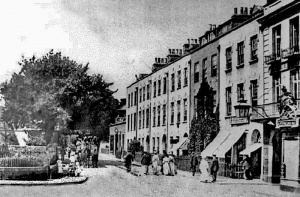 La Motte Street in 1905
 -
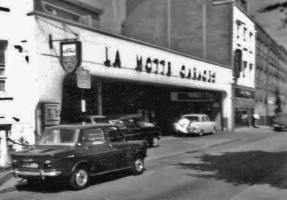 La Motte Garage
 -
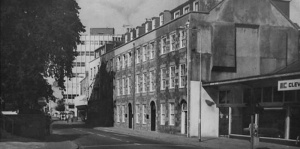 Cleveland Garage
 -
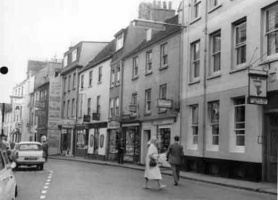 La Motte Street
 -
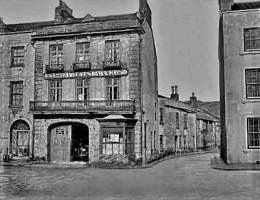 The old livery stables at the end of Hemery Row
 -
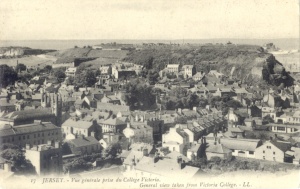 La Motte Street is in the centre right of this photograph taken from Victoria College
 -
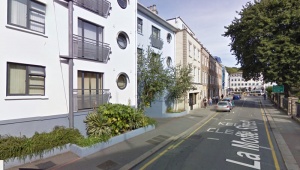 A street view by Google in 2010
 -
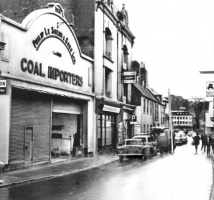
-
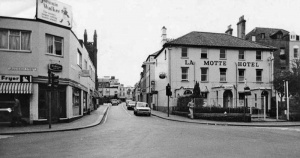 The junction with St James' Street ...
 -
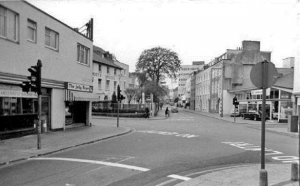 And turn through 90 degrees to view the junction with Grosvenor Street in 1978
 -
-
-
-
-
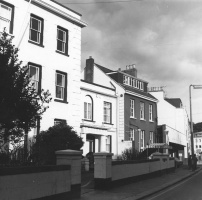
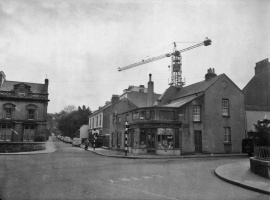 The eastern end of La Motte Street at the junction with St James' Street to the right and Grosvenor Street straight ahead
 -
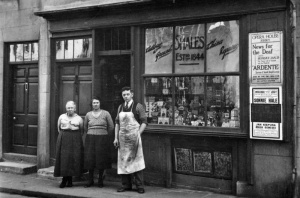 No 10 in the 1920s
 -
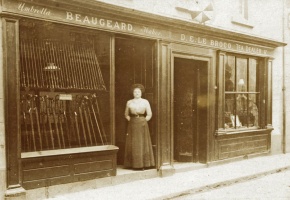 Nos 6 to 8 in 1910
 -
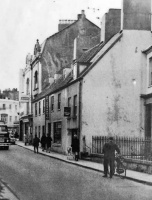
-
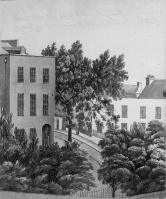 An early 19th century sketch by Henry Irwin of Jacques Hemery's house on the corner with St Saviour's Road ...
 -
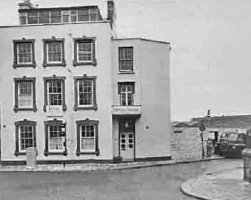 ... Burlington House, as it became known
 -
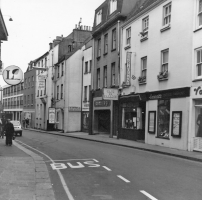 1977
1977 -
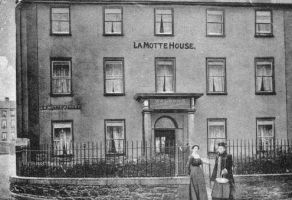 La Motte House, 1900
 -
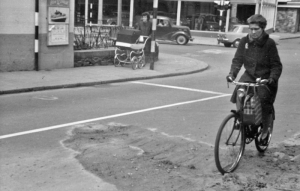 The junction of James Street and La Motte Street in the 1950s
 -
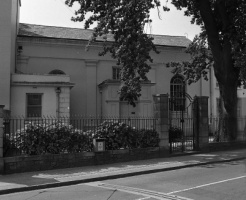 The former La Motte Street School in 1983 - Picture Jersey Evening Post
 -
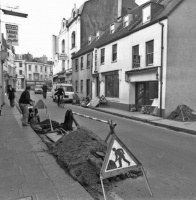 The western end of the street in 1976 - Picture Jersey Evening Post
 -
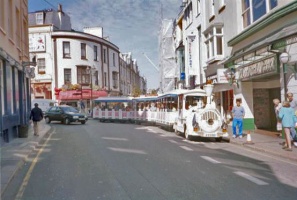 A mini-train for tourists in La Motte Street


-
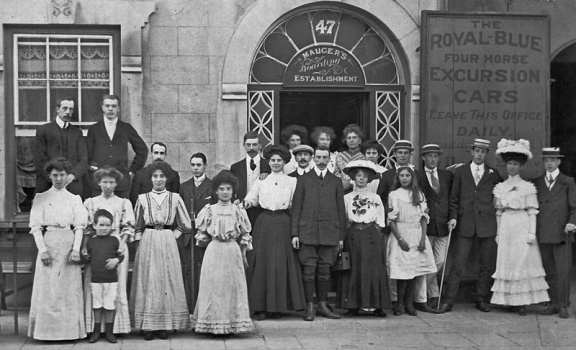 Mauger's Boarding Establishment was at No 47 when this picture was taken. This is the last house in Hemery Row
 -
![Was this a visiting band staying at No 47? We don't know when the picture was taken. The bandsmen look possibly French, so they could have been participating in one of the Concours musicale in the early 20th century]]](/w/images/thumb/b/ba/E19StHelierBandLaMotteStreet.jpg/544px-E19StHelierBandLaMotteStreet.jpg) Was this a visiting band staying at No 47? We don't know when the picture was taken. The bandsmen look possibly French, so they could have been participating in one of the Concours musicale in the early 20th century]]
Was this a visiting band staying at No 47? We don't know when the picture was taken. The bandsmen look possibly French, so they could have been participating in one of the Concours musicale in the early 20th century]]

![Was this a visiting band staying at No 47? We don't know when the picture was taken. The bandsmen look possibly French, so they could have been participating in one of the Concours musicale in the early 20th century]]](/wiki/File:E19StHelierBandLaMotteStreet.jpg)

La Motte Street businesses
-
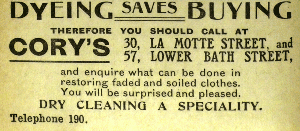
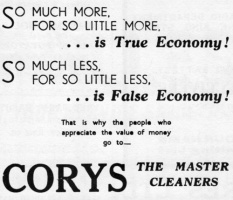
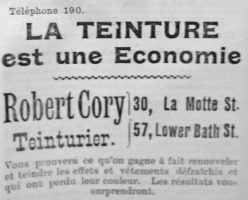
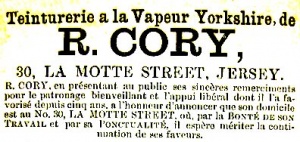 Cory cleaners
 -
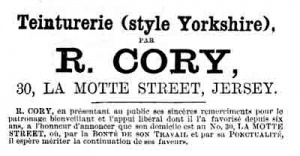 Yorkshire style dyeing
 -
-
-
-
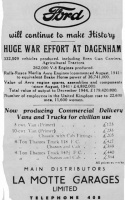 La Motte Garages 1945 advert
 -
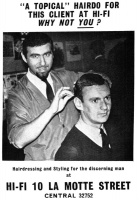 Hi Fi Hairdressers, 1965
 -
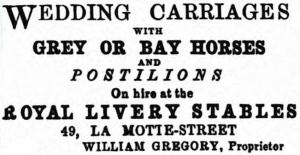
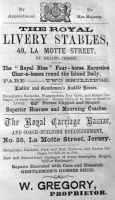 Royal Livery Stables, 1874
 -
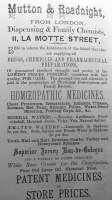 1890
1890 -
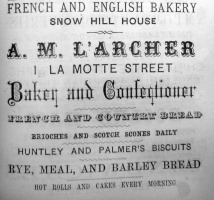 1886
1886 -
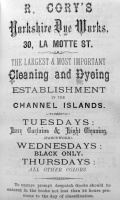 1890
1890 -
 1922
1922 -
 1860
1860 -
-
 1874
1874 -
 1915
1915 -
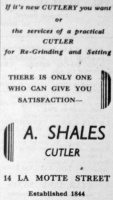 1948
1948 -
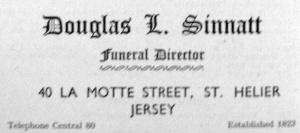 1948
1948 -
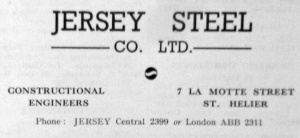 1948
1948 -
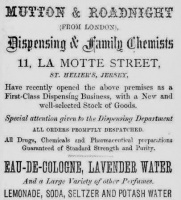 1887 advert
 -
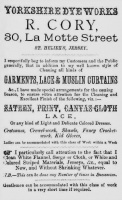 1887 advert
 -
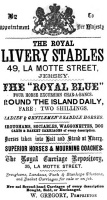 1873
1873 -
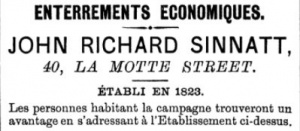 1887 advert from L'Almanach de la Gazette de Jersey
 -
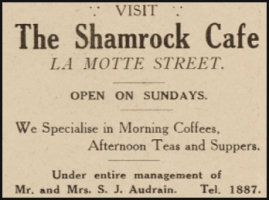 Advert from Jersey Leader, 1935
 -
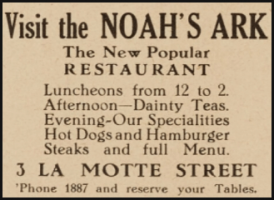 Advert from Jersey Leader, 1935
 -
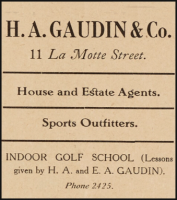 Advert from Jersey Leader, 1935
 -
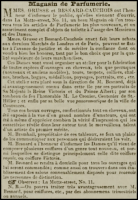 A perfumery was opened at No 11 in 1850, as advertised in Chronique de Jersey
 -
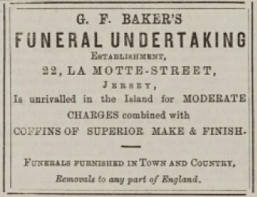 G F Baker's undertaker's business was at 22 La Motte Street in 1874
 -
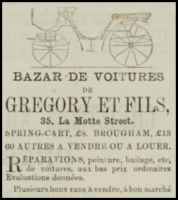 Carriages for sale and rent in 1890
 -
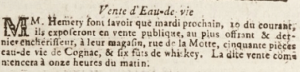 M Hemery was selling cognac and whisky at his La Motte Street shop in 1809