Minden Place

Minden Place

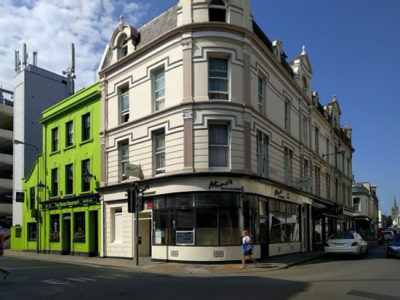
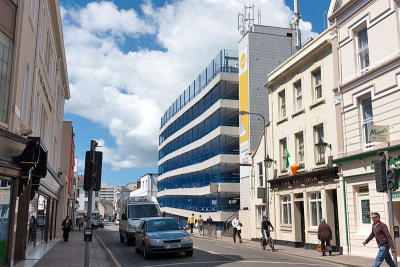
The corner with Bath Street was once a butcher's, next door to the Foresters pub, later the Victoria [1]. It became a restaurant, opening in the late 1960s as The Great American Disaster, which upset the owners of the American franchise, with which it had no connection, and had to change its name to Yankee Catastrophe. It was later bought by Italian restaurateur Mino Ranieri and became Mino's for many years, although it is now the Green Rooster cafe and bar
Minden Place, named after the Battle, is the continuation of the through route from the Parade, following on from Union Street and Burrard Street, and ending at its junction with Bath Street.

Minden Place is a short street, a continuation of Burrard Street from the junction with Cattle Street and Rue de Funchal (formerly James Street). It was named after the Battle of Minden, although it is not clear why, because that took place in 1759 and it is likely to have been some decades after that when the street was created and given its name. It is not mentioned in Edmund Toulmin Nicolle's The Town of St Helier, which notes that none of the streets in the surrounding area existed in the early years of the 19th century and Burrard Street was only made public in 1817.
Jersey's first postmaster, Charles William Le Geyt, fought with distinction at the Battle of Minden, but his appointment was in 1894, long after the battle and before Minden Place would have existed. It is not known that he had any connection with the street.
It is also unclear why it was called Minden Place and not Minden Street. The usual definition of a 'place' is a road which is only open at one end and has no further exit. This does not seem to have applied in Jersey, which has few places - Kensington and Parade are the others which spring immediately to mind - which also do not conform to the description. Minden Street is a small side road off Minden Place, running behind what is now the multi-storey car park and connecting it with Bath Street. The multi-storey was built on the site previously occupied by the island's last open-air cattle market. It is difficult to track the occupancy of Minden Place buildings in the same way that we have done for other town streets, because the numbering system changed either before or after the Second World War.
Markets
Minden Place was dominated for many years by three markets. The largest was the Cattle Market on the north side of the street. At the time it was built there would have been open countryside beyond it. Across the street was the rear entrance to the Beresford Market. That is still there, providing entry to a thin fish market running throough too Beresford Street. There is another entrance, not accessible by the public, in Cattle Street. The market was formerly much larger, but was gradually eaten into to provide space for an expanding Telephones House, which was home to the island's main telephone exchange.
A toy market previously stood on the corner of Minden Place and Cattle Street, where the first section of Telephones House was built, opening in 1926.

Brewery and inns
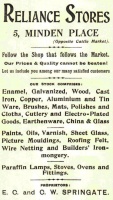
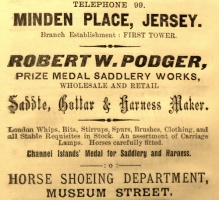
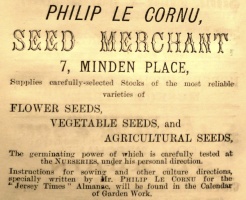
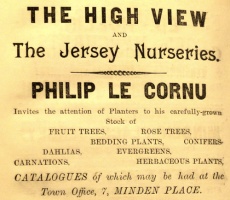
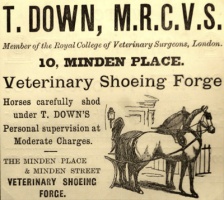
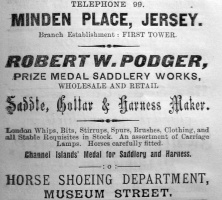
Unlike Beresford Street, which runs parallel to the south, Minden Place has never been a shopping street. As the advertisements on this page confirm, seed merchants, livery stables, saddlers, veterinary shoeing forge, a supplier of Jersey Royal seed potatoes grown in the north of England, a pawnshop and a hardware store have all featured.
And in stark contrast to Beresford Street, which has had very few inns and taverns throughout its 200-year history, Minden Place was once dominated by public houses and a brewery.
Originally there were two breweries, as our history of Randall's Brewery shows. They were both at the western end of the street, one known as Burrard Street Brewery (it appears under Minden Place in early census returns) and the other as Minden Brewery. For a time in the 1830s they combined their operations, and eventually Minden Brewery merged with Clare Street Brewery, which became Randall's main premises. Brewing in Minden Place finally ended in 1919, having ceased during the Great War.
No doubt the brewery was conveniently placed in 1851 to supply Charles Baldwin's New Market Inn [2], George Averty's Union Inn and George Vardon's Victoria Inn. By 1861 these had been joined by William Turgis' Forester's Inn. There may well have been others, because the census shows more innkeepers than it names inns.
The brewery was founded by Joseph Quirk, run for a time after his death by his widow, and then taken over by their maltster, Robert Randall, who bought the brewery for his second son, Charles Walter Randall.
Other Minden Place publicans or innkeepers mentioned in later 19th century censuses were Mary Gallichan, her son-in-law George Mauger, Richard Orchard, John Aubin (who was also a carpenter), William Chapman, Arthur Hadley, William John Keeping, George Wright, Elizabeth Noel and her son Ernest. Into the 20th century, Capt Gosselin, L E Boyce; F H Grandin, his widow Mrs D B Grandin and their son, another F H Grandin at the Minden Hotel; H G Wilkinson, W H Thornton, W Gay, H C Morin and C Breton at the Forester's; and A Tarr (from 1915 to 1950), W J Peacock, D Le Breuilly, P Cassin, Mrs Henegan, P Dootson, and M Kelly at Victoria's, the last remaining establishment. These are by no means exhaustive lists because census returns and almanacs did not always associate publicans and their premises.
No doubt these 'watering holes' thrived on the patronage of farmers and farm workers, who came to town to visit the cattle market, as also did the blacksmiths, bootmakers, seed merchants, saddlers, stables, harness makers, farriers, basket makers, a French veterinary surgeon, Henry Crousier, and others who traded in Minden Place over the years.
It is doubtful if so many public houses could have been supported by the business brought by farmers and others from the country parishes, but as with other streets on the fringes of the expanding town of St Helier, there were countless small lanes and cottages housing the growing population. One thing that these residents, and the men and women who ran businesses which provided for their needs, had in common, was that the majority were immigrants from England or France. Very few native Jerseymen and women had businesses in Minden Place in the 19th and early 20th centuries.
Victoria's
This inn is the only surviving 19th century licensed premises in Minden Place and one of only two listed buildings - the other is Telephone House. The Historic Environment Record notes that the inn is clearly shown on the 1834 Le Gros map, making it one of an ever diminishing number of buildings in the town from this late Georgian period. It is thus likely to be one of St Helier's earliest hotel inns.
The high survival of interior features dating to the 1820/30s contributes to the building's great historical and architectural significance. It was a purpose-built public house. It appears that the original stables, shown in 1834, have been extended over part of the rear yard. This can be seen from the roof space accessed from the first floor function room. The roof space runs through to Minden Base Warehouse in Minden Street. The front facade has the appearance of later 19th century remodelling.
Mino's
For a long period almanacs did not mention the property on the north-east corner of the street at its junction with Bath Street and, apart from knowing that it was a butcher's, run by W S Jocelyn, as shown in the picture at the top of the page, we do not know when he was in business.
The building was then home to Carmen's fancy goods shop, before it became a restaurant called Tito's, changing to the Yankee Catastrophe throughout the 1970s, and then to Mino's in the early 1980s.

Telephone House
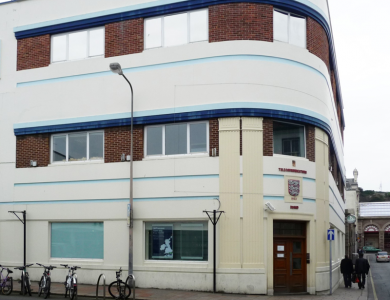
HER records that this corner building at the western end of Minden Place retains a distinctive 1930s style and is a good local example of this period. The adjacent later buildings integrate well with the original. Telephone exchange built in 1933, with 1960s additions. An urban Art Deco building with a curved façade, decorated with stylised classical pilasters and brick stripes. The original section is the corner building, with curved entrance bay on corner.
Properties
-
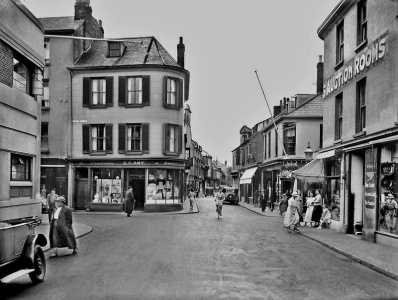 Minden Place in 1937
 -
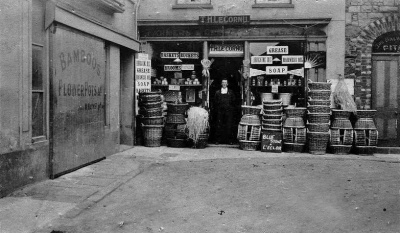 Thomas Le Cornu's hardware store in the corner of Minden Street
 -
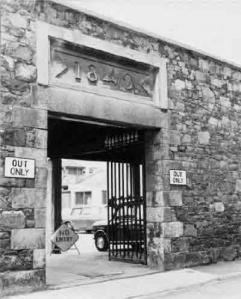 The entrance to the old cattle market, which became a temporary ground level car park before the present day multi-storey park was built
 -
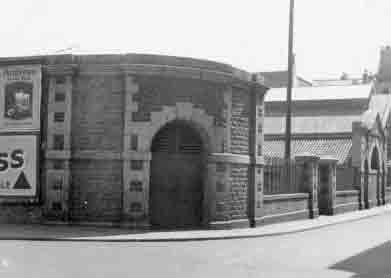 A toy market once stood at the corner of Minden Place and Cattle Street, where Telephone House was built
 -
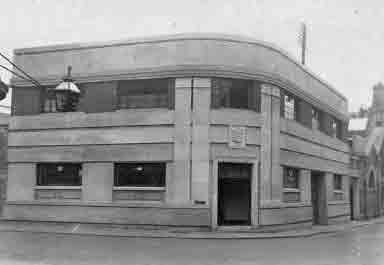 The new telephone exchange, completed in 1926
 -
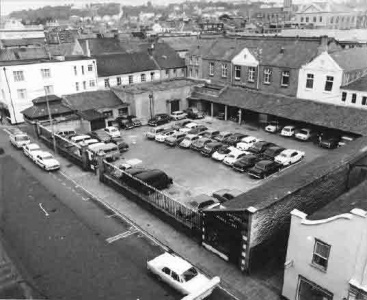 The former cattle market before it made way for a multi-storey car park
 -
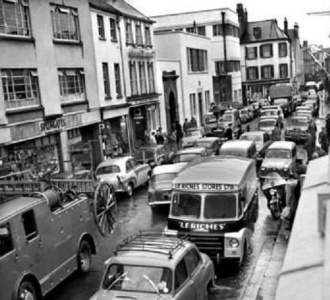 A busy street in 1960, once two-way, but for many years only for traffic heading for Bath Street
 -
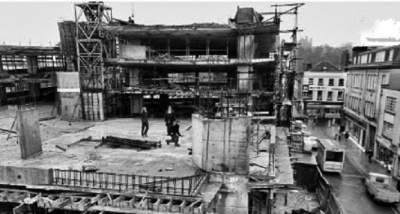 Construction of Jersey's first multi-storey car park under way
 -
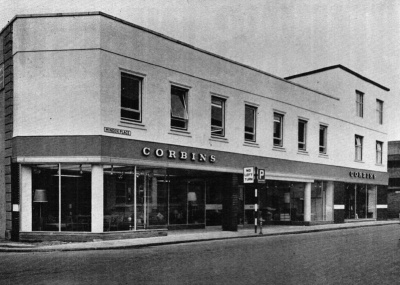 Corbins
 -
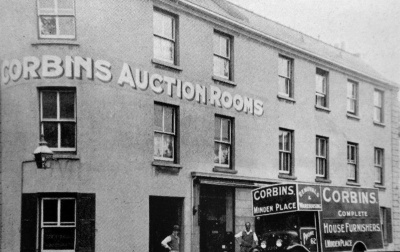 An older Corbins
 -
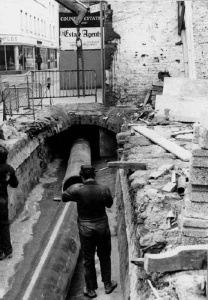 Drains being laid
 -
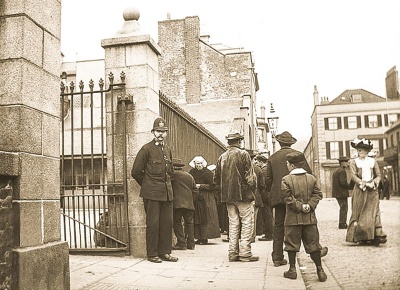 The reason for this gathering outside the gates of the former cattle market in Minden Place, and the presence of a policeman, are not known
 -
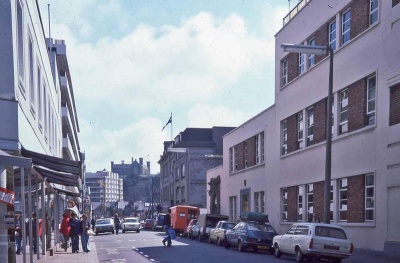 Telephone House, on the right, was gradually extended eastwards down the street
 -
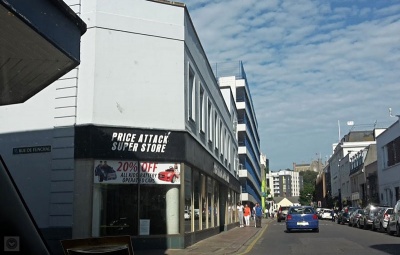 The furniture store on the corner with Rue du Funchal, once Corbins, had several owners and at least two rebuilds, before it was again demolished and rebuilt in the 2010s
 -
-
-


Businesses
-
 1925
1925 -
-
-
-
-
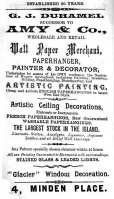 G J Duhamel took over the wall paper business of Amy and Co at 4 Minden Place
 -
 1905
1905 -
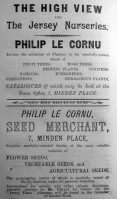 1905
1905 -
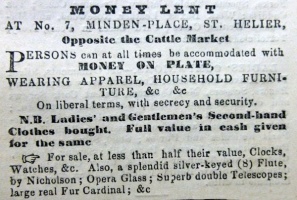 1852
1852 -
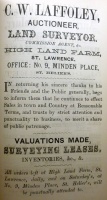 1886
1886 -
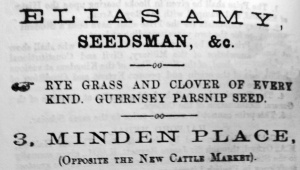 1866
1866 -
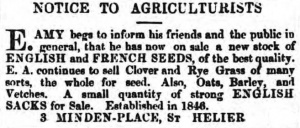 1857
1857 -
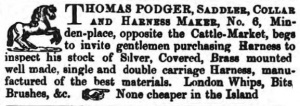 1859
1859 -
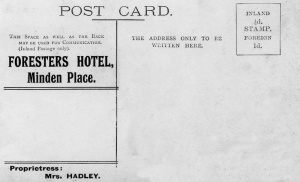 The Foresters Hotel was run by Arthur Hadley from the 1880s, and then by his widow Elizabeth until the 1920s.
 -
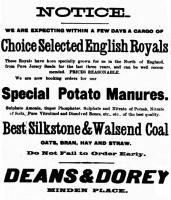 1899 Evening Post advert
 -
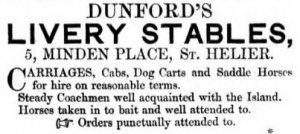 1859
1859 -
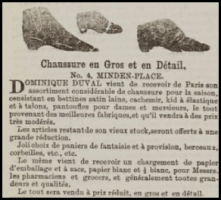 Dominique Duval's shoe business was at 4 Minden Place in 1874, as shown in this advert in Chronique de Jersey
 -
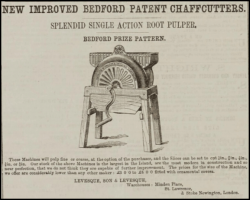 Levesque and son sold 'new and improved chaff cutters' at their Minden Place shop in 1874
 -
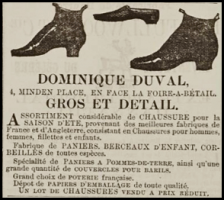 Dominique Duval was at No 4 in 1880