Picture gallery of Jersey shipbuilding
From Jerripedia
Jump to navigationJump to search

Jersey shipbuilding gallery

West Park today is dominated by traffic. Sandwiched between the Esplanade on one side - the main gateway to St Helier from the west - and St Aubin's Road and Victoria Avenue on the other, carrying thousands of vehicles a day in either direction, it is undoubtedly the island's busiest crossroads. A century and a half ago things were very different, as this painting which had the place of honour on the cover of the special bulletin published to mark the centenary of La Société Jersiaise in 1973, shows so vividly. Painted by Felix Benoist in 1870, according to a note in the bulletin, the painting shows the area in much greater detail than any of the photographs which survive from that era. The view is from the summit of westmount, where a Victorian family is shown enjoying the outlook. Below them horses graze among rocky outcrops, long since levelled . But it is the scene along the coast which is most fascinating. No sea wall has yet been built, and a large shipyard occupies the shoreline on the right, smoke belching out of its chimney. There are further similar chimneys to the left, one standing next to the site now occupied by the Grand Hotel, which would not appear for another two decades. Benoist shows clearly how the town of St Helier has already spread to what remains its western boundary to this day, the Triangle Park and People's Park providing a valuable open space. This painting, which was in the collection of John Blench at the time of the centenary, is one of the best overall views of the island's capital town to survive from Victorian times. But there is something missing from the picture which suggests that the date of 1870 might not be correct. A year earlier the States had agreed to the establishment of Jersey's first railway, from the Weighbridge to St Aubin. The lines were laid and test runs were taking place in September of the following year. So when did Benoist undertake this work? It seems inconceivable that he would have ignored the railway line when his painting includes so much other detail, so either it was painted in 1870 from sketches made before the track was laid, or the date is incorrect. Update, October 2017: This picture was added to the site in 2011, and to this page in March 2016. Further research has now revealed that it is not an original colour painting, but a coloured version of a lithograph, published in Album de L'Ile de Jersey by Felix Benoist in 1870. It is, therefore, highly likely that Benoist's original drawing was made on a visit to Jersey several months before publication, so it could easily have been made before the railway track was approved and laid


One of the best known of the ships built in Jersey - the 1861 clipper Percy Douglas on the stocks at Beaumont ...

... and under full sail. The ship was named after Jersey's Lieut-Governor, Sir Robert Percy Douglas, who took up office the year before she was launched. Although the Percy Douglas was built at Beaumont, by Edward Allen, she was registered in Liverpool to Thomas Hayley, to whom the ship was awarded when Edward Allen went bankrupt. Registered as 781 tons and launched on 8 August 1861, the Percy Douglas worked the China routes until 14 December 1871 when she was finally wrecked after running aground off Rangoon, India. A special £1 Jersey coin was issued in 1991 with the ship on the obverse.
Click on any image to see a larger version
-
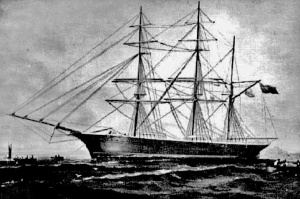 A drawing of Gladiateur at sea
 -
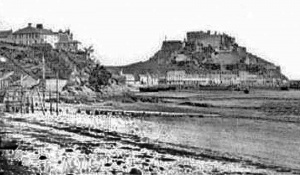 Gorey shipbuilding area in 1876 ...
 -
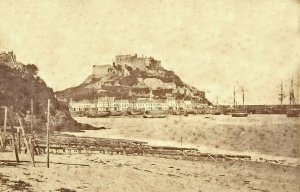 ... and a better photograph of where the ships were built and launched
 -
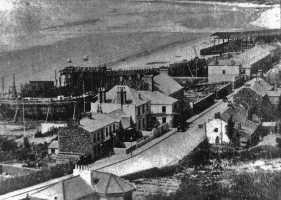 Deslande's shipyard at First Tower in 1870
 -
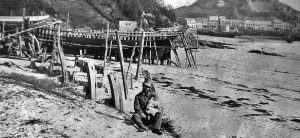 Shipyards at Gorey
 -
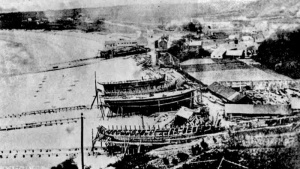 Gorey
Gorey -
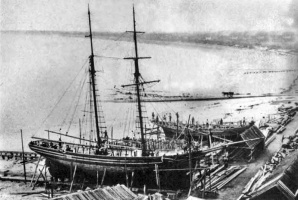 Gorey's ship-building yards in about 1875. A photograph by Philip Morel Laurens of a schooner on the stocks in the shipyard of Philippe Bellot
 -
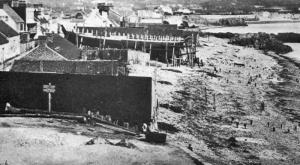 Havre des Pas
 -
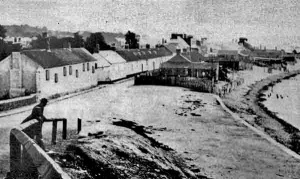 Havre des Pas
 -
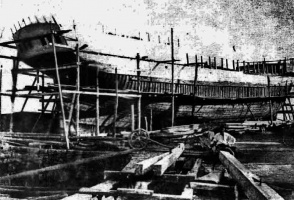 A ship destined for the North Atlantic routes on the stocks at Clarke's West Park yard
 -
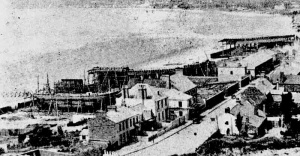 First Tower
 -
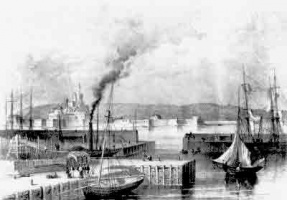 In this 19th century picture of St Helier Harbour a ship can just be seen under construction in the foreground on the left
 -
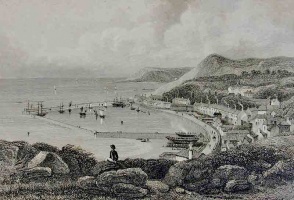 Shipyards at St Aubin
 -
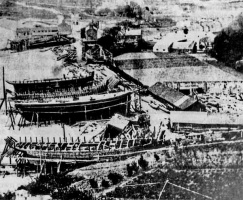 Ships under construction at Gorey, not St Aubin's Bay, as is sometimes suggested for this picture
 -
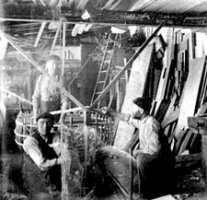 Philip Le Huquet's boat-building shed at Gorey


.jpg)
.jpg)


A superb quality photograph of the shipyards at Havre des Pas, showing a large ship under construction and the channels alongside used to launch ships down the beach, The picture was taken by E Ogier in about 1875, when the industry was in terminal decline
-
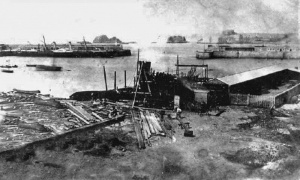 Shipyard at South Pier in St Helier Harbour
 -
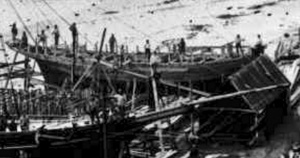 Bellot's Yard in the 1870s
 -
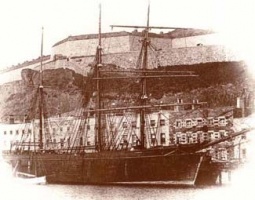 Gladiator, a 427-ton barque, built by Le Vesconte in 1866
 -
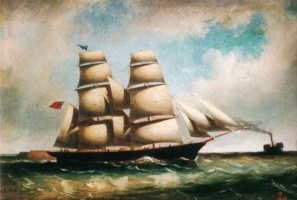 Escape, a brig built by J and T Le Huquet at St Catherine, painted by Philip Ouless in 1866
 -
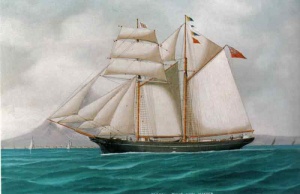 Flying Foam, built at St Catherine in 1879 by J and T Le Huquet. The 160-ton schooner was wrecked in 1937
 -
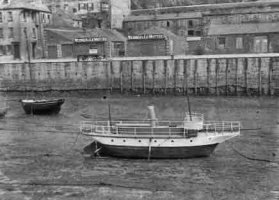 Seagull, the first steel ship built in Jersey. She was launched from the beach at Bel Royal in September 1908 and fitted out very slowly by her amateur builders in the Harbour during 1909. She was classified as a steam yacht.
 -
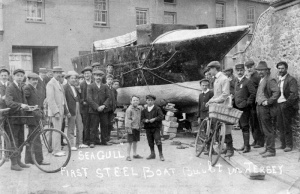 Seagull in the St Helier yard where she was built
 -
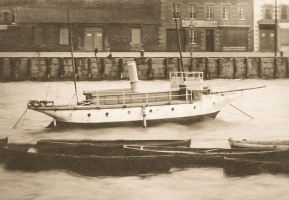 Seagull afloat
 -
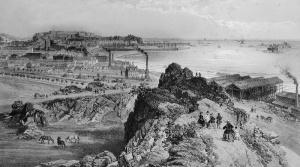 West Park shipyard viewed from Westmount
 -
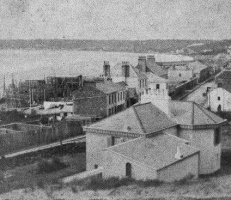 St Aubin's Road at First Tower showing shipyards on the left. Photograph by William Slater
 -
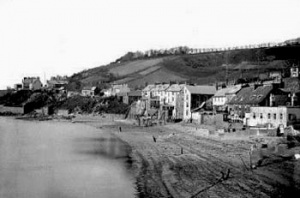 The shipyards at Gorey
 -
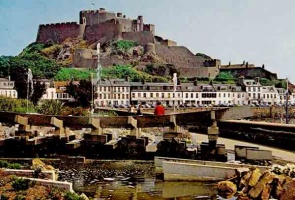 A granite ship's keel remembers the day when Gorey was one of the British Isles' main shipbuilding centres ....
 -
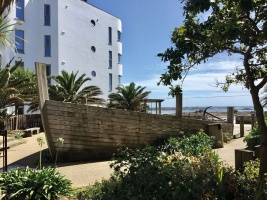 ... and a commemorative garden at Havre des Pas on the site of Allix's shipyard
 -
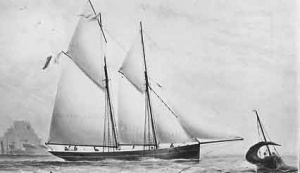 When launched on 2 April 1852 Eclipse was Jersey's largest cutter, at 112 tons. She was built for T de Faye and Co for the French trade at Black Rock Yard by F C Clarke. This picture is from 1879, when Capt Adolphus Bataille was in command of the vessel.
 -
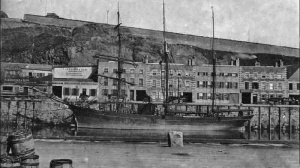 Gladiator, or more properly Gladiateur, was built by Le Vesconte. She was a 427-ton barque, owned by Fr Carrel and Co from 1866 to 1874. She was broken up in 1916, ten years after transferring to Yarmouth as a coal hulk.
 -
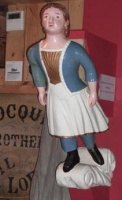 This figurehead from the Prospero is a symbol of Jersey's shipbuilding heritage. When she was carved Jersey was the fourth largest shipbuilding centre in the British Isles. The Prospero spent most of her time trading in China and Australia but in 1864 Captain Malzard took a cargo 2,500 miles up the Amazon to Iquitos, Peru. Malzard finally sold the Prospero to Joseph Storm of Adelaide in late 1869


A ship under construction at Clarke's yard at West Park

Gorey in the 1870s