Proclamation of sovereigns
Proclamations

Jersey has always been intensely proud of its direct association with the Kings and Queens of England, and whenever a sovereign dies and a successor accedes to the throne a ceremony is held in the Royal Square to proclaim the new monarch

Charles II
The most famous proclamation was that of King Charles II in 1649. Following the execution of his father, Charles I, the Parliamentary Government made it clear that there were to be no proclamations. Jersey's States, staunchly Royalist at the time, ignored the warning and went ahead and proclaimed Charles II King.
George II
King George II was proclaimed on 22 June 1727. The Proclamation Procession assembled near the Town Church between 11 o'clock and noon and then marched to the Royal Square. A company of the Militia Cavalry led the way, followed by a detachment of the Fusiliers of the Town Regiment; the Officers of the English garrison led by their commanding officer, Captain John Sykes; the Advocates, the Viscount carrying the Proclamation, the Law Officers, Denonciateur Dumaresq carrying the Royal Mace, flanked on both sides by a guard of halberdiers; the Lieut-Governor Col Magnus Kempenfelt; Lieut-Bailiff Joshua Pipon, the twelve Jurats, twelve Rectors and twelve Constables; a number of gentlement of the island and a company of the Town Regiment and a detachment of the Militia Cavalry bringing up the rear.
The procession took a circuitous route to the Market Square (not yet renamed the Royal Square) proceeding via Snow Hill, Queen Street and King Street to Charing Cross, where the old prison straddled the road, Broad Street and what is now Library Place, to enter the square next to the Town Church before drawing up in front of a pedestal where the statue of George II now stands.
The Viscount mounted the pedestal and read the Proclamation before calling out Vive Le Roy, Georges, after which there were three cheers for the new King and a salute was fired from Elizabeth Castle as well as three volleys by the Cavalry and Fusiliers.
Elizabeth II
The proclamation of Queen Elizabeth II took place on 9 February 1952. There were no serving soldiers to form the procession so it was made up of detachments of the Jersey Sea Cadet Corps, the Victoria College Combined Cadet Force, the Militia Band and a detachment of the British Legion
Charles III
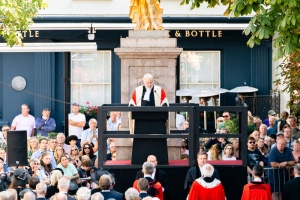
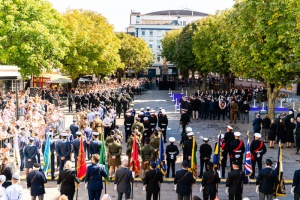
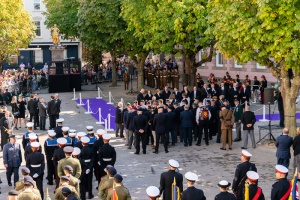
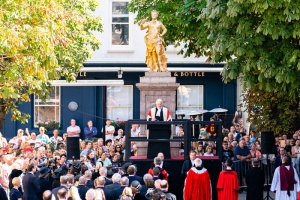
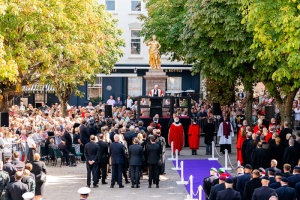
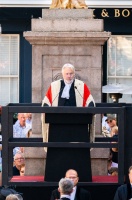
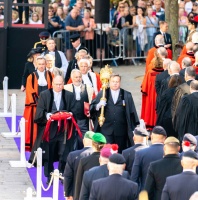
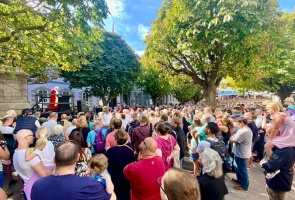
The proclamation of King Charles was held on Sunday 11 September 2022. The ceremony seems to have parted with tradition because the proclamation was read by the Bailiff, Sir Timothy Le Cocq, whereas earlier proclamations were read by the Viscount.
Gallery
Click on any image to see a full-size version
-
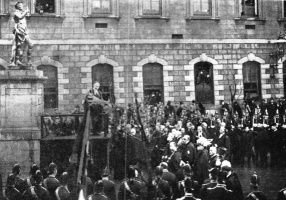 Edward VII, 1901
 -
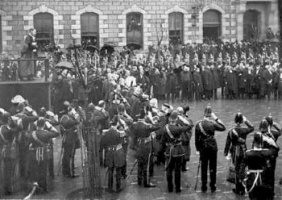 Edward VII
 -
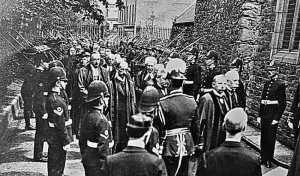 These four photographs were offered for sale in 2019 associated with a medal ceremony in 1910 ....
 -
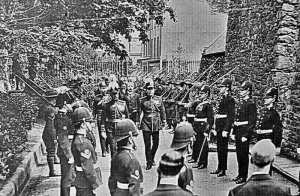 ... but we believe that they show scenes from the ceremonies at the Town Church and ...
 -
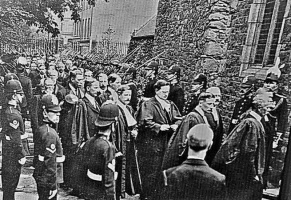 ... in the Royal Square for the proclamation of George V ...
 -
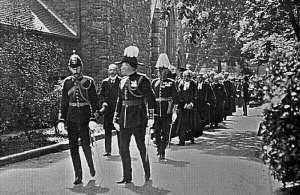 ... and that they are linked to other pictures below which were already on this page
 -
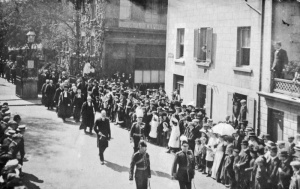 Procession of dignitaries from the Town Church on Proclamation Day
 -
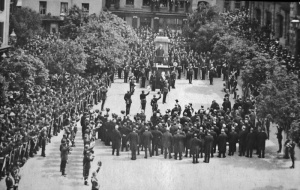 The Proclamation celebrations in the Royal Square
 -
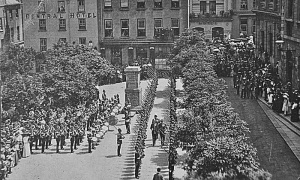 Captioned 'King's birthday parade in 1910', this is probably also part of the proclamation ceremonies
 -
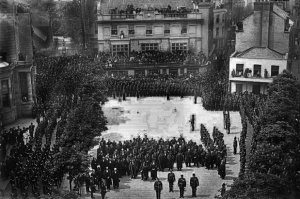 George V, 1910
 -
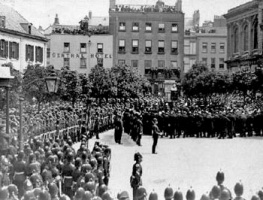 GeorgeV
 -
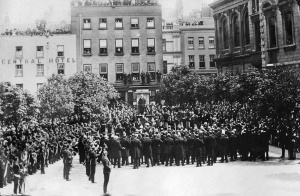 George V
 -
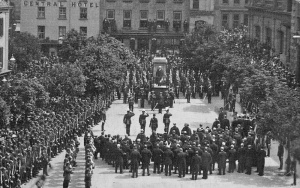 George V
 -
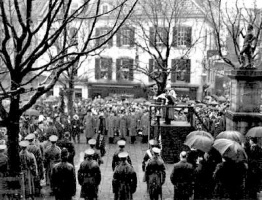 Edward VIII, 1936
 -
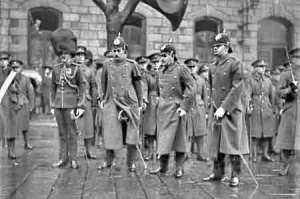 Top brass at the proclamation of Edward VIII
 -
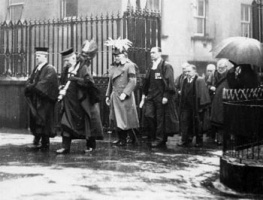 The official procession leaves the Town Church before the Proclamation of George VI
 -
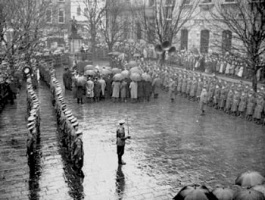 GeorgeVI, 1936
 -
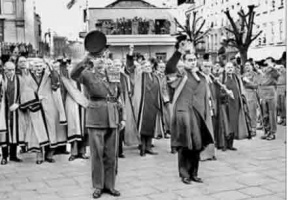 Queen Elizabeth II, 1952
 -
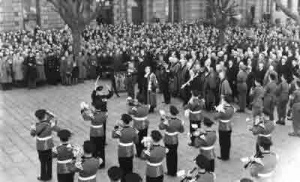 Elizabeth II
 -
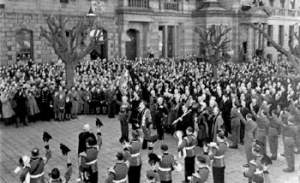 Elizabeth II
 -
 Charles III, 2022
 -
 Charles III, 2022
 -
 Charles III, 2022
 -
 Charles III, 2022
 -
 Charles III, 2022
 -
 Charles III, 2022
 -
 Charles III, 2022
 -
 Charles III, 2022