St Paul's

St Paul's Church

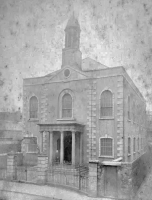
The original St Paul's Church
St Paul's Church, New Street, St Helier is an independent Anglican church with an evangelical emphasis.
Building
The church was built in 1891 and stands on the site of another church with the same name, built in 1815, opened in 1817 and demolished in 1889.
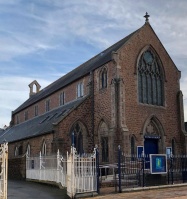
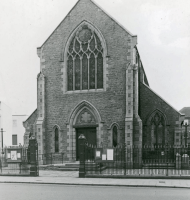
The current building is in the Gothic style and constructed of pink and grey granite. There is an open belfry in the east end.
The first church had to be demolished because its foundations, built on marshy ground, were inadequate and the church was condemned as unsafe when the foundations began to collapse unevenly.
History
From the church website
St Paul’s has a long and political history.
By 1813, the town’s population was increasing so rapidly that the Town Church became too small to accommodate the growing congregations. So a considerable number of merchants and principal tradesmen of the town set about raising a subscription for the purpose of purchasing ground and building a Protestant Chapel.
For various reasons it took until October 1817 for the Order in Council to be placed on the rolls of the Royal Court in Jersey and for permission to be given.
Building the new chapel
One of the gardens bordering Chemin Neuf (New Street) was eventually chosen for the site of the new chapel. Twenty four of St Helier’s wealthy parishioners bought thirty shares between them to cover the cost of the building and elected Aaron de Ste Croix to be treasurer of the chapel building fund.
The total cost came to about £7,000, but most of this cost was met by the sale of the pews – as it was then the custom for families to buy the pew where they sat each Sunday for their exclusive use. This brought in £6,834.
The first service in the chapel in French, which was still Jersey’s official language, was on Sunday 14 December 1817. No fewer than 1,200 attended to hear the Rev Francois Ricard, the Rector of St Ouen, preach the sermon of consecration.

Finding a Minister
Then came a problem for the chapel founders: to find a resident French-speaking minister. They finally managed to secure the services of the Rev P E Froissard from the Université de France. Unfortunately, as subsequent events were to prove, the chapel founders omitted to ratify the Rev Froissard’s appointment by obtaining the approval of the Bishop of Winchester, in whose Diocese Jersey is.
Despite lengthy court proceedings and after the majority of Jurats in the Royal Court on 18 November 1819 found in favour of the French minister, in March 1821 the Jersey Ecclesiastical Court at Carlton House in London had Jersey’s Royal Court inhibitions “rescinded and annulled”. St Paul’s Chapel was closed in May of that year.
The good news
In February 1822, however, the Chronique de Jersey was able to give the good news: “After having been subjected for several years to a period of underhand dealing of a most sad and unfair character, the proprietors of St Paul’s must feel a deep sense of gratitude in being able to reopen this fine building erected at their own expense.” The opening service was in English and attended by the Lieut-Governor, Sir Colin Halkett.
Innovations
Other innovations were:
- The start, in 1843, of a Sunday school
- The opening of St Paul’s Elementary School in Union Street
- The formation in 1868, specifically for the education of poor children, of the St Paul’s School Association
New St Paul’s
In 1889 surveyors found St Paul’s Chapel to be structurally unsafe, so services could no longer be held there. The site had originally been a marsh and the Chapel’s foundations, after seventy years, had sunk unevenly into it.
Three men, Jurat Peter Briand, Lieut-Colonel W C Gray and James Bertram, then took it upon themselves to rebuild St Paul’s on the same site and were greatly supported in their venture by Dean George Orange Balleine, who also arranged financial assistance.
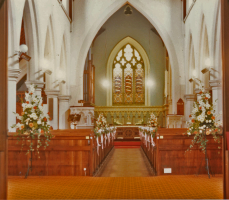
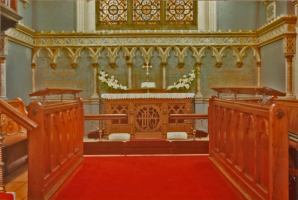
Initially, the plan was for a wooden church cased with corrugated iron. Fortunately sufficient funds were made available for a stone building to be erected, with Adolphus Curry as the architect. The Gothic style church was built using Jersey granite from the La Moye area in the parish of St Brelade, with the interior fittings of elegant simplicity combined with comfort. They included a small gallery for 50 people, an oak floor, pitch pine pews and screens made by a Mr Curzner of St Helier, a roof in stained and oiled deal and two stained glass windows, which were gifts from Madame Millais and Lieutenant Colonel Gray.
At first the pulpit, holy table, reading desk, lectern and organ came from the original chapel, but memorial replacements were soon to be given by members of the congregation. Remarkably, the building took only ten months and one week to complete. On Tuesday 29 September 1891 Dean Balleine preached the sermon at the opening service.
The first issue of St Paul’s Church Magazine came out in January 1899. The most memorable year for the church, however, was 1912. Not only was the building debt wiped out and £2,000 raised towards an endowment fund in honour of the occasion, but St Paul’s was at last consecrated by the Bishop of Winchester.

German Occupation
During the Occupation, St Paul’s choir had three choirmasters. The first was Charles Journeaux, then Ronald Le Marinel, and finally Eric Le Conte. The choir had a problem because many of its young boys had been evacuated from Jersey. The important decision was taken to invite the ladies from the parish to augment the choir. Throughout the Occupation services, complete with hymns, canticles, psalms and even a simple anthem on festive occasions, were regularly held on Sunday mornings.
Interior changes
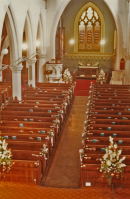
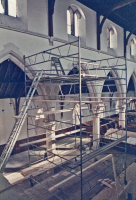
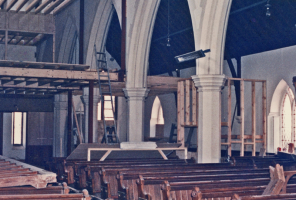
In 1985 it was decided to make major alterations to both the ground and first floor of the church. By extending the gallery by 25 feet, a new area was created, so that upstairs there is now a large Upper Room, a smaller meeting room, a kitchen and toilets. Downstairs is the main Fellowship Area, as well as a library, a large kitchen and further toilets, including facilities for the disabled.

Historic environment record
The description of the church on the HER website
A good quality example of late 19th century Gothic revival church, designed by Jersey architect Adolphus Curry.
The medieval parish churches remained the only places of public worship in Jersey from the Reformation until the building of St Aubin's Chapel in 1736 and the first St Paul's Church in 1815 - a plain Georgian building with a tetrastyle Doric portico and a domed bellcote.
These were built at the instigation of the prospective congregations and it was not until 1835 that the Church of England authorities provided new buildings.
The original 1815 St Paul's Church was built as a proprietary chapel, in response to political and demographic pressures at the beginning of the 19th century. The then Rector of St Helier was a fervent supporter of the Laurel party, whereas many of his parishioners were committed to the Rose cause and objected to his political sermons.
The other contributing factor to the construction of only the second church in St Helier was the rapidly expanding town population, with too many people to fit into the Town Church for a service.
Sale of pews
St Paul's was built after a long wrangle in the Royal Court and was funded almost exclusively through the purchase of pews. It was customary for families to own their own pews for regular use. The Rector, Dean Dupré blocked its use until his death in 1823.

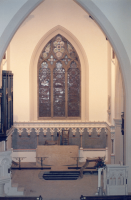
The church was built on marshland and the foundations soon began to sink. The building was eventually declared structurally unsound and demolished in 1882. The present church was completed in 1891 to designs by Adolphus Curry in late 19th century Gothic revival style, and consecrated in 1912. Records show that the original gallery, oak floor, pitch pine pews and screens were made by Mr Curzner of St Helier, and the two stained glass windows - to the east and west fronts - were gifts from Madame Millais and Lieutenant Colonel Gray. The gallery and entrance lobby were much altered from 1985 onwards.
The church is built of pink La Moye granite, with a gabled slate roof. The nave and aisles are of seven bays with buttresses and angle buttresses. There are large west and east windows in the Decorated style. The main west door is square and set within an arch with blind tracery above - flanked by narrow lancets with drip mouldings.
The aisle windows have simple Y tracery and the clerestory windows are paired lancets. The two-bay sanctuary has a roof at a lower level and at the junction between nave and sanctuary roofs there is a bell cote. Above the south door is an inscription 'St Pauls, built MDCCCXV rebuilt MDCCCXCI'.
To the front of the church are a set of decorative iron railings and gates, which continue beyond the church boundary to a pedestrian throughway to the north. The frontage includes an unusual pair of cast iron gaslight stands.
The modified entrance steps and access ramp to the main door was added in 2000, and in 2003 an extension was added to the south-east. The interior is relatively plain but has a unity of design - the same patterns and motifs being carried in the stained glass in the west and east windows and in some of the original interior fittings and furnishings.
Further articles
External links
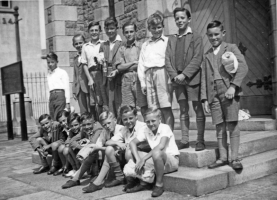
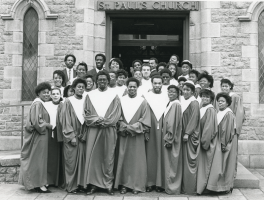
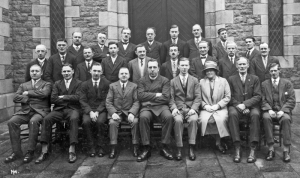
Gallery

-
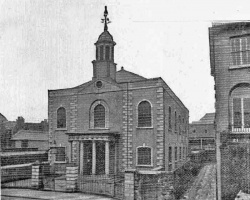 The old church
 -
-
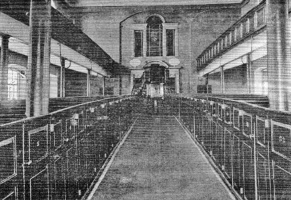 Inside the old church
 -
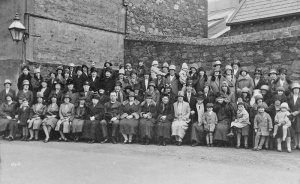 Mothers' group meeting in 1930
 -
-
-
-
-
-
-
-
 1984
1984 -
 1984
1984 -
 1984
1984 -
 1984
1984 -
 1984
1984 -
 1984
1984


-
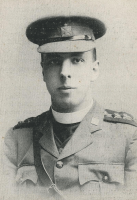 Rev Albert Simmons, 1920-30s
 -
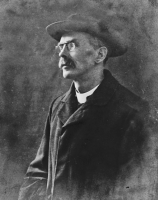 Rev Augustus Poynder
 -
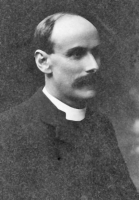 Rev C D Hindle
 -
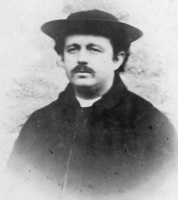 Rev Ernest Bulstrode Pryce, 1890s
 -
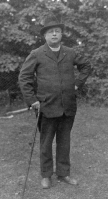 Rev Ernest Bulstrode Pryce, 1890s
 -
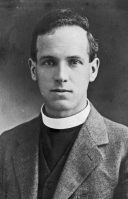 Rev Roger Gregory, 1930-40s
 -
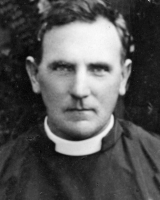 Rev S Wheeler, 1949-1953
 -
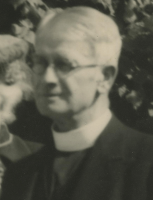 Rev Sydney Bazalgette, 1940s
 -
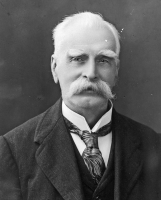 Charles Barnabas Buttfield, trustee in 1924
 -
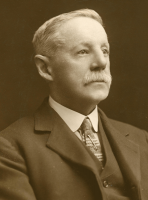 James Bertram, trustee in 1890-1900s
 -
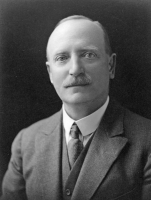 Oswald Belk, trustee in 1910s
 -
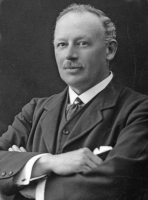 Thomas Frank Pirouet, trustee in 1901


StPaul%27s1890s.png)