A special album of Great War photographs

A special album of Great War Photographs

An album of photographs revealing previously unknown aspects of life in Jersey during the Great War was given to the Photographic Archive of La Société Jersiaise in 2014. It is described in these terms on the Archive's Facebook page: The First World War (1914-1918) generated more photographs than all previous conflicts put together. However, until recently Jersey photographic archives contained relatively few records of the profound impact of the First World War on islanders’ lives. With the First World War now beyond living memory, photographs are vital as objects with the power to transport us back in time to witness the experiences of our forebears. Upon the centenary, photographs have emerged from attics, albums and shoeboxes to reveal the faces and tell the stories of islanders during the Great War. One special album donated to the Société Jersiaise in 2014, in the words of its compiler John Edward Coombs, and Gordon Owen his late son, contains 208 'photos that each and all speak for themselves'. Largely unseen until 2014, the album documents an island community from 1914-1918 which was forever changed by war.
The album first appeared online in 2018, when we chose a selection of these photographs for this page to give them a wider audience. In 2022 the album was given a prominent position in the Societe's revamped website, and because of the unique perspective it presents of the impact of the Great War on island life, we decided to enlarge this gallery in 2023 to include images of each page, and enlarged and digitally enhanced copies of a larger selection of the most important pictures. Our thanks to Jersey's Great War historian Ian Ronayne for providing carefully researched captions to the pictures


Click on any of the page imafges below, and the thumbnails of individual pictures, so see them at full size
Page images


Individual photographs
The album was collated largely in chronological sequence, from the outbreak of war and recruitment of local volunteers, through the creation and departure to war of the Jersey Overseas Contingent, formed from members of the Royal Militia Island of Jersey, to eventual peace celebrations. We have tried to follow that sequence, grouping the photographs under appropriate subject headings. However, the album is slightly confusing because there appears to be an overlap in the early pages between the recruitment of individual civilian volunteers in the very early days of the war in 1914, the recruitment of individual volunteers from the Militia, the recruitment of civilian conscripts, and the eventual recruitment of the militiamen who made up the Contingent.
When war broke out Jersey was heavily defended but by late 1914 it was clear that there was no threat to the island. Some 18 months after the start of the war the United Kingdom government called on Jersey and Guernsey to in introduce compulsory military service for all men between 18 and 41. It was not until February 1917 that the Jersey States passed the Military Service Act and the Royal Militia Island of Jersey was suspended for the remainder of the war. Members of the Militia who had not already signed up voluntarily, then decided to form a contingent to go off to fight in the war. By February 1915 an infantry company of 230 officers and men was ready to embark, later joined by another 96.
Regular soldiers leave
Men of the South Staffordshire regiment who had been training in the island depart
-
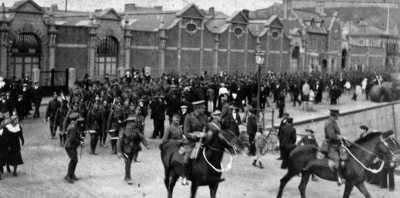 Men of the South Stafford Regiment leave the Island in June 1915. Part of the unit’s role in Jersey was training soldiers for the regiments active service battalions in France, Belgium and elsewhere.
 -
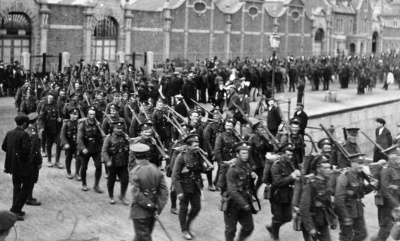 Another image of trained South Staffordshire Regiment men leaving in June 1915.
 -
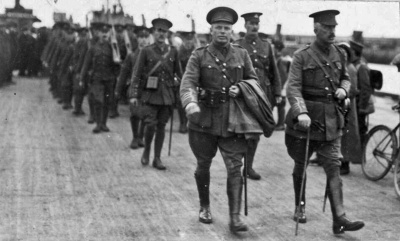 Arrival of the South Staffordshire Regiment – led by Lieutenant Colonel Edward Bulwer, the regiment’s 4th Battalion arrived without fuss or fanfare on 9 August 1914 to replace the Island’s army garrison, then preparing to depart for the front in France.
 -
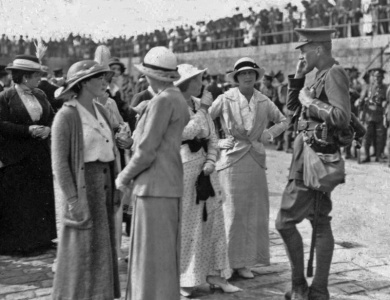 An officer of the 1st Battalion Devonshire Regiment converses with civilians at St Helier Harbour on 21 August 1914, the date the unit left for active service in France. The battalion had been present as Jersey’s regular army garrison since 1911 and developed a close relationship with Islanders.
 -


Raising the Jersey Contingent

-
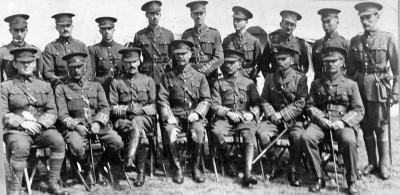 The officers of 3rd (Town) Battalion Jersey Militia pose for a photograph in August 1914, soon after mobilisation for the defence of Jersey. The battalion’s commanding officer, Colonel G.M.McKenzie, is sitting in the centre of the bottom row – he resigned from the Militia in December 1914 to join the regular army.
 -
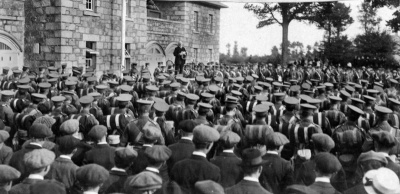 Assembled Militiamen and some civilians (possibly off-duty Militiamen) gathered at Grouville Arsenal to hear an appeal to volunteer for overseas service made by the Viscount of Jersey in October 1915. The event was part of an Island-wide campaign organised in support of Britain’s Derby Scheme - launched in the autumn of 1915 with the aim of encouraging a voluntary commitment to join-up as a last step before introducing compulsory military service.
 -
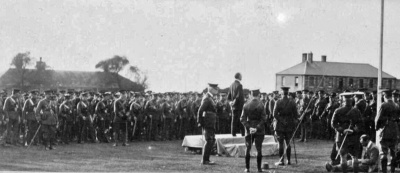 The Bailiff, William Vernon, appeals for volunteers from the Militia in October 1915 at St Peter’s Barracks while the Lieutenant Governor and other senior officers look on. ‘Grand Recruiting Rallies’ such as this were taking place across the Island at the time. . . with only limited success.
 -
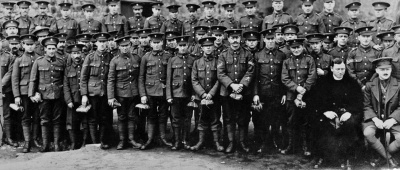 More 3rd (Town) Battalion members pose in February 1915 with members of the YMCA send-off committee after receiving their send-off parcels at the temporary barracks established in the Canning Factory at Grève d’Azette. They would leave for training in southern Ireland a few days later.
 -
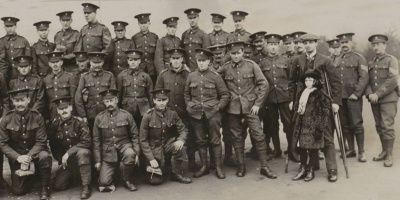 More 3rd (Town) Battalion members pose for the camera after receiving their YMCA send-off parcels in February 1915. They would leave for training in southern Ireland a few days later.
 -
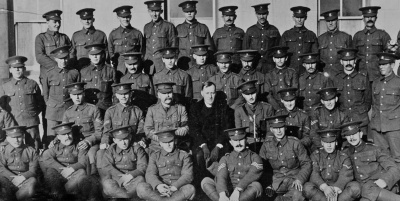 Jersey Contingent volunteers from 2nd (East) Battalion gather for a photo with Reverend D.D. Love who presented them with gifts from the YMCA committee at the end of February 1915. They are assembled at St Martin’s School, which had been taken over as battalion HQ at the outbreak of war. The Contingent’s commanding officer Lieutenant Colonel Walter Stocker is sitting on the reverend’s right, while second-in-command Captain George Johnson is probably the officer seated on his left. Captain Johnson has the sad distinction of being the Contingent’s first death in action – killed by an enemy shell near Vermelles on 1 April 1916.
 -
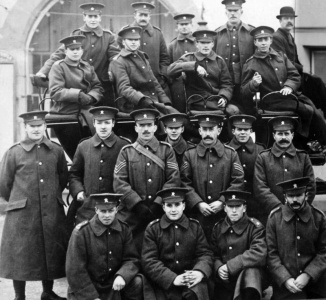 Contingent members from the 1st (West) Battalion assembled just before departing the Island at the start of March 1915.
 -
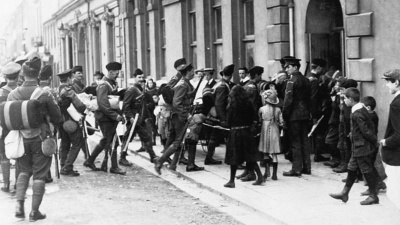 Recently mobilised militiamen of the 3rd (Town) Battalion enter newly requisitioned billets at New Street School in St Helier as curious children watch on in July or early August 1914.
 -
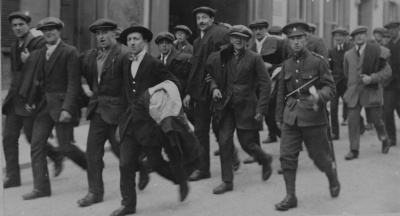 These recruits would soon be marching in step ...
 -
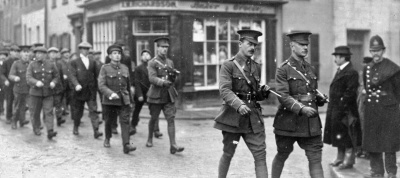 Two smart lieutenants lead a column of South Staffordshire men through St Helier – they are a mix of new recruits still in their civilian clothes and probably recalled reservists who have retained their army uniform.
 -
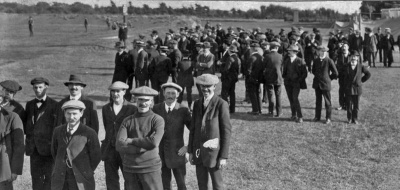 This image most likely shows recruits for the Militia’s 3rd (Town) Battalion being assembled and paraded at F.B. Fields in September 1914. Efforts were made after mobilisation at the outbreak of war to increase the number of troops available for Militia service including forcing numerous men who had avoided their legal duty before the war.
 -
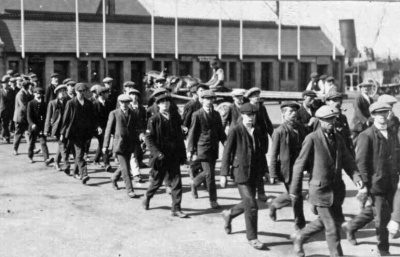 After the Regular British Army garrison left soon after the war’s start, the War Office sent a unit of the South Staffordshire Regiment to Jersey. The 4th (Special Reserve) Battalion was a training unit, preparing new soldiers for despatch as reinforcements for the regiment’s active service battalions. Soon it was receiving hundreds of recruits, men raised through Lord Kitchener’s ‘Your Country Needs You’ campaign. This image shows a batch arriving on the New North Quay, probably in the autumn of 1914, without uniforms or equipment.


Training

-
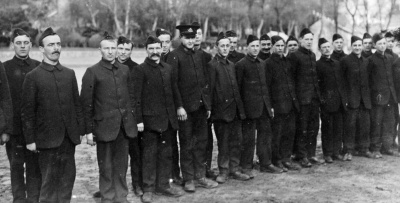 A line up of the latest recruits who have arrived from the UK in December 1914 for training with the South Staffordshire Regiment in Jersey: They appear to be parading on People’s Park, which was opposite regimental accommodation in the Grand Hotel. This had been taken over by the army in September 1914 to cope with a rapidly expanding number of men being trained by the regiment.
 -
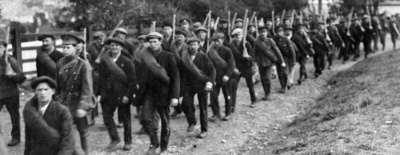 South Staffordshire Regiment in Jersey: recruits on a route march passing through an unidentified location. Most have no uniforms, some have been issued rifles by this time and all have a blanket roll over their shoulders, suggesting they may be sleeping outside that evening.
 -
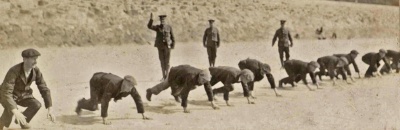 South Staffordshire Regiment in Jersey: recruits receiving physical activity training on West Park beach.
 -
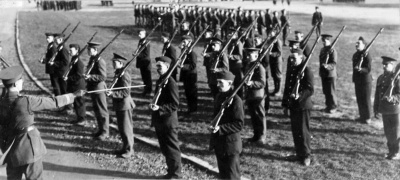 The Principal of Victoria College and commanding officer of the school’s Cadet Corps Mr Arthur Worrall engaged in drilling a platoon of South Staffordshire Regiment recruits on People’s Park in January 1915.
 -
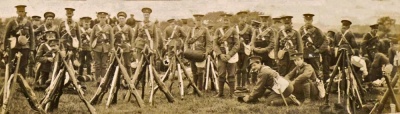 Militia mobilisation: members of the 1st (West) Battalion awaiting orders at St Peter’s Arsenal in August 1914.
 -
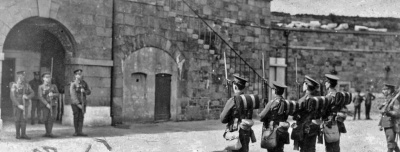 In early May 1915, the Militia’s 3rd (Town) Battalion moved from its temporary barracks in the Canning Factory at Grève d’Azette into Fort Regent following the departure of South Staffordshire Regiment troops. This image from that date shows a changing of the guard at the fort.
 -
 OTC training
 -
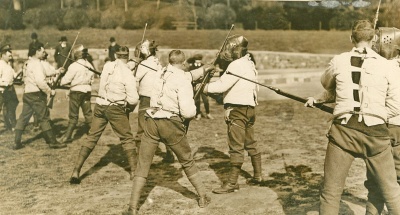 South Staffordshire Regiment in Jersey: recruits carrying out bayonet drill on People's Park.
 -
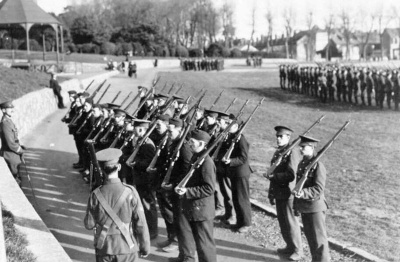 The Principal of Victoria College and commanding officer of the school’s Cadet Corps Mr Arthur Worrall engaged in drilling a platoon of South Staffordshire Regiment recruits on People’s Park in January 1915. By this time two battalions of the regiment were present in the Island: the 4th (Extra Reserve) Battalion and 11th (Reserve) Battalion.


Departure

-
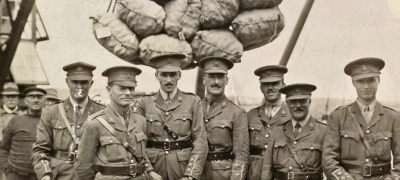 Militia officers at the Harbour
 -
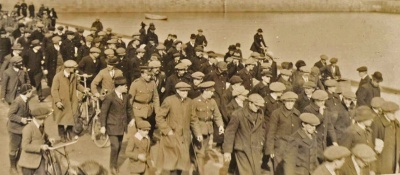 Recruits in civilian clothes march to the Harbour
 -
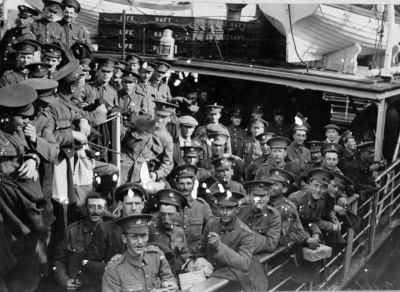
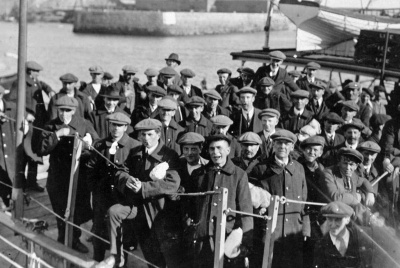 On board and ready to leave
 -
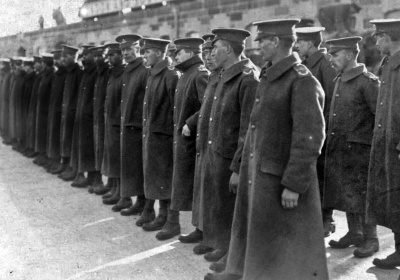 Departing soldiers line up at the Harbour
 -
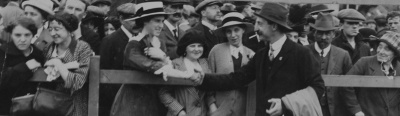 Departure of French military reservists at the start of August 1914 – one man about to leave to rejoin his regiment in France bids farewell to family or friends.
 -
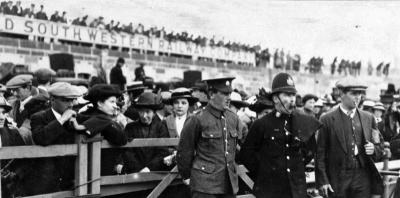 Further scenes of French military reservists departing the Island in August 1914 – the harbour authorities had to erect barricades to hold back crowds of well-wishers who came to say goodbye.
 -
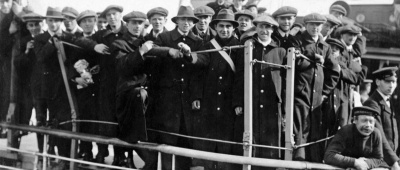 Recruits leaving for training in England
 -
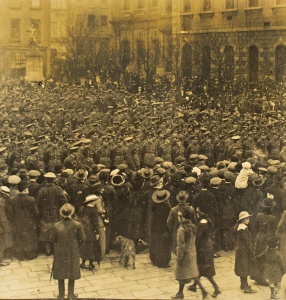 Jersey Contingent members assemble in the Royal Square on 2 March 1915, prior to marching to the harbour at 7.00 am. A large crowd of well-wishers have gathered under rather dreary conditions to bid them farewell and good luck.
 -
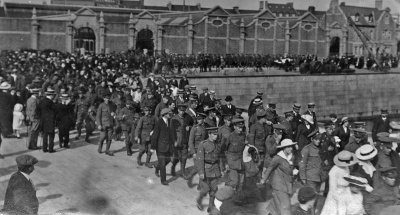 Volunteers march along the Albert Pier


-
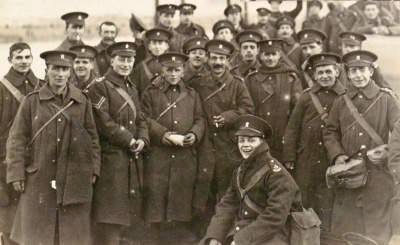 Cheery Contingent members on 2 May 1915, most likely on the New North Quay waiting to board ship. Among those present in this photograph are Rifleman Peter Brisset, standing fifth from left and holding a white package and possibly Rifleman (later Lance Corporal) Harold Battam crouched down at the front.
 -
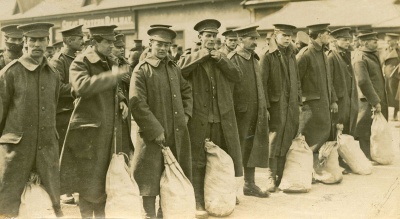 Jersey Contingent members with their kitbags
 -
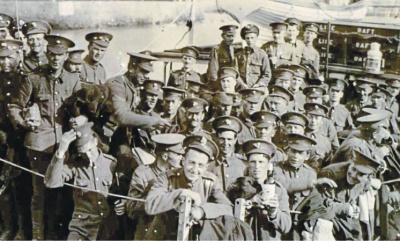 A last farewell from the Ibex deck
 -
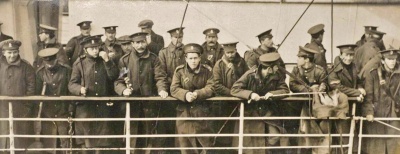 Members of the Jersey Contingent return to Jersey in November 1915 for a short period of leave. Training at Aldershot was complete, and the men were about to embark for France and the front.
 -
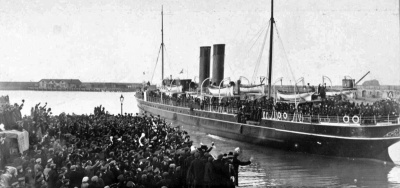 The SS Ibex pulls clear of the New North Quay after embarking the Contingent, bound for Weymouth. She was a Great Western Railways ship, one of several used on the England to Channel Islands route that were later impressed into military service. Always a popular vessel with Islanders, the Ibex returned after the war and remained in local service until 1925.
 -
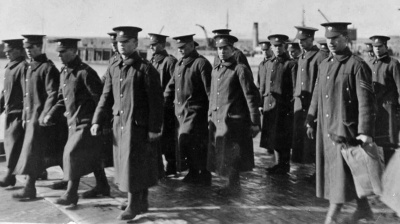 Ready to board
 -
A final parade on the Albert Pier
-
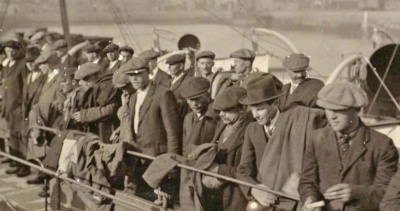 This group left in civilian clothes ...
 -
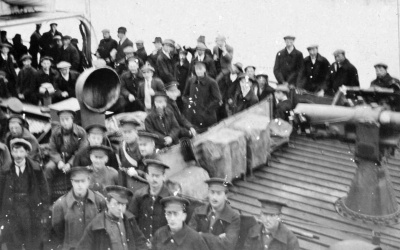 ... and these were in uniform ...
 -
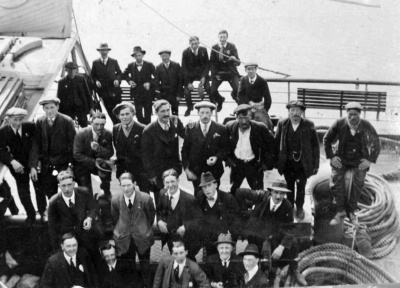 ... civilian clothing
 -
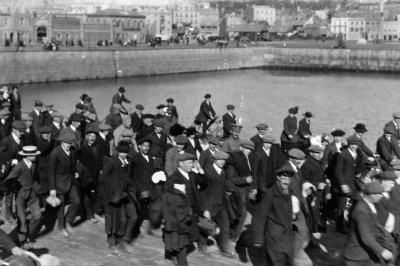 Recruits in civilian clothes march down to the harbour
 -
Some of these uniformed men were accompanied by wives and family
-
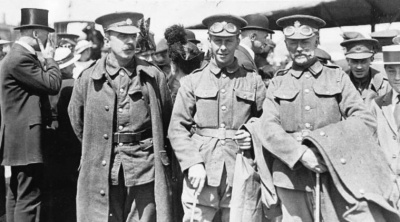 A group from the Army Service Corps photographed in mid-1915. From left to right: Edgar Clements, who appears to have later joined the Royal Engineers, Private Allan Randall from St Helier and H. Hynes.
 -
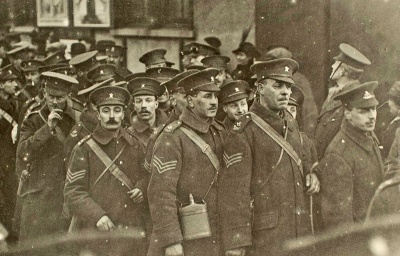 Contingent members, mostly likely on the New North Quay, awaiting their turn to board ship ready for departure from the Island on 2 March 1915.
 -
Cheery Contingent members on 2 May 1915, most likely on the New North Quay waiting to board ship. Among those present in this photograph are Rifleman Peter Brisset, standing fifth from left and holding a white package and possibly Rifleman (later Lance Corporal) Harold Battam crouched down at the front.
-
Group at St Helier Harbour, uniformed but without cap badges – new recruits or mobilised reservists coming to Jersey for training with the South Staffordshire Regiment or trained men departing to join active service battalions at the front?
-
A last farewell from the Ibex deck
-
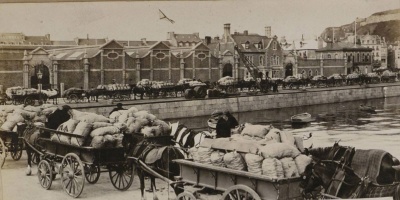 Kitbags transported around the harbour


French residents

-
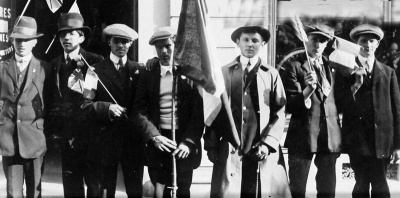 Young Frenchmen report to the French Consul in Library Place in October 1914 prior to leaving the Island. They are from the ‘Classe 1915’, which designated the year they would become liable for military service.
 -
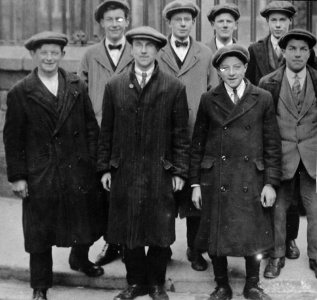 French recruits
 -
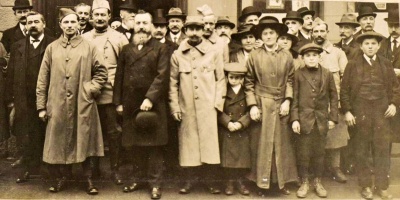 At a ceremony held on New Year’s Day at the French Consulate, Monsieur Jouve, the Consul, awarded a Medaille Militaire to Corporal Jerome Durand of the French 94th Infantry Regiment, standing to the Consul’s right in this picture with his hand in his pocket. Corporal Durand, whose family lived at Hampshire Gardens in Aquila Road, St Helier, had lost his left hand in the war.
 -
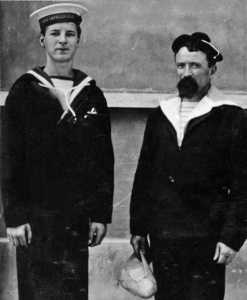 Evidence in August 1916 of the ‘Entente Cordiale’ between Britian and France - on the right is Francois Penn from Jersey who is serving in the Defence Maritime de Cherbourg and with his son Francis then serving at Royal Navy training establishment HMS Impregnable.
 -
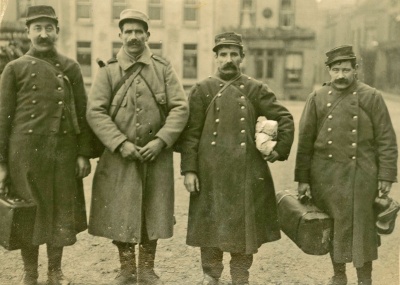 French soldiers arrive in St Helier for a short period of leave in January 1917
 -
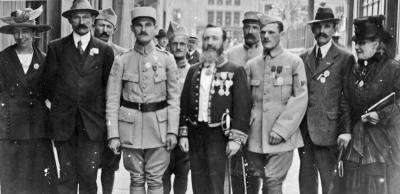 In a ceremony held in the French Consulate in July 1918 Sergeant Bastide receives a medal for bravery – he is outside in this picture standing to the right of Jersey’s French Consul Monsieur Jouve.
 -
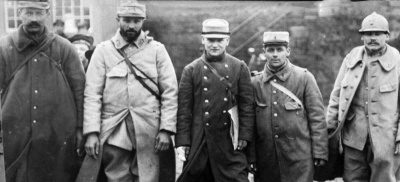 French soldiers on leave
 -
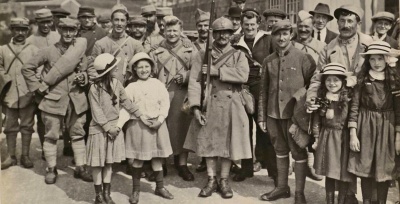 French soldiers arrive on leave in June 1917.
 -
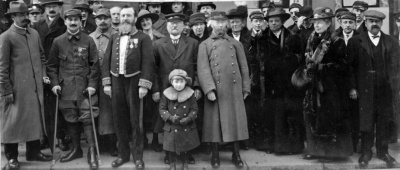 Soldat Raoul Joseph Gabent receives the Croix de Guerre with Silver Star in March 1918 from the French Consul, who noted that Gabent’s father had fought in the Franco-Prussian War.
 -
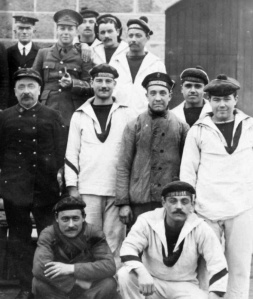 French sailors.
 -
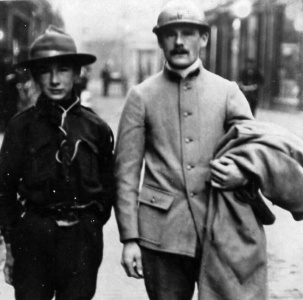 Father and son: French Army soldier and boy scout
 -
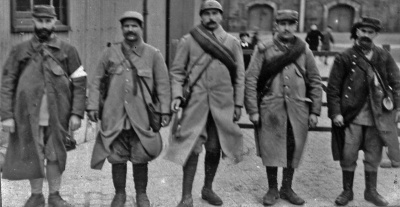 French soldiers arriving on leave in January 1917.
 -
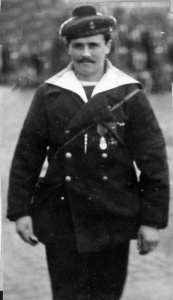 François Talibaut of the French Navy and holder of the Croix de Guerre arrives on leave in April 1917.
 -
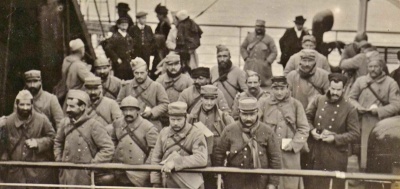 Home from the trenches
 -
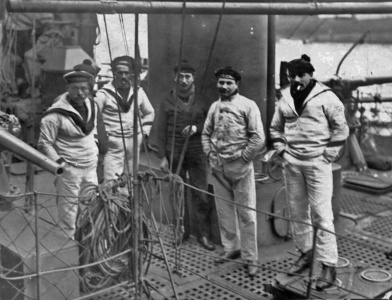 Crew members of a visiting French torpedo boat tied-up alongside the Albert Pier early in 1915. They would have most likely come from a squadron based in Brest that had patrol responsibilities around the Channel Islands.


Prisoners-of-war
-
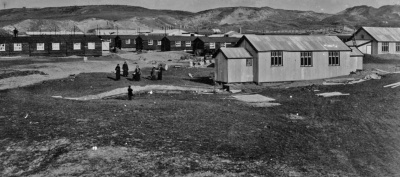 The Lieutenant Governor received instructions to construct a prisoner of war camp in Jersey soon after the war began. Les Blanches Banques in St Ouen’s Bay was chosen as the location, on land already owned by the War Office. This image shows part of the camp in March 1915, the month during which the first prisoners arrived.
 -
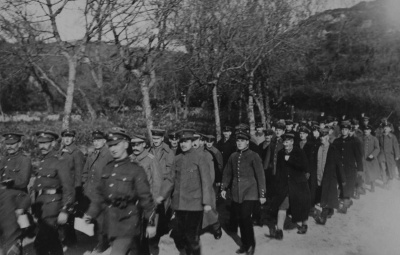 A procession of German prisoners of war marching from their camp in St Ouen’s Bay to St Brelade’s Churchyard in November 1918 to attend the funerals of three comrades.
 -
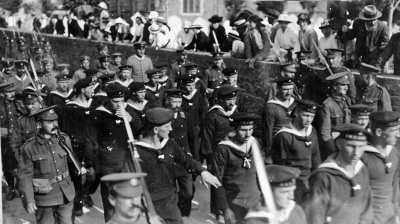 The funeral of German prisoner of war Karl Brundig who died aged 21 on 21 August 1915 following an epileptic fit while being held in the recently opened Blanches Banques POW camp. He burial took place in St Peter’s Churchyard accompanied by a cortege of 50 comrades who were permitted to accompany the coffin from St Peter’s Barracks where it had been resting. The image shows them passing a large crowd of curious local onlookers who gathered for the occasion.
 -
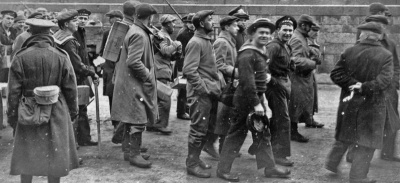
-
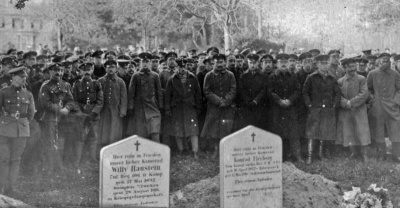 German prisoners of war assembled in November 1918 for the burial of three comrades in St Brelade’s Churchyard.
 -
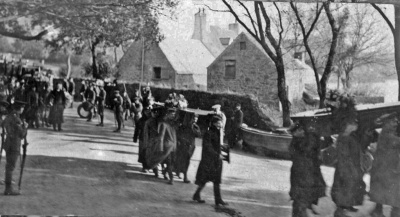 Funeral profession


Island life

-
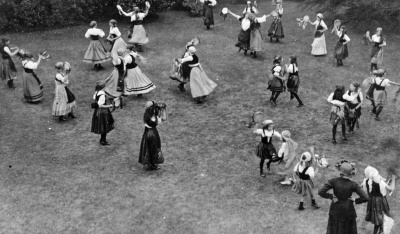 The fête raising funds for Jersey prisoners of war in July 1916 included entertainments such as this performance of the Polish Village Dance.
 -
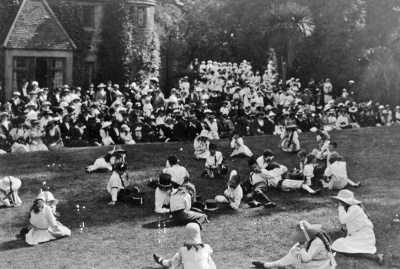 Government House
 -
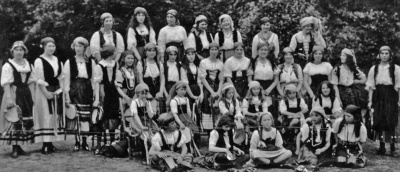 Another image from the fête held at Government House on 6 July 1916 showing the group that performed the Polish Village Dance.
 -
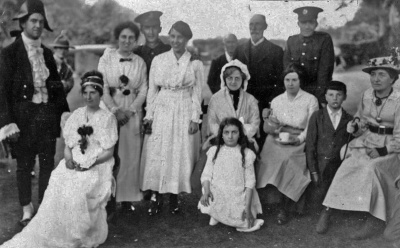 Performers at the Government House fête held in July 1916 in aid of a campaign to support Jersey’s prisoners of war.
 -
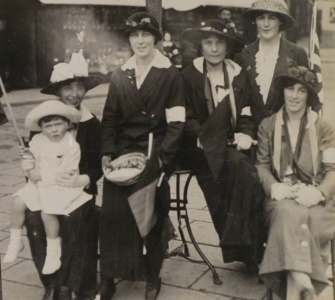 Collectors out raising funds for Belgian refugees in October 1914 – part of a flag day organised by the Evening Post.
 -
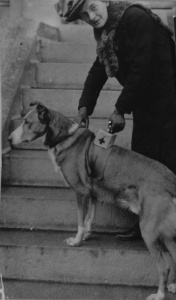 ‘Jack’ the canine collector for the St John Ambulance Association in December 1917.
 -
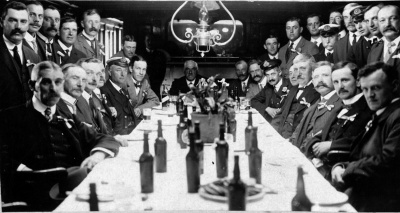 In July 1916, a committee of local merchants organised a ‘Gift to the Royal Navy’ scheme to donate over 250 tonnes of potatoes from Jersey to the Royal Navy, created from farmers contributing a portion of their crop. This image shows representatives of the merchants supporting the donation scheme gathered in the cabin of the SS Notts at the time of shipment.
 -
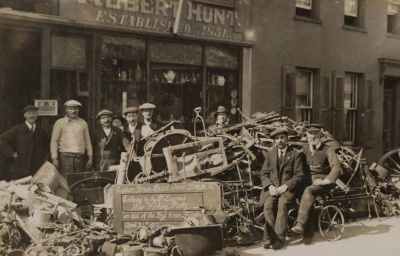 Household junk for sale for the Red Cross
 -
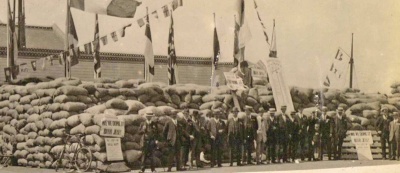 A giant stock of potatoes awaiting shipment in July 1916 as Jersey’s ‘Gift to the Royal Navy’ donation scheme.
 -
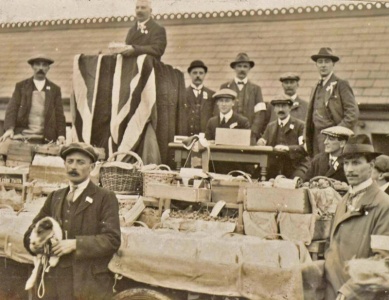 Auctioneer Mr H.S. Godfray conducting an auction at the Weighbridge in support of ‘Our Day’ in October 1915. This fundraising campaign collected £1,400 for the Jersey Branch of the Red Cross and St John’s Ambulance.
 -
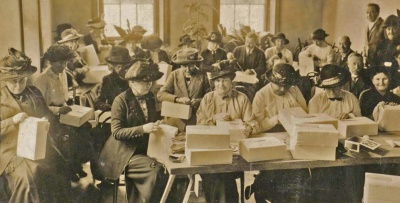 Preparing boxes for British prisoners of war
 -
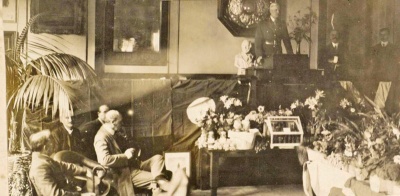 Another auction
 -
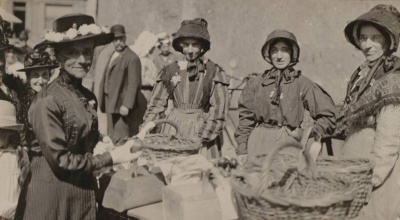 Ladies fundraising at a Vier Marchi
 -
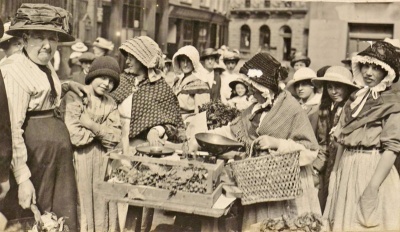 A vier marchi in the Royal Square to raise funds
 -
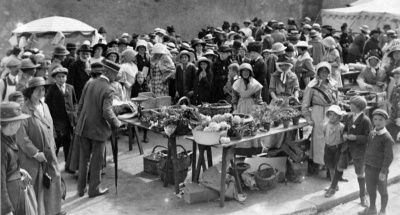 The market stalls


-
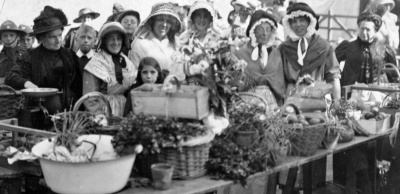 Traditional Jersey bonnets were worn by most
 -
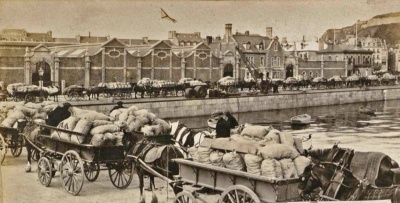 Potatoes for export, destined to feed the Army
 -
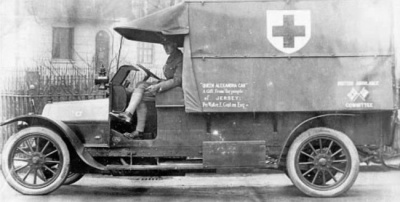 One of three ambulances donated by Evening Post readers early in the war to the French Army medical services is ready to leave the Island in January 1915 to begin important work in the Vosges Mountains at the front in eastern France.
 -
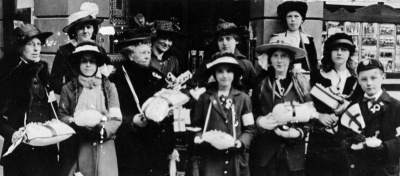 Street collection for war charities
 -
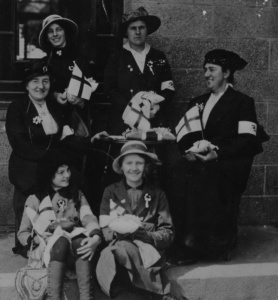 Street collectors
 -
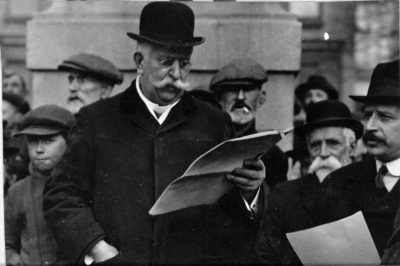 The Royal Court Denunciateur J.A. Balleine promulgates Jersey’s Military Service Act in March 1917 by reading out in the Royal Square – from that time forward men from the ages of 18 to 42 could be called up for compulsory military service.
 -
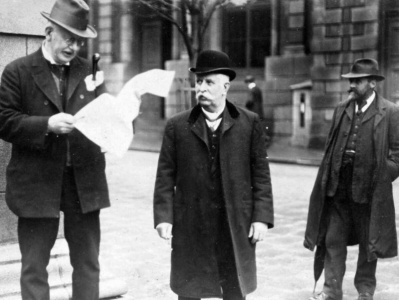 Proclamation
 -
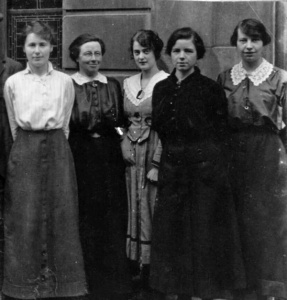 In September 1917 the States agreed to ration sugar, which had to be imported to the Island and was in short supply. They established a Sugar Controller, Major Lloyd, and appointed him a staff of lady clerks, some pictured here outside the Control Office in Hill Street.
 -
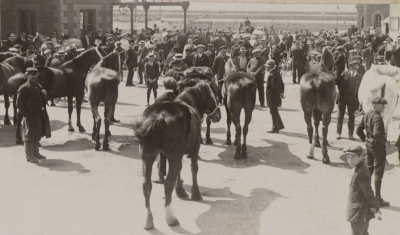 Local horses purchased by the army wait on St Helier Harbour quayside for transport overseas in August 1914.
 -
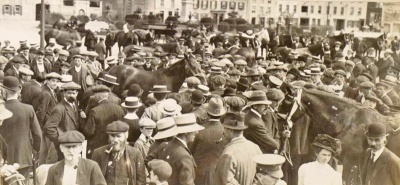 A large crowd gathers at the Weighbridge in August 1914 to view a horse purchase event arranged by the army.
 -
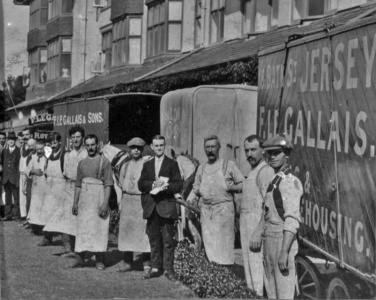 Transforming the Grand Hotel for military use
 -
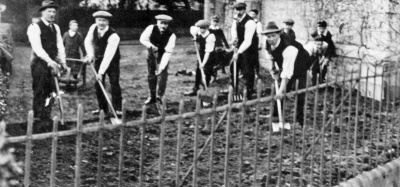 Preparing the ground around St Luke’s Church in March 1917 for the planting of potatoes. Britain had asked the Island for a considerable contribution of potatoes at this time.
 -
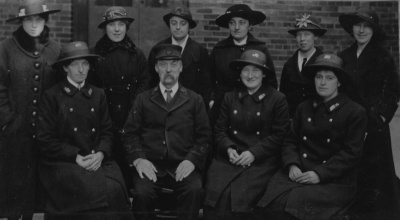 Women took over from postmen to deliver the mail
 -
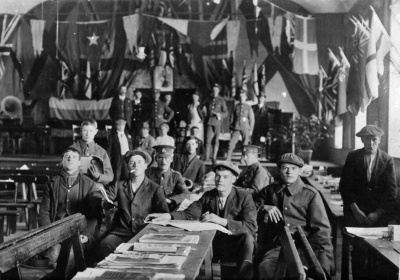 The reading and concert room in October 1914 in the recently opened Soldiers and Sailors Institute.
 -
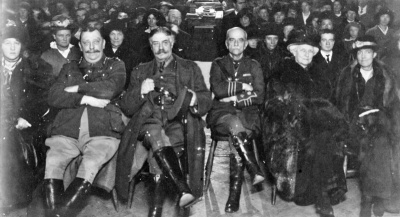 Senior officers of the garrison watching a Christmas Concert at Brighton Road Military Hospital in December 1916. Among those present were the new Lieutenant Governor, General Sir Alexander Wilson and Lady Wilson (on the left), and Lieutenant Colonel John Yourdi of the Royal Army Medical Corps.


Victory parade
-
-
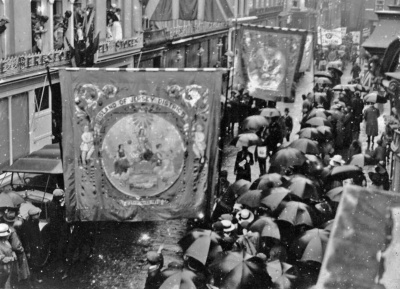
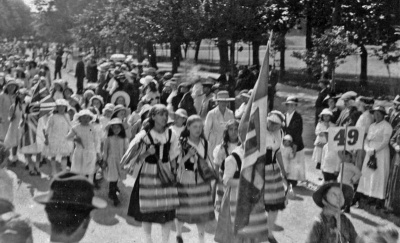
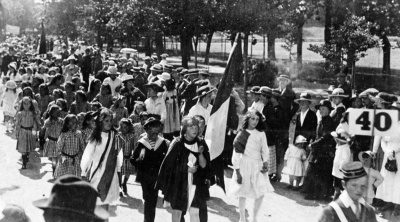
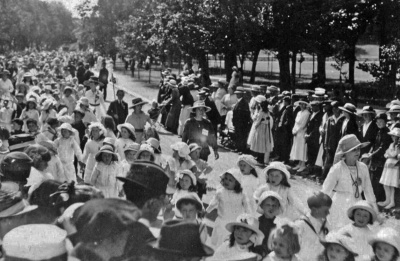
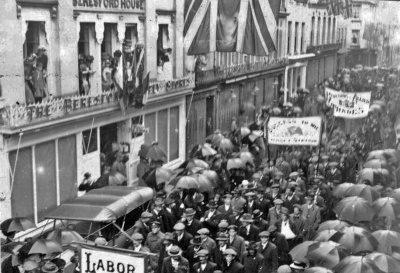 The parade held in July 1919 to celebrate signing the peace treaty officially ending the war: members of the Dockers and Workers Union march down Halkett Street.
 -
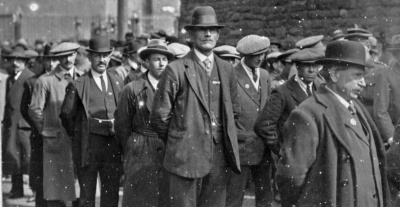 Several ex-servicemen organisations formed in the aftermath of war to provide support and companionship for veterans. Comrades of the Great War was one of the first, forming in November 1918 and welcoming former soldiers and sailors. In this picture some of its members attend a church parade in May 1919.
 -
-
-
-
-
-
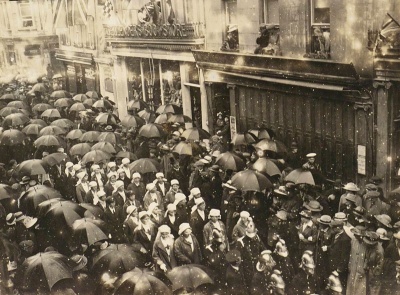 The parade held in July 1919 to celebrate signing the peace treaty officially ending of the war: a group of Voluntary Aid Detachment (VAD) nurses taking part.


-
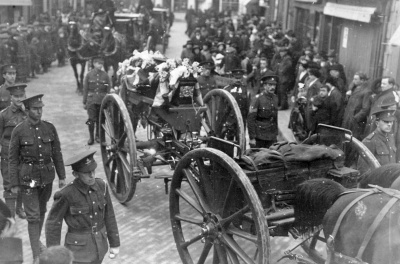 The funeral cortege with accompanying military procession for Corporal Walter Cheney of 3rd (Town) Battalion Jersey Militia passing through Charing Cross on 10 February 1915. After catching a chill while serving on outpost duty, the 26-year-old was eventually hospitalised with pneumonia before dying of the illness on 7 February.
 -
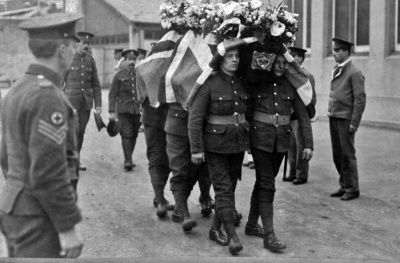 The funeral of Drummer William Wright who died on 7 March 1916 while serving in Jersey with the 4th Battalion South Staffordshire Regiment. The 46-year-old, who was married and from Birmingham, was being borne by comrades from Brighton Road Military Hospital to Almorah Cemetery for burial.
 -
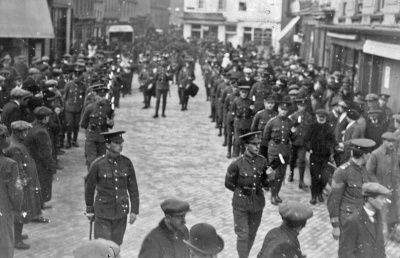 The funeral cortege and procession of Corporal Walter Cheney of the Militia’s 3rd (Town) Battalion passing through Charing Cross on 10 February 1915 having left the Parade and on its way to a service at St Mary’s and St Peter’s Church. Corporal Cheney was then carried to Almorah Cemetery for burial.


Miscellaneous pictures
-
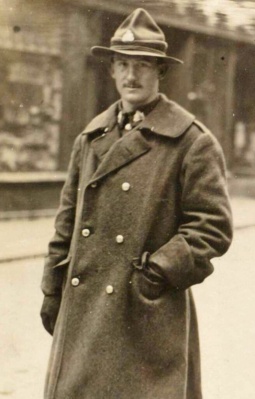 Private H. Fulford of 2nd New Zealand (Otago Infantry Battalion) on leave in February 1917.
 -
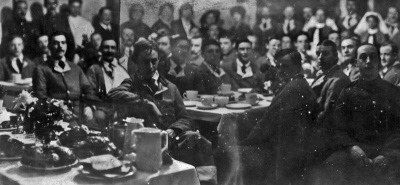 Military patients assembled for a ‘Christmas Treat’ in December 1916. They were being treated at Brighton Road Military Hospital, which had been a primary school before being taken over by the military in October 1914 in view of the increasing number of soldiers in the Island. Former pupils were found alternative locations for their schooling – infants in Great Union Road, boys in Cannon Street and Girls in Victoria Street.
 -
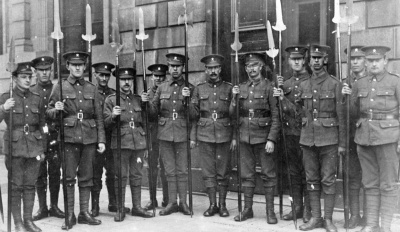 Militiamen form a halberdier guard in October 1914 at the Assise D’Heritage, an ancient ceremony dating back to feudal times in the Island.
 -
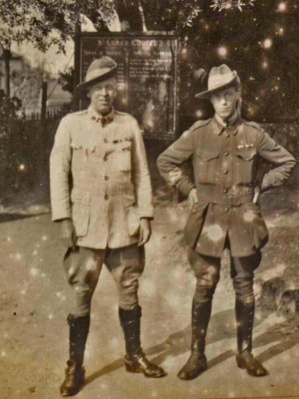 ANZACs
 -
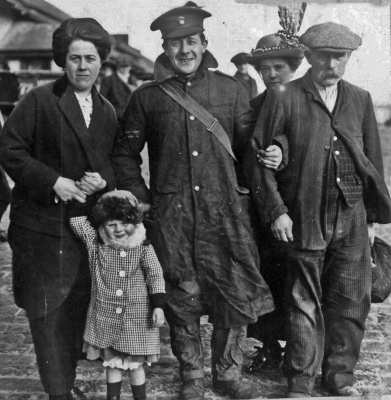 Corporal Arthur Watts, who had left Jersey for a new life in Canada before the war, arrives on 31 November 1914 for a spell of leave after being wounded while on active service with the Royal Munster Fusiliers. Later promoted to sergeant, he would be honourably discharged in August 1916.
 -
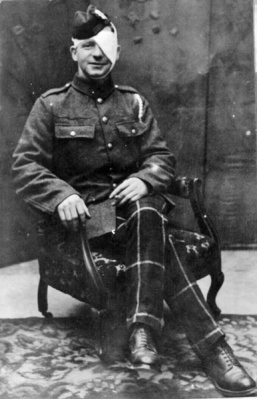 Private George Beasley of the 2nd Battalion Highland Light Infantry home on leave in March 1915 recovering from wounds received on the Belgian frontier in October 1914. He was staying with his parents who lived at 4 Don Road, St Helier and would not go back to the front, being discharged from the army a few months later.
 -
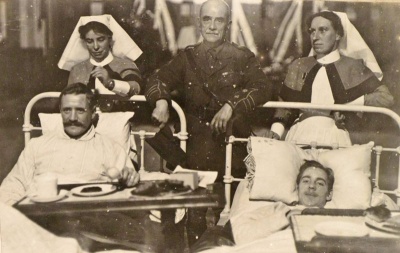 Lieutenant Colonel John R. Yourdi of the Royal Army Medical Corps pictured with Sisters Bennett and Streetsmith and two patients in January 1917, most likely at the Brighton Road Military Hospital. Yourdi had joined the army as a surgeon in 1881 and served in various postings as well as taking part in the Egyptian War of 1882 for which he was decorated. He returned to military service soon after the outbreak of war and was posted to Jersey. He was subsequently honoured with an OBE.
 -
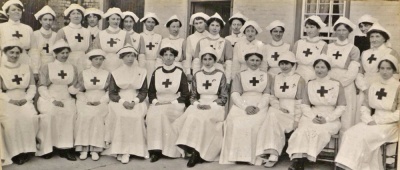 Nurses
 -
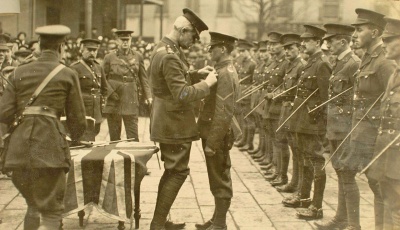 Lance Corporal Ball of the 4th Battalion South Staffordshire Regiment receives the Distinguished Conduct Medal from the Lieutenant Governor in January 1916.
 -
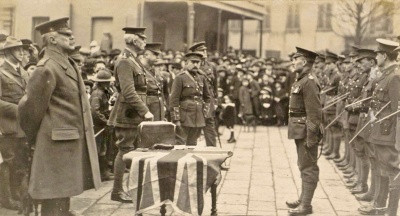 In a Royal Square ceremony held early in 1916, the Lieutenant Governor General Sir Alexander Rochfort awards Long Service and Good Conduct Medals to Quarter Master Sergeant Hill of the Militia’s 3rd (Town) Battalion.
 -
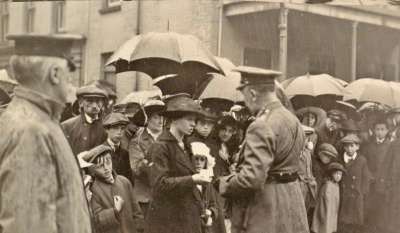 The Lieutenant Governor General Alexander Wilson presents the Military Medal in June 1917 to Louise Game on behalf of her husband Corporal Ambrose Game of 7th Battalion East Surrey Regiment. Corporal Game was wounded while fighting on the Western Front and died in a base hospital at Etaples.