Don Road

Don Road

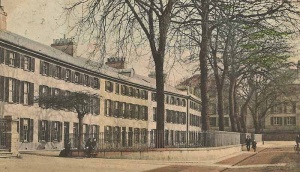
It is not known exactly which part of Don Road is shown in this old drawing, but it was probably the western end
Formerly La Rue Jerome, at its eastern end, Don Road runs from Colomberie past the bottom of Mont Millais and behind Howard Davis Park to the junction with Route du Fort, although some maps show its name changing to Georgetown Road at the parish boundary with St Saviour at the bottom of Belvedere Hill.

Don Road was opened in a grand ceremony attended by the States on 23 December 1806 and named after the Lieut-Governor Lt-General Sir George Don, who had been appointed earlier in the year and as part of his overall review of the Island's defences at a time when the United Kingdom and France were at war, he set about building a network of new roads, so that troops could be moved more easily from one part of the island to another.
Don Road was one of the first and most important as the main eastern gateway to the town.
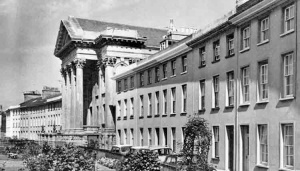
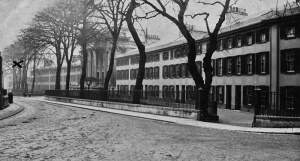
A fine terrace of houses, Royal Crescent, was built in 1826 by Bailiff Sir Thomas Le Breton, with a magnificent theatre in the centre completed two years later. This was destroyed by fire in 1863, and replaced by a Methodist church, which was itself demolished towards the end of the 20th century, leaving an open space in the middle now used for car parking.
The stage backdrop of the theatre was a painting of the harbour and St Aubin's Bay from La Collette by Cruton, an English artist.

-
-
-
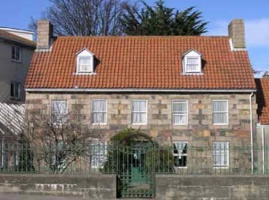 This fine granite house is at the Georgetown end of Don Road
 -
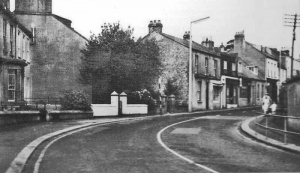 The bottom of Don Road in 1967 before Route du Fort was built, cutting through on the left where the tree stood
 -
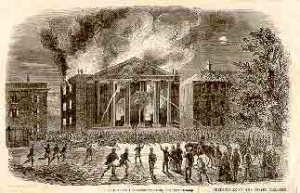 Fire destroys the theatre
 -
-
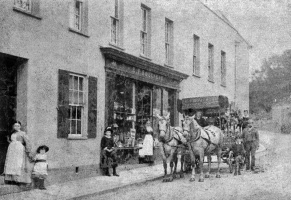 Bouchere shop in Don Road
 -
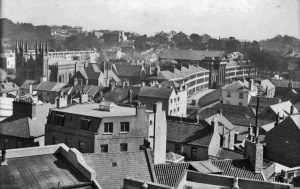 A view over St James' Street and Don Road, showing the church and Royal Crescent
 -
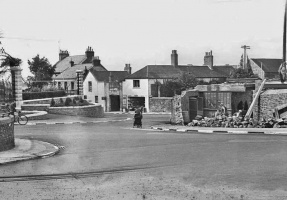 Widening of the junction with La Colomberie in 1939
 -
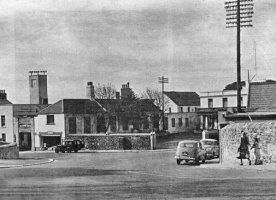 The same junction in 1952
 -
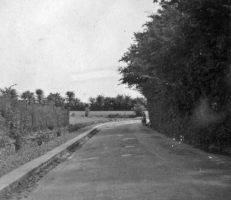 1949
1949 -
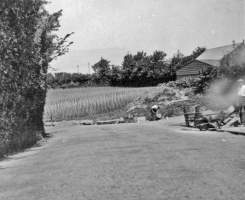 1949
1949


Businesses
-
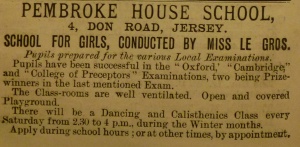 Pembroke House School
 -
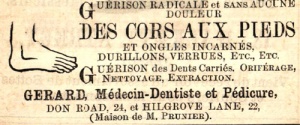 Gerard, pedicure
 -
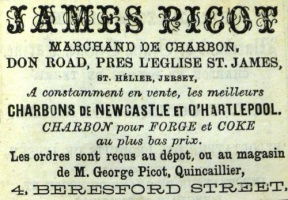 James Picot, charcoal merchant
 -
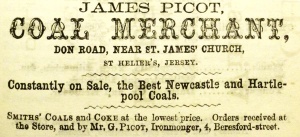 James Picot
 -
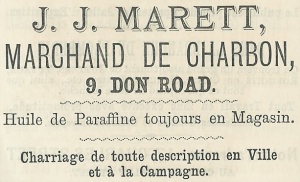 1892
1892 -
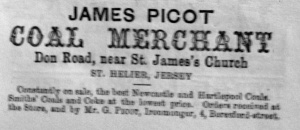 James Picot, 1874
 -
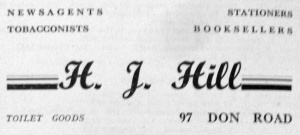 1948
1948 -
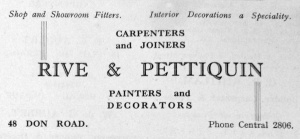 1948
1948 -
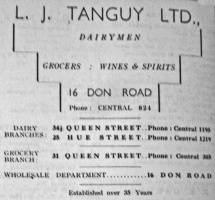 1948
1948 -
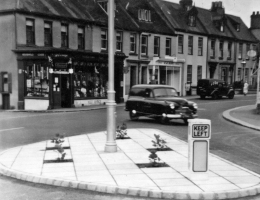 1953
1953 -
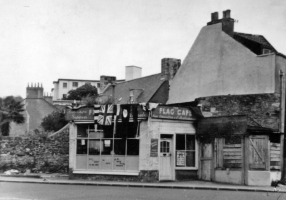 1953
1953