Esplanade
On the coast
|
 The Esplanade
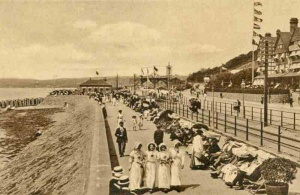
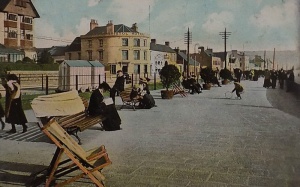
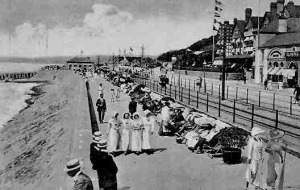
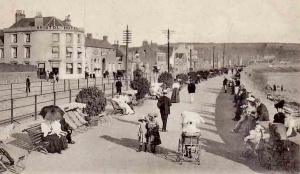
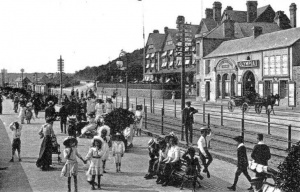
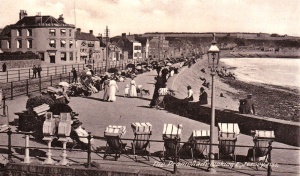
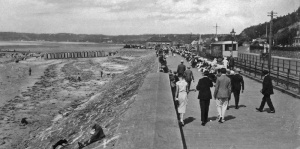
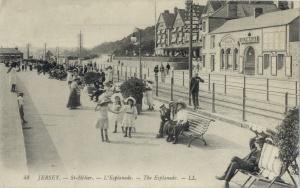
 The Esplanade is at the eastern end of St Aubin's Bay. It has a popular promenade from near the Weighbridge to West Park. This picture was taken in 1904
|

Sadly nothing like the view of times past, but a 360-degree panoramic view of the Esplanade in 2010
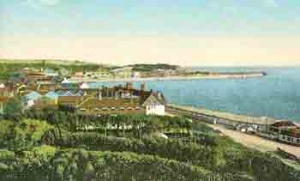
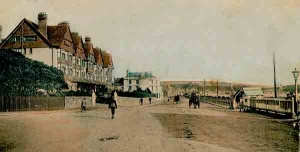
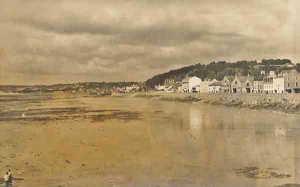
For over 150 years the Esplanade was the town of St Helier's sea front from the harbour to West Park. Today most of the sea frontage has disappeared as land reclamation has extended the coastline out towards Elizabeth Castle, but a pedestrian walkway remains behind what was the sea wall and meets the sea again heading west towards the start of Victoria Avenue
This article is partly based on the research of the Jersey Archive for their series of presentations in 2010 entitled What's Your Story?.
Town expansion
A study of the Esplanade and Castle Street is a story of the expansion of St Helier and the changing industries pursued in the Island’s capital. The area has changed completely in the last 200 years being transformed from sand dunes to the commercial hub that it is today.
Tourism and agriculture dominated early on, with hotels and potato stores a familiar site. As the Island has developed so has the area with a shift in power to the finance and legal industries with some of the Island’s predominant firms having a presence, like our sponsors Appleby.
The Esplanade is a relatively modern creation. The 1795 Duke of Richmond map reveals that the Esplanade did not exist then. In the place that it was to occupy all that can be seen are sand dunes.
However, Jersey has a long tradition of land reclamation and it was soon decided that a sea wall and roadway should be built so that the western parishes could have direct access to St Helier Harbour. The first part of the Esplanade, to Patriotic Street, was started in 1829 by Abraham de la Mare. This was completed in 1835. In 1858 John Le Cras began work on widening it and extending it to West Park.

Castle Street
Castle Street did exist before the Esplanade was constructed but it was little more than a track across the sand. The creation of the Esplanade and the seawall meant that some measure of protection was provided to the area and Castle Street began to develop as a consequence.
In the 1901 census there are at least ten hotels listed along the Esplanade, including the Victoria Hotel, of 4 Esplanade, the Customs Hotel, of 10 Esplanade, and Bellevue Hotel, of 14 Esplanade, now the Appleby building. The biggest hotel in the area is one that still exists today, the Grand Hotel.
Attractions would frequently come to the Esplanade. In September 1883 Myers’ Circus was opened for a short season in a spacious tent erected on a piece of ground near the Marine Hotel.
The review in the British Press and Jersey Times was extremely complimentary, stating that "the acrobatic feats of the Hogini Brothers deserve very favourable mention".
The season was not to go without incident. On 27 September the performer known as George Albert Hogini, real name George Frank Burt, went to the hospital with a great pain in his bowels. He went into surgery but unfortunately it was too late and he died. He was only 13 years and 10 months old.
His funeral service took place at St Andrew’s Church before he was buried at Mont à L’Abbé. The funeral service was organised by Mr J R Sinnatt and he recorded that the circus band played from the church to the cemetery and that it was very well attended, as he was a great favourite.
In 1877 in stormy weather, the cutter Marie François of Plymouth was pulled from her anchorage and driven on to the breakwater. It is reported that in the evening hundreds of people lined the Esplanade in order to view the attempt to pull the ship to safety. One man was almost thrown overboard several times but they eventually succeeded, to great acclaim from the crowd.
Railway
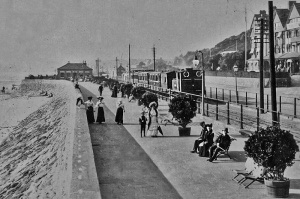
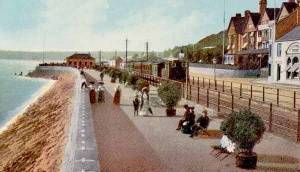
The railway was an integral part of the Esplanade. In 1869 a new Bill in the name of the Jersey Railway Company was passed by the States of Jersey. Work on the line between St Helier and St Aubin was completed the following year and the inaugural journey took place on 25 October 1870. The railway was a quick and easy link to the town from St Aubin.
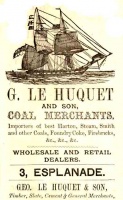
In 1879 a serious fire started at 12 Esplanade. It was being used as a store by Mr Le Huquet, who rented the property from Mr McAllen and contained 5,000 empties, barrels and baskets, about six tons of potatoes and a quantity of apples. The fire engine was called and the hose was attached to a fire plug in Castle Street, about 150 yards away. Unfortunately the supply of water was not good and holes in the hose meant that the pressure was extremely poor.
The fire soon became a spectacle as the regiment joined the firefight and more people gathered to watch. So interested were people that the newspaper report comments that inhabitants of St Aubin, having heard the news from the crier, boarded the first train to St Helier to watch. A performance at the Assembly Rooms was even stopped so that the audience could go to St Helier to watch the blaze.
The fire was eventually brought under control without loss of life but the States were severely criticized for not providing adequate fire fighting facilities to protect the population.
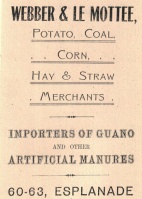
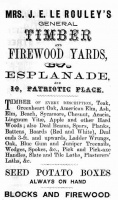
For those who remember the Esplanade and Castle Street area in the early part of the 20th century the thing that comes through strongly is the presence of the merchants. Names including John Terry, Bailhache, Le Rossignol and Le Caudey all had stores in the area.

Churches
As the area expanded the religious needs of the community became important. Castle Street was a site of one of the earliest Catholic chapels in the Island after the French Revolution, which saw an influx of émigrés to the Island who wanted to practice their Catholic religion. In September 1803 a Catholic chapel was set up in an old flour loft in Castle Street. The only access to the site was by using a ladder. It was dedicated to St Louis in memory of the king and came to be known as Les Mielles or the Sand Hills.
Evidence of the building exists in the form of an insurance record from February 1836 in the name of Henry Lipscombe, a tobacconist. The insurance covers a building “used as a Catholic Chapel underneath as a Tobacco Store.” This chapel was used until the 1840s before the community outgrew it and it was replaced by a building in New Street.
The Anglican religion also had a presence in the Esplanade area. In 1854 the Reverend Philippe Filleul, the Rector of St Helier, together with other members of the community purchased a piece of land on the Esplanade to build a district church.
Work on the building of St Andrew’s Church started soon after. The Church was completed by 1869 and was conveyed to the Ecclesiastical Commissioner and in 1870 a new District was created to include St Andrew. Being so close to the water a lot of the early patrons were linked to the sea in some way, including shipwrights, mariners and pilots.
In the 1920s it was decided that it would be appropriate to site a church in the First Tower area with its growing residential population. Work started on a new St Andrew’s Church and deconsecration of the church on the Esplanade took place in 1931. The old St Andrew’s Church was finally sold to Sidney Horman Limited in 1934 having had its porch and bell tower removed.
Brett
In his 1977 work Buildings of the Town and Parish of St Helier C E B Brett is less than complimentary about the Esplanade:
- "On the seaward side, a finely built concave sea wall and flagged promenade of admirably-tailored red granite blocks, punctuated by serrated rows of vertical blocks at the curving junction with the Albert Quay. The original esplanade to Patriotic Streeet was started in 1829 by Abraham de la Mare, and completed in 1835; John Le Cras widened it and extended it to West Park, beginning in 1858. Edward Pickering, the Yorkshire contractor for the railway from St Helier to St Aubin (opened 1870) promised to build a complete sea wall linking the two towns, but collapsed (financially) in 1873 and never kept his promise.
- "On the landward side, alas, a mess: the once coherent terraces of warehouses and hotels, generally three-storey-plus-dormers in scale, have been broken up by unsuitable alterations, demolitions and replacements. A nine-storey block of flats, Marina Court, sticks out like a sore finger. The impression the town gives from the seafront is shoddy and messy. It would be worth while trying to encourage a very deliberate policy of rebuilding all along the front in the modern idiom, but to the old scale, if rehabilitation is not worthwhile. There are only a few buildings worth noticing left in the Esplanade.
The Esplanade today
Much has changed, though it would be interesting to know whether he would have approved of the changes. To a large extent his advice has been followed, in that old buildings have been replaced by new ones 'in the modern idiom', so that from Patriotic Street to Castle Street the landward side of the Esplanade has changed character totally.
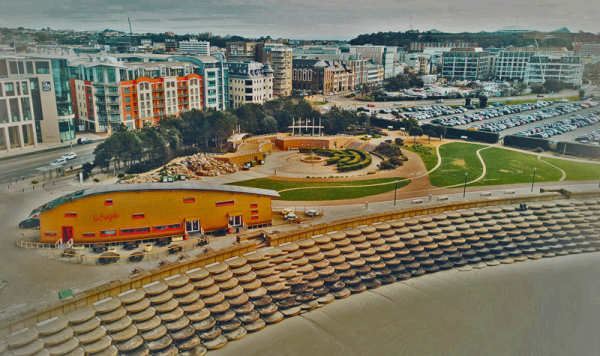
But it is on the seaward side that even greater change has been wrought, the West of Albert reclamation scheme having changed the shape of the coastline, so that the granite sea wall which Brett admired so much has disappeared from sight and there is no longer a curving junction with the Albert Pier.

-
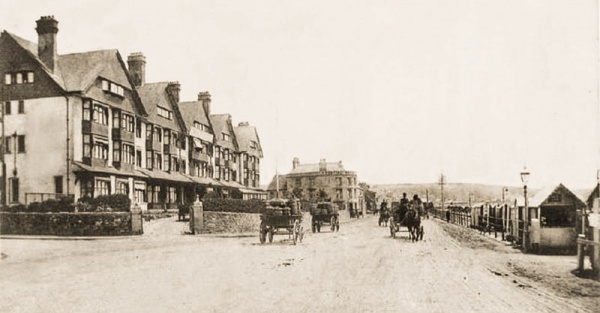 The West Park end of the Esplanade at the end of the 19th century ...
 -
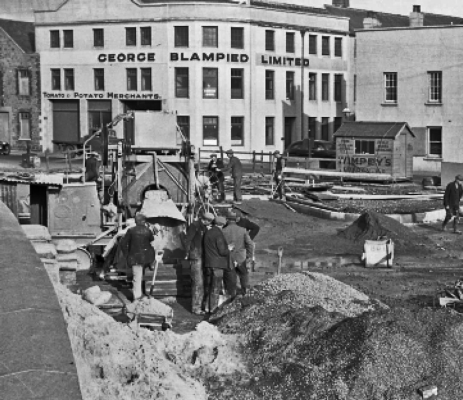 ... and in 1938 the railway has gone and the promenade has been widened - pictureEvening Post
 -
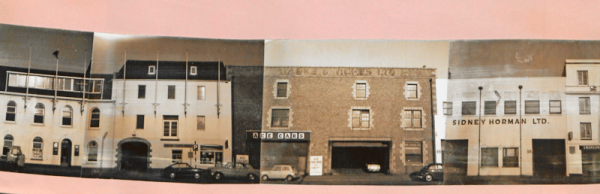 Composite panoramas from an album of ...
 -
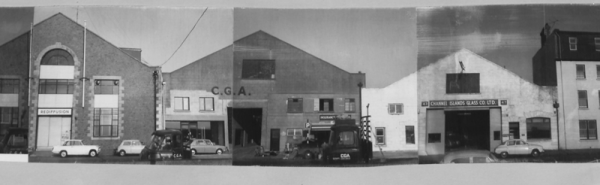 ... planners' photographs taken in the 1970s


Click on image to see larger picture
-
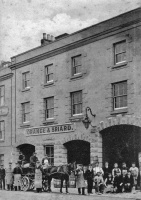 Orange and Briard, 9 Esplanade
 -
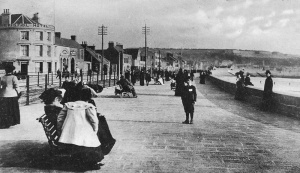 1904
1904 -
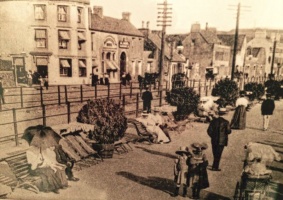
-
-
-
 The Esplanade in 1910
 -
-
-
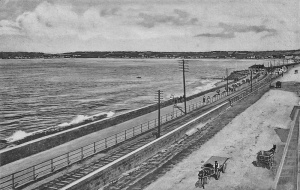
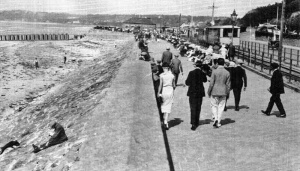
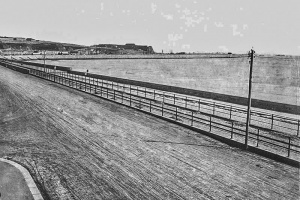
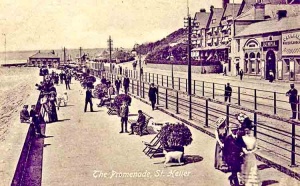 The railway line ran immediately behind the pedestrian promenade
 -
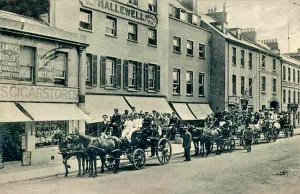 Excursion cars on the Esplanade
 -
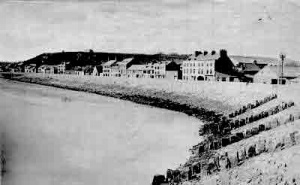 The Esplanade in 1881 before the Grand Hotel was built
 -
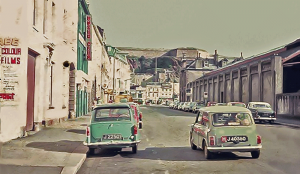 1970s
1970s


-
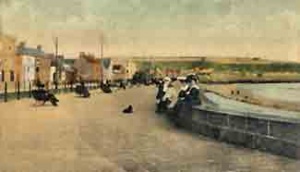 The Esplanade in 1904
 -
-
-
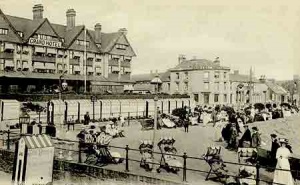 A view from 1913
 -
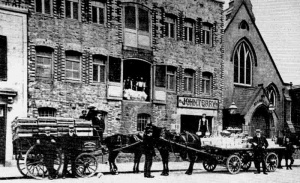 The Esplanade in about 1900. The building on the right is the original St Andrew's Church
 -
-
-
-
-
-
 The Esplanade in 1896
 -
-
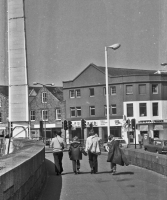 1982 - Jersey Evening Post photograph
 -
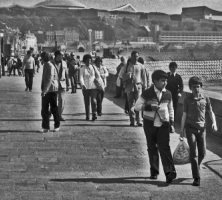 1982 - Jersey Evening Post photograph
 -
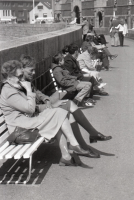 1982 - Jersey Evening Post photograph
 -
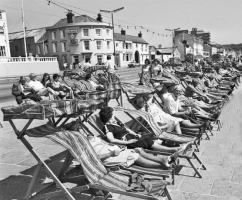 1978 - Jersey Evening Post photograph
 -
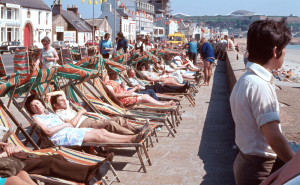 1973 - Jersey Evening Post photograph
 -
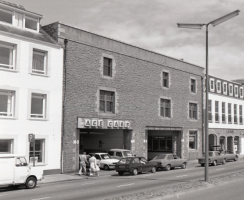 Ace Cars, 1980 - Jersey Evening Post photograph
 -
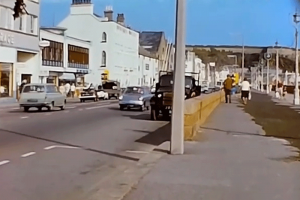 1967 view
 -
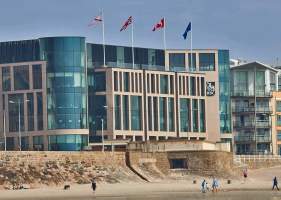 21st century building for Royal Bank of Canada


.jpg)


-
-
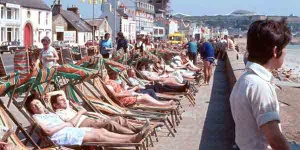 A 1973 picture
 -
A train running along the Esplanade ...
-
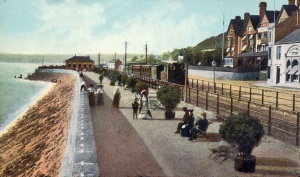 ... and a tinted version of the previous image
 -
-
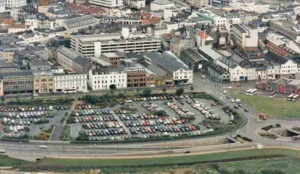 Esplanade car park
 -
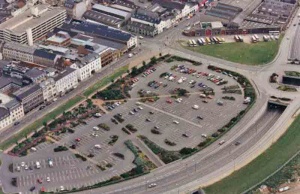 Esplanade car park
 -
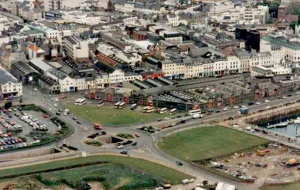 Underpass
 -
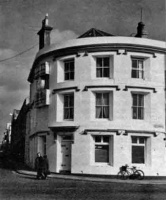 The Bristol Hotel, much admired by architecture historian C E B Brett as 'a good example of how to turn a corner gracefully - almost a lost art'
 -
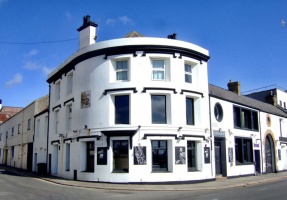 Bristol Hotel, now demolished
 -
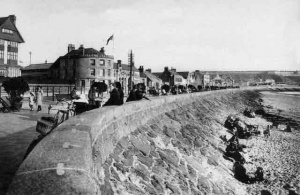 The seawall, solid granite blocks occasionally shifted by raging seas ...
 -
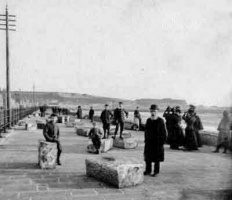 ... as this 19th century picture vividly illustrates


-
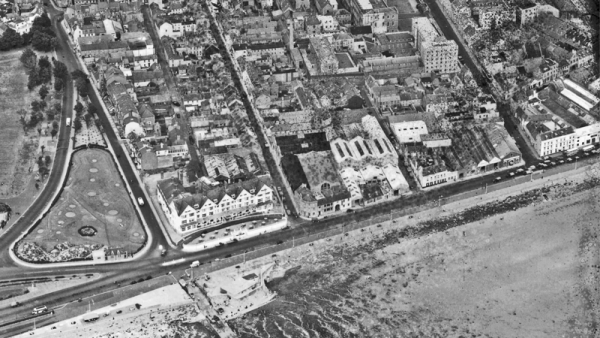 1951 Aerofilms aerial photograph
 -
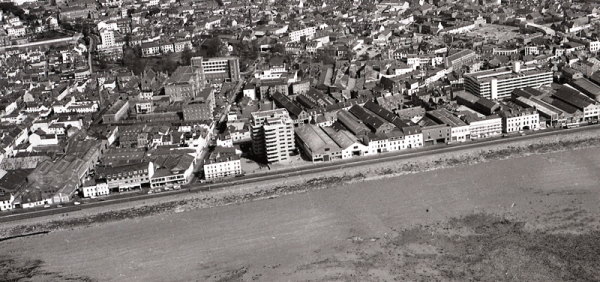 1974 Jersey Evening Post aerial view
 -
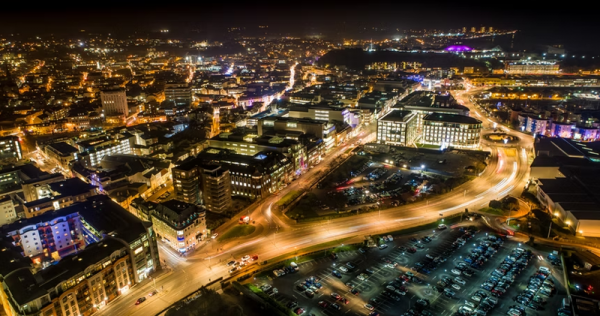
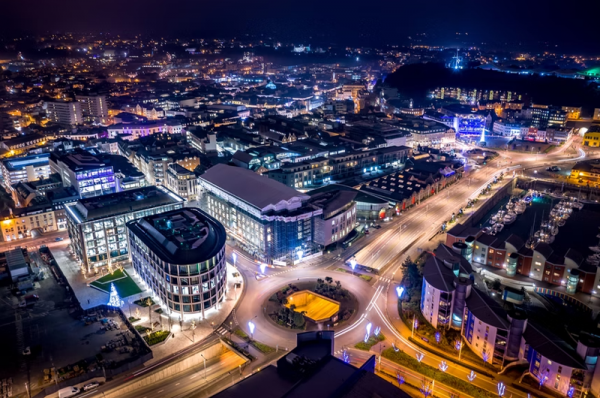
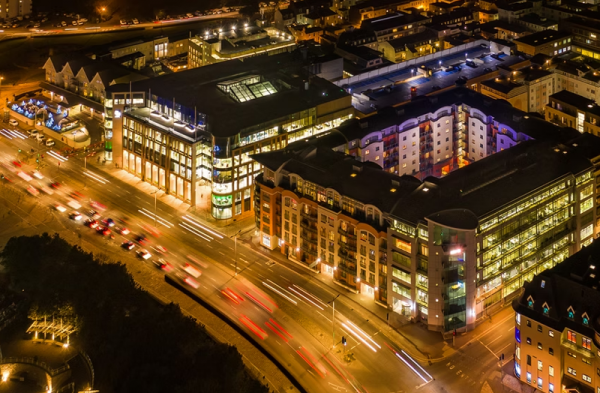 2020s drone views
 -
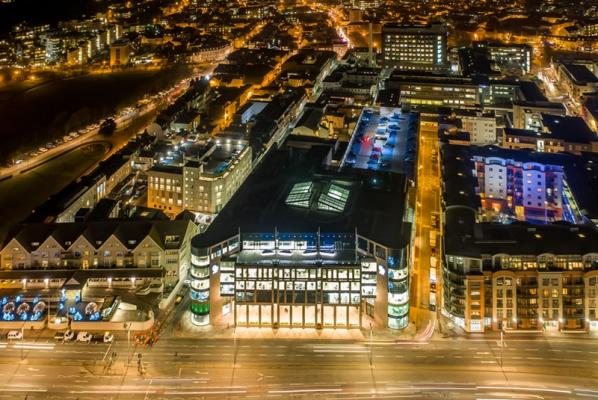 by Bam Perspectives
 -
-


-
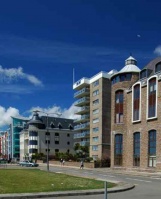 A 2005 picture
 -
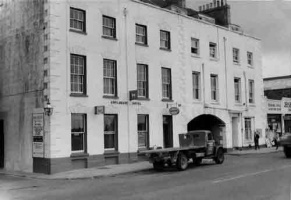 Anley Street emerges on to the Esplanade through an arch under No 33
 -
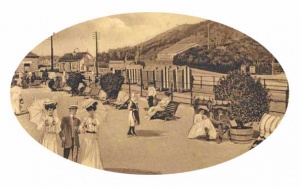 1890
1890 -
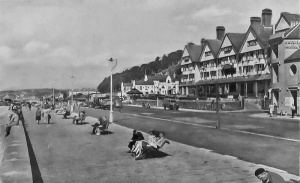 1950s
1950s -
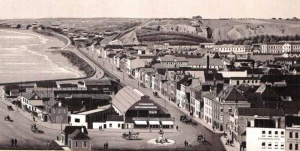
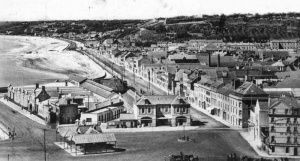 A view from a distance on an LL postcard
 -
-
-
-
-
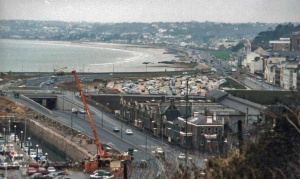 Underpass construction in 1995
 -
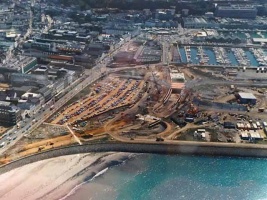 Construction of the underpass in the 90s
 -
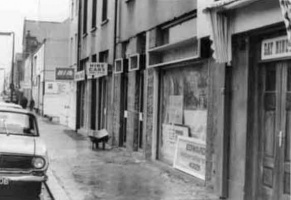 11 Esplanade in 1972
 -
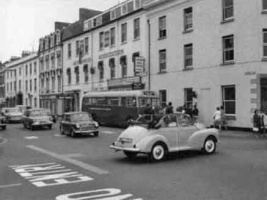 1968
1968 -
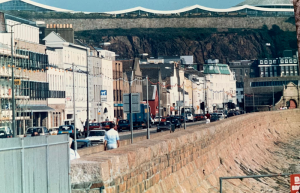 This picture was taken after the development of Fort Regent in 1974-75 and before land reclamation started here in 1994
 -
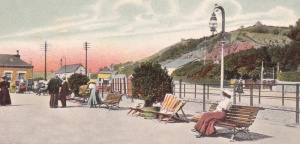
-
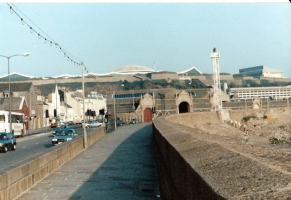 1987
1987


.jpg)


-
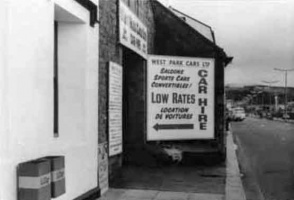 1972
1972 -
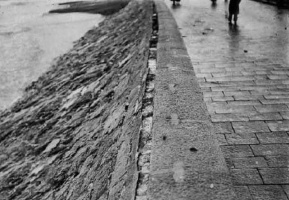 Seawall
 -
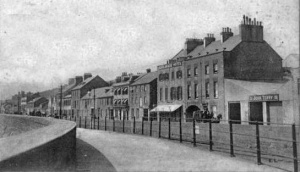
-
-
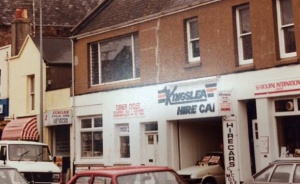 15-17 Esplanade
 -
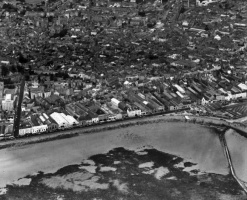 1951 aerial photograph by Aerofilms
 -
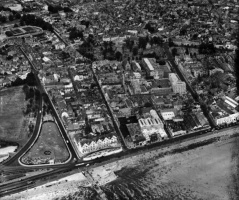 1951 aerial photograph by Aerofilms
 -
-
-
-
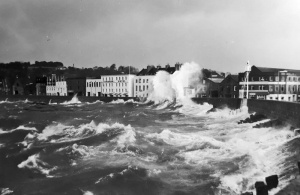 Rough seas in the 1950s, long before this corner was reclaimed from the sea
 -
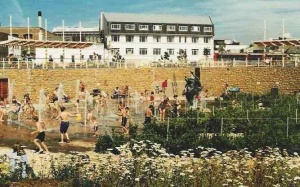 Jardins de la Mer - a 1990s feature on reclaimed land in front of the Esplanade


-
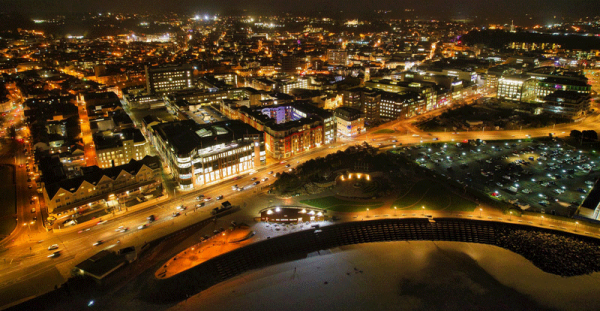 A 2023 photograph from a drone by Paul Lakeman. Visit his Facebook group for a large selection of photographs looking down on Jersey's coasts. Photographs are available in return for a contribution to Jersey Hospice
 -


-
-
1910
-
-
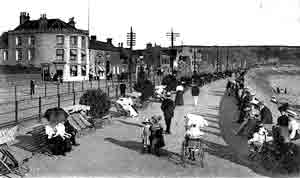
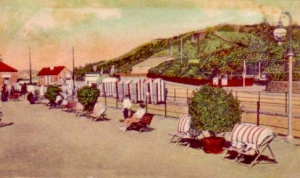
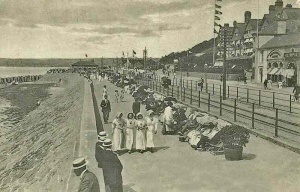
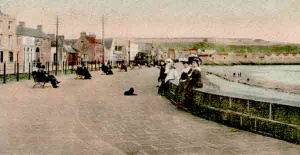
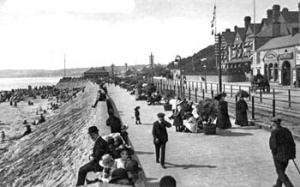 Since it was built the Esplanade has been a popular place to sit in the sun or take a walk
 -
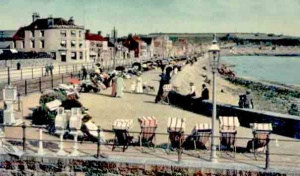 The Esplanade at West Park in 1906
 -
-
The West Park end of the Esplanade viewed from Westmount
-
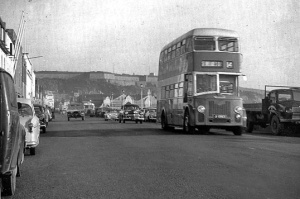 A JMT Leyland double-decker bus on the Esplanade in about 1958
 -
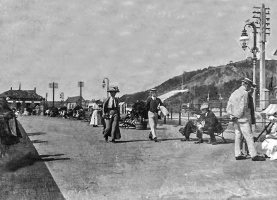
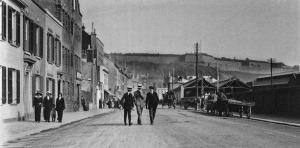 An unusual picture from the Edwardian era. Were the three gentlemen strolling happily along the middle of the road - that would never happen today - connected to the three ladies on the pavement?
 -
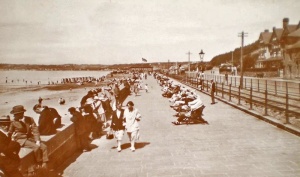 1920s
1920s -
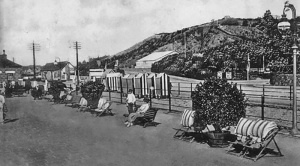 The Esplanade with Westmount behind, showing the 'Tin Hut', where West Park Pavilion was later built
 -
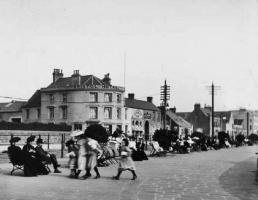 1880s photograph by Philip Godfray


-
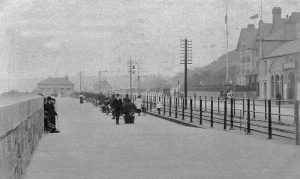 1912
1912 -
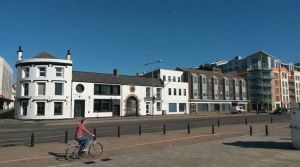 The corner with Kensington Place before the 21st century redevelopment ...
 -
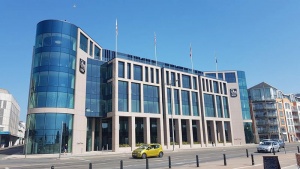 ... and afterwards- Gaspe House completed
 -
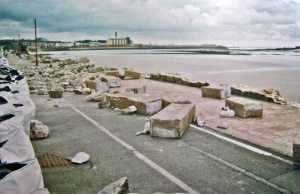 Storm damage to the Esplanade seawall in 2008
 -
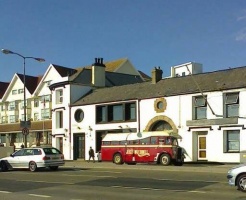 These buildings have now made way for a modern office block
 -
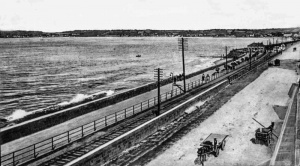 Looking towards West Park along a very quiet Esplanade - picture courtesy of Jersey Temps Passe
 -
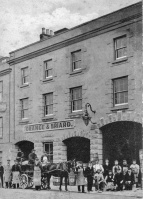 Merchants Orange and Briard - picture courtesy of Jersey Temps Passe
 -
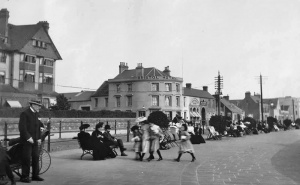 Bristol Hotel in the background
 -
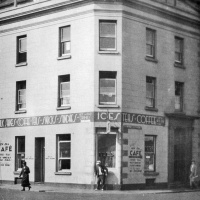 Forte's New Era Cafe made the corner of Conway Street and the Esplanade in 1936
 -
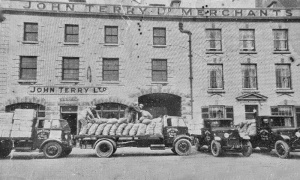 John Terry agricultural merchants
 -
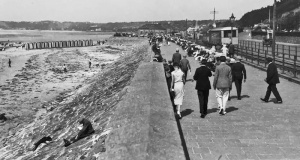 The promenade at West Park
 -
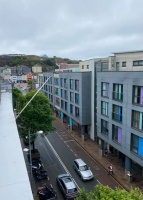 21st Century


1968 photographs
These photographs recording the properties along the Esplanade, most of which have now been demolished, were taken by planning officers using Polaroid cameras, in 1968

-
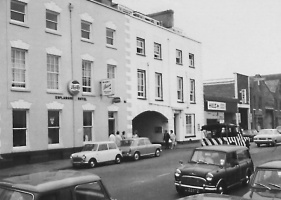 Esplanade Hotel
 -
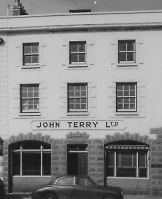 John Terry' store
 -
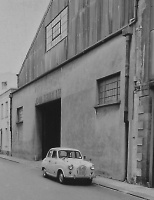 John Terry's store
 -
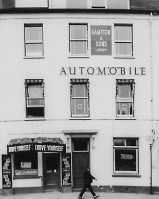 No 5
No 5 -
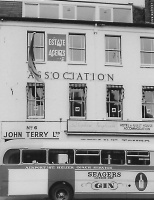 No 6
No 6 -
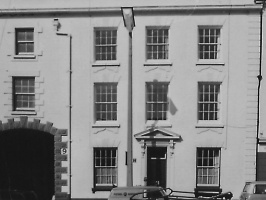 No 9
No 9 -
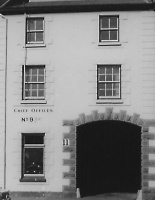 No 11
No 11 -
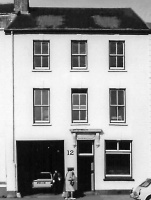 No 12
No 12 -
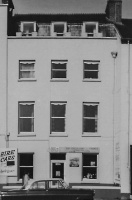 No 13
No 13 -
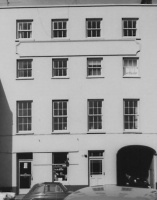 No 14
No 14 -
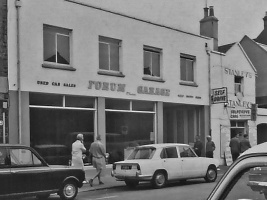 No 17
No 17 -
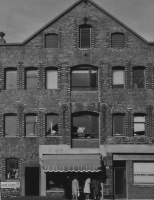 No 18
No 18 -
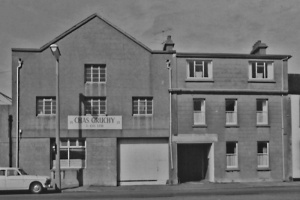 No 23
No 23 -
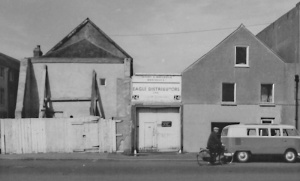 No 24
No 24 -
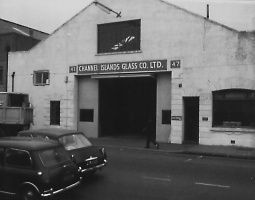 No 47
No 47 -
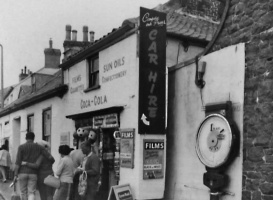 No 68
No 68 -
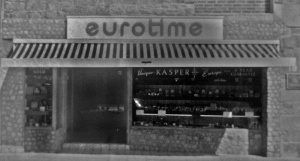 Eurotime was at No 18


1938
Improvements to the road layout at the eastern end in 1938


-
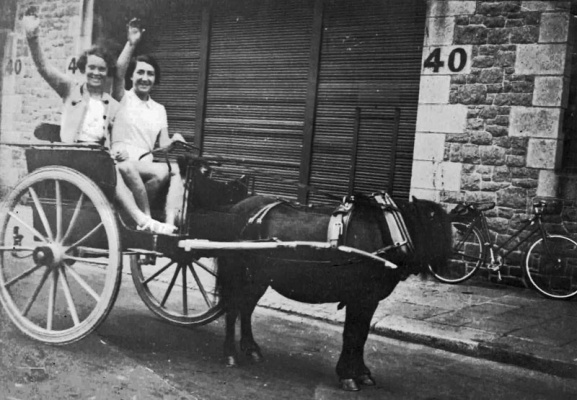 Stella Norrie and Florrie Pitman outside 40 Esplanade, next door to where they worked
 -
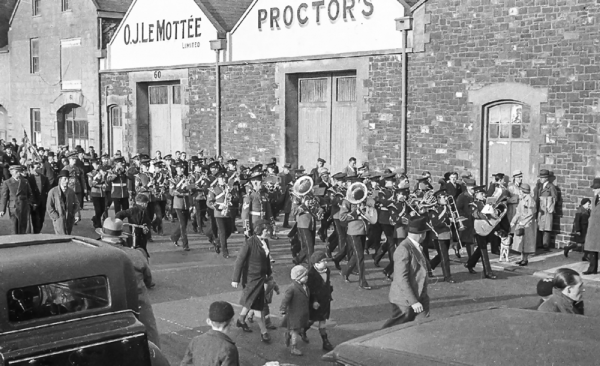 A band marches along the road in 1935


Esplanade businesses

-
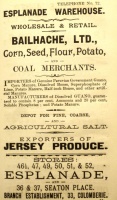
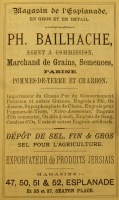 Philip Bailhache's merchant's business occupied a large block between the Esplanade and Seaton Place in the mid-19th century
 -
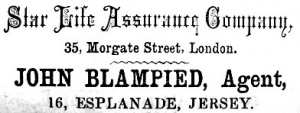 John Blampied was agent for Star Life Insurance Company at 16 Esplanade in the 19th century
 -
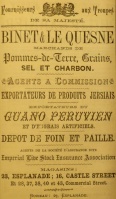 Merchants Binet and Le Quesne traded in the 19th century at a large block between the Esplanade, Castle Street and Commercial Street
 -
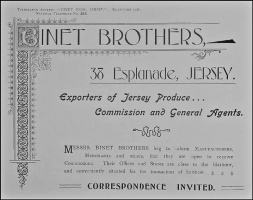 Binet Brothers 1900 advert
 -
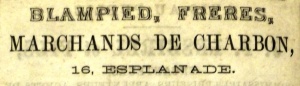 Blampied, literal translation 'charcoal merchants', but actually coal merchants
 -
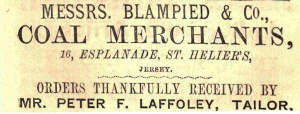
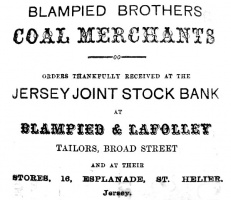 An unusual mixture of businesses for this Blampied family: Coal merchants with an Esplanade depot, and tailors in partnership with Lafolley, in Broad Street
 -
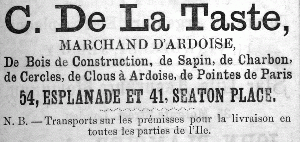 Charles de la Taste sold roof slates and other building material from 54 Esplanade and 31 Seaton Place behind ...
 -
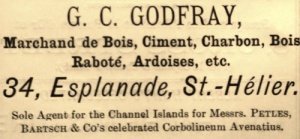
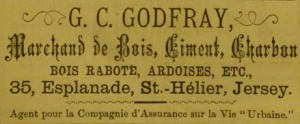 ... G C Godfray was in business at 35 Esplande selling a similar selection of building materials
 -
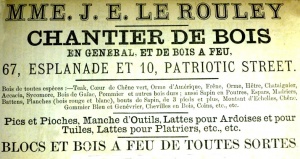
-
-
-
-


-
-
-
-
-
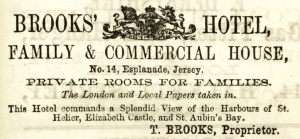 Brooks Hotel
 -
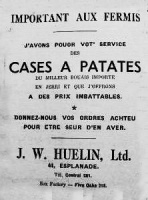
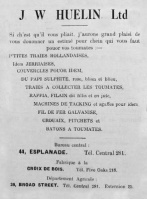
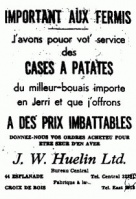
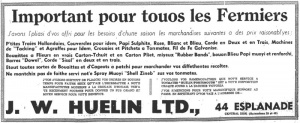
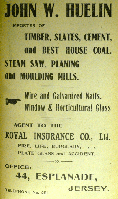 John W Huelin, importer of building materials
 -
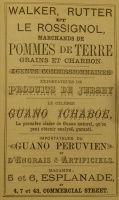 Potato merchants Walker, Rutter and Le Rossignol's store stretched from the Esplanade to Commercial Street
 -
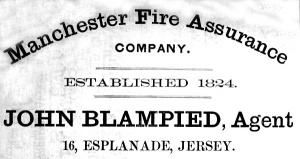
-
-
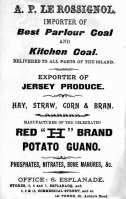 A P Le Rossignol, coal merchants
 -
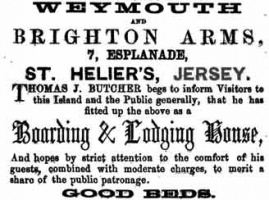 1857
1857 -
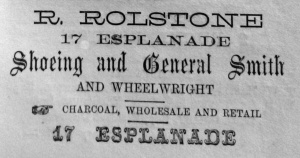 1874
1874


-
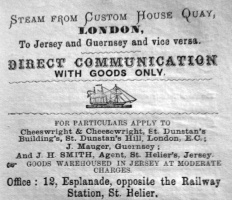 1874
1874 -
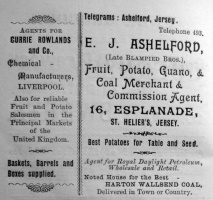 Ashelford, merchant in 1905
 -
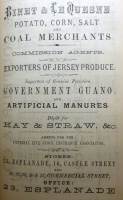 1886
1886 -
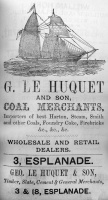 1886
1886 -
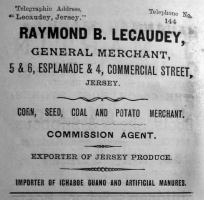 1905
1905 -
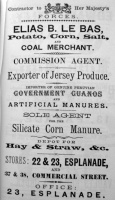 1890
1890 -
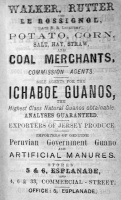 1886
1886 -
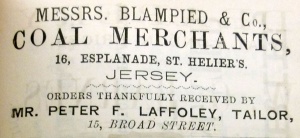 1886
1886 -
-
-
-
-
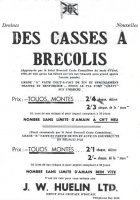 1960
1960 -
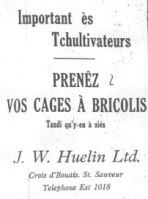 1961
1961 -
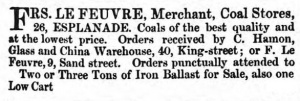 1862
1862 -
 1858
1858 -
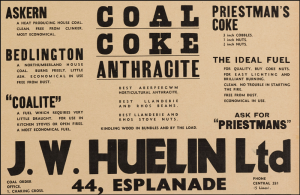 Advert from Jersey Leader, 1935


-
 1858
1858 -
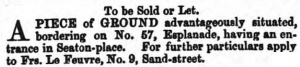 1860
1860 -
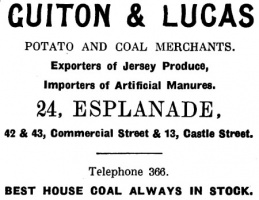 Guiton and Lucas, Esplanade merchants, 1940
 -
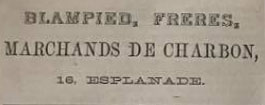 Blampied Brothers, charcoal merchants in 1875
 -
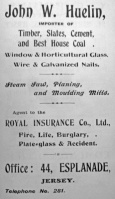 1915
1915 -
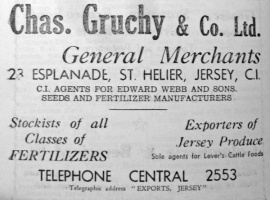 1955
1955 -
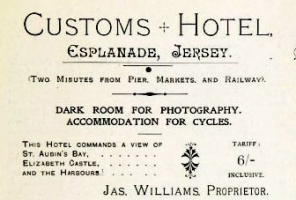 1899
1899 -
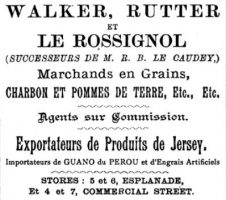 1887 advert from L'Almanach de la Gazette de Jersey
 -
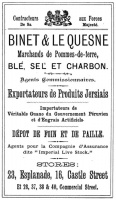 1887 advert from L'Almanach de la Gazette de Jersey
 -
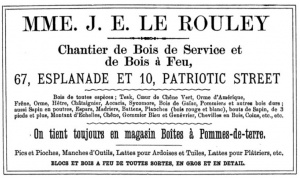 1887 advert from L'Almanach de la Gazette de Jersey
 -
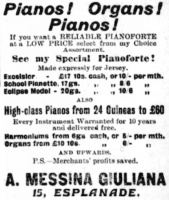 1903
1903 -
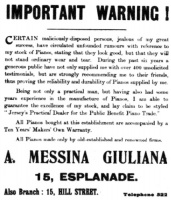 1907
1907 -
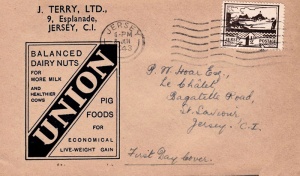 1943
1943 -
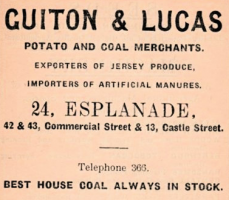 1953
1953 -
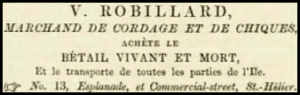 Advert in Chronique de Jersey in 1850
 -
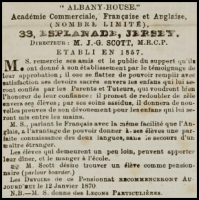 Albany House, a French and English commercial academy, was at 33 Esplanade in 1870
 -
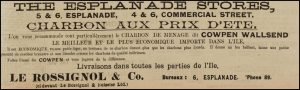 Esplanade Stores were run by Le Rossignol and Company


-
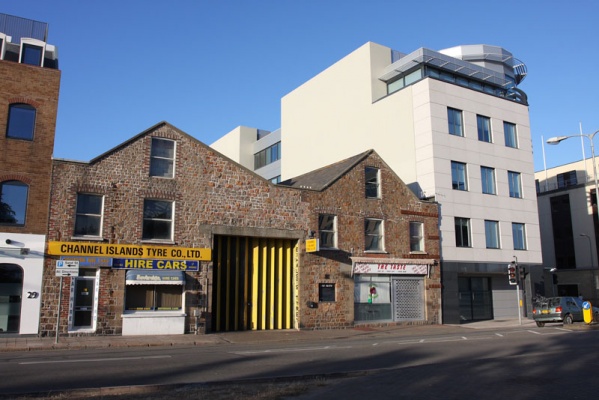 Sandwiched between modern office blocks, these old warehouses are one of the few Esplanade properties which have not been demolished and rebuilt ...
 -
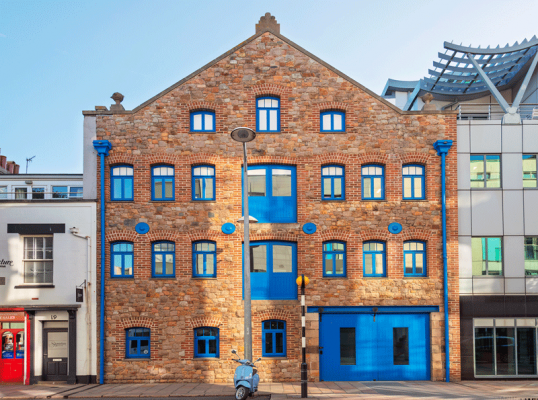 ... and although modern office accommodation has been established inside No 18, the front facade has been immaculately restored - Picture by Paul Williams