Saint Mary

Saint Mary

Catel de Lecq
Saint Mary has fewer inhabitants than any other Jersey parish. It is situated in the north west and covers an area of 3,604 vergees

The parish and its church derive their name from a mediaeval monastery, probably destroyed during Viking raids some time between the 8th and 10th centuries. In 1042 William the Conqueror gave "Saint Mary of the Burnt Monastery" to the abbey of Cerisy.
Attractions
Among the natural attractions of the parish is a feature known as the Devil's Hole (Lé Creux du Vis), a blowhole in the coastal cliff. The descent into the Devil's Hole used to be accessible to visitors and was a lucrative tourist attraction, but it has been closed off for decades. Following a shipwreck in 1851, when the ship's figurehead washed up in the Devil's Hole, a statue of a devil adapted from the figurehead was set up above the Hole. This wooden statue was replaced by a succession of modern versions in the 20th century.
Mourier Valley runs down the boundary between St Mary and St John. The stream formerly powered a number of mills despite the scant population of the area.
Crabbé is the location for pistol shooting.
Grève de Lecq lies on the border between St Mary and St Ouen. On the east side of the bay, in St Mary, lies Le Catel de Lecq, an ancient earthwork. In the bay, Le Moulin de Lecq, an old watermill was converted into a residence in 1929 and following the Second World War became a pub, while retaining the wheel and remnants of the gears.
The parish stands upon course-grained granite, 'of Saint Mary's type'. This granite was formerly quarried for building.
St Mary is twinned with Longues-sur-Mer, a commune of the département of Calvados, Normandy.
Vingtaines
The parish is divided into vingtaines for administrative purposes as follows:
- Vingtaine du Sud
- Vingtaine du Nord
The parish forms one electoral district and elects one Deputy.
Demographics
Saint Mary has the smallest population of all the parishes in Jersey, having only 1,591 residents in 2001.
Parish church
Constables
External links
Gallery

-
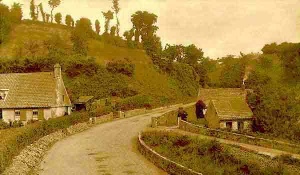 A quiet parish in 1913
 -
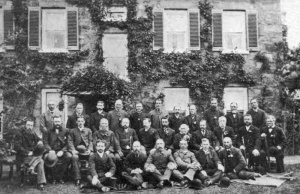 The municipality about 1890
 -
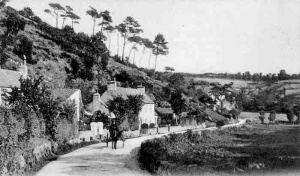 St Mary's Valley
 -
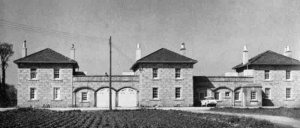 St Mary's Arsenal
 -
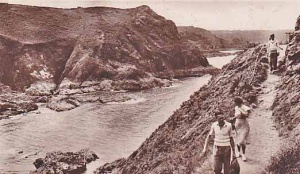 Walking along the north coast
 -
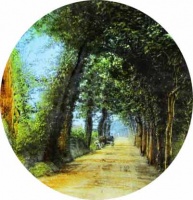 St Mary lane
 -
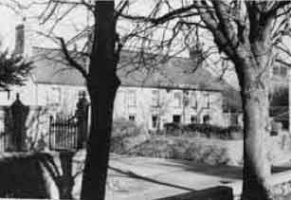 St Mary’s Church area 1964
 -
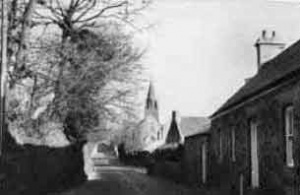 St Mary’s Church area 1964
 -
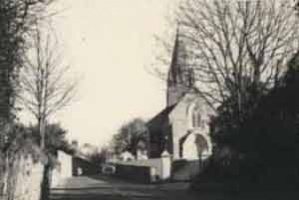 St Mary’s Church area 1964
 -
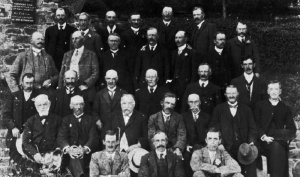 The municipality in 1920
 -
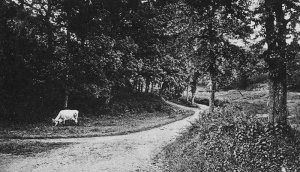 A St Mary lane
 -
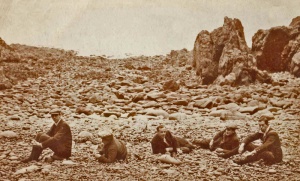 Crabbe
 -
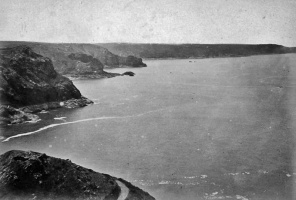 Crabbe 1891
 -
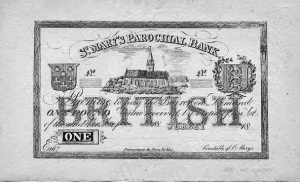 Parish banknote
 -
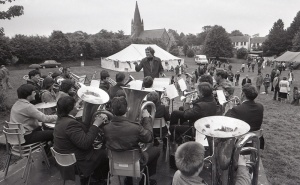 A parish fete
 -
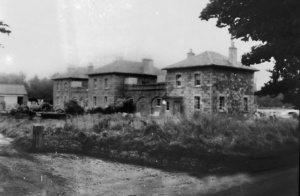 The arsenal
 -
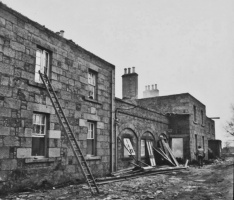 The arsenal
 -
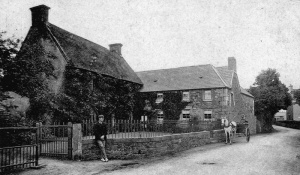 A St Mary cottage photographed for a George Allix postcard
 -
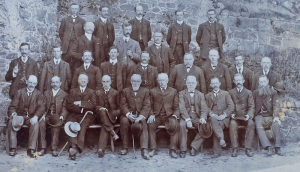 The members of the municipality in 1910
 -
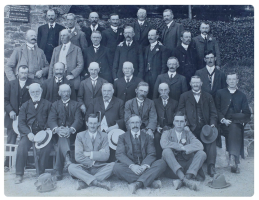 1920
1920 -
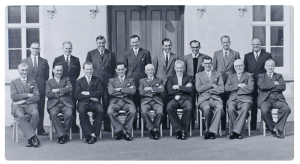 Honorary Police members in 1960
 -
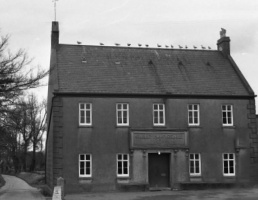 The parish hall in 1981 - Jersey Evening Post picture


Planning Office pictures
This set of photographs of the same locations in 1964 and 1978 was taken by planning officers
-
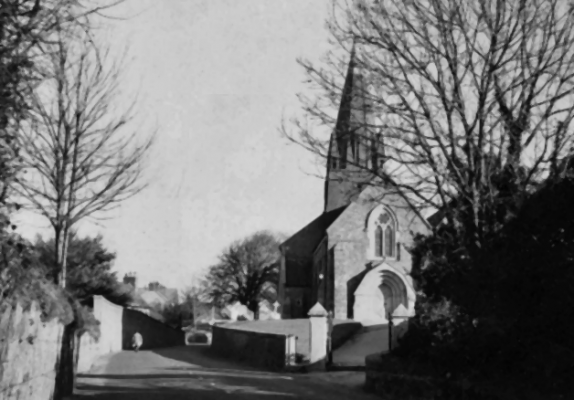 1964
1964 -
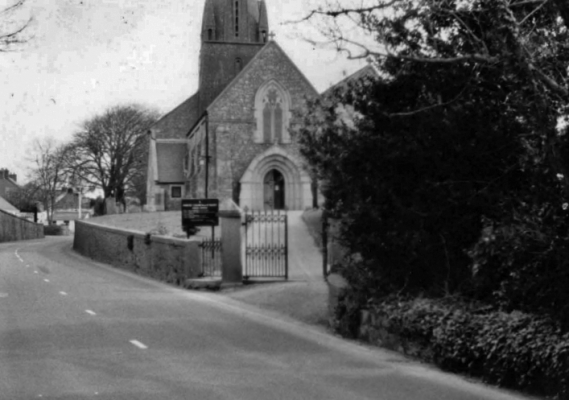 1978
1978 -
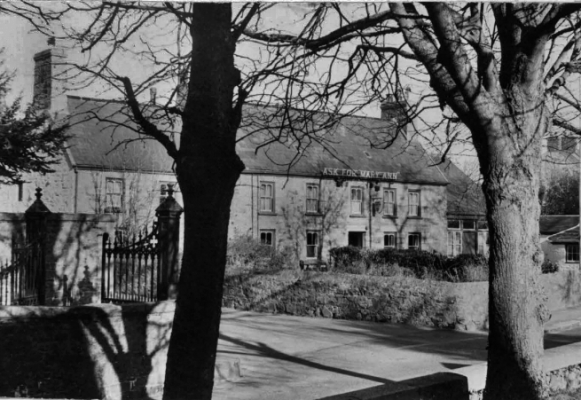 1964
1964 -
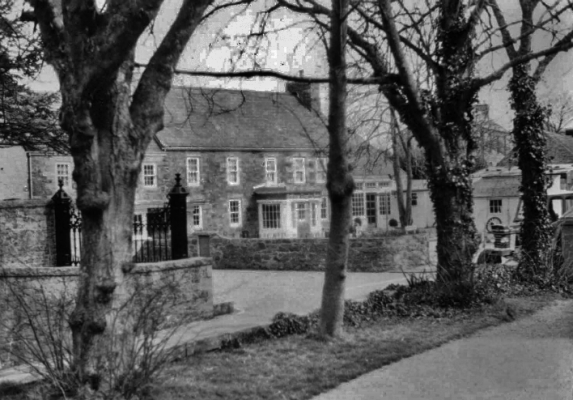 1978
1978 -
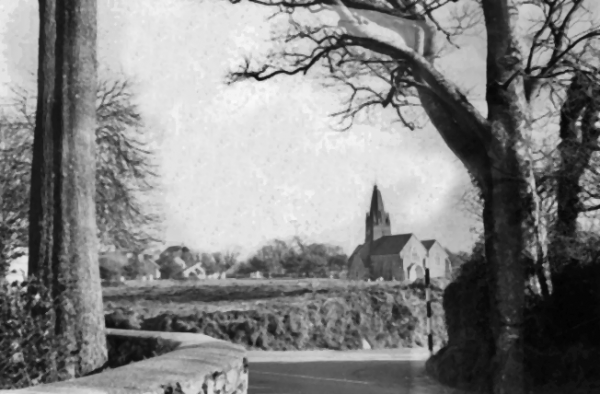 1964
1964 -
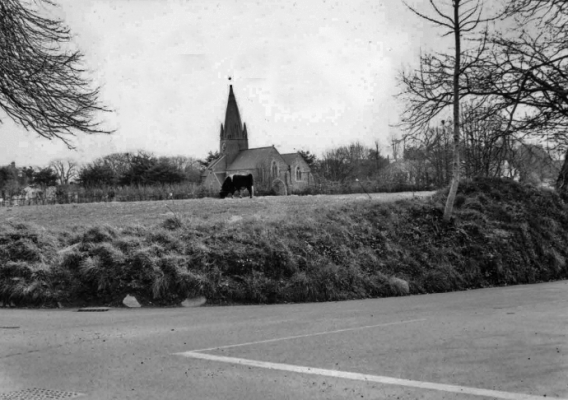 1978
1978 -
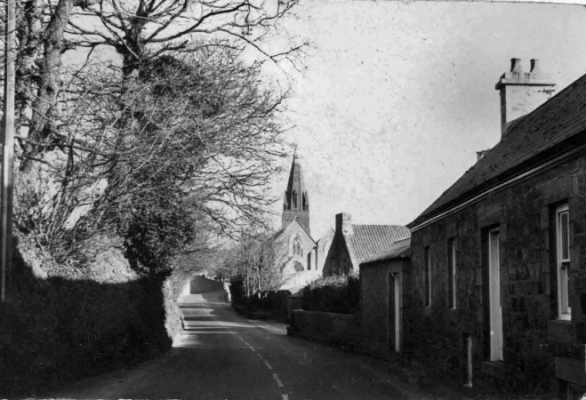 1964
1964 -
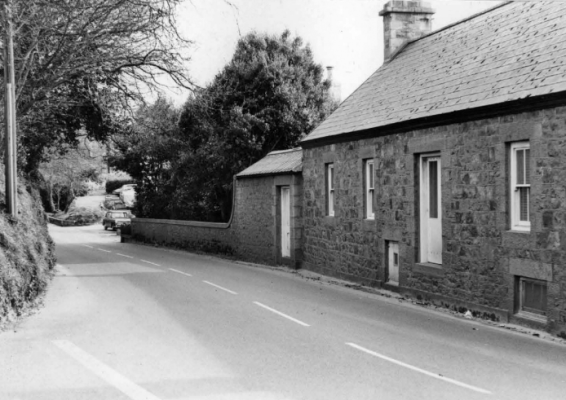 1978
1978


Notes and references
- ↑ Exact dates uncertain. He was 72 years old in 1532. Married Collette Le Couteur. Possibly the same Pierre who was an Advocate in 1534
- ↑ Sworn in 1 April 1536
- ↑ Exact dates uncertain. May not have succeeded Nicolas Hue. He was father of Jean, Nicolas, Jacques, Edouard and Marie, who married Jacques Journeaux. The estate of Jean Hamon, son of Jean, eldest son of Claude, passed in about 1595 to Jean Arthur, son of Clement
- ↑ Second son ofNicolas Journeaux, Jurat, Seigneur of Catelet. Exact dates not known. May have served until 1583.
- ↑ Part of Arthur family which lived at La Falaise from the 16th to the end of the 19th centuries, and would provide the parish with 12 Constables in the years to come
- ↑ Sworn in on 7 May 1586 for a single year, the maximum allowed at the time. First of many St Mary Constables from this family
- ↑ Son of Philippe and Collette, nee de Carteret, daughter of Richard, Seigneur of Vinchelez de Haut. The family lived in Le Marais district. Sworn in 15 May 1587
- ↑ Second term. Lived to an old age and died in 1612
- ↑ Second term. Sworn in on 3 October 1597 at a States Assembly. Asked several times to be allowed to retire, until successful in 1601
- ↑ Son of Nicolas, Constable in 1586
- ↑ Previously Centenier. Sworn-in at a States Assembly on 30 April 1612
- ↑ Son of Simeon, son of Francois
- ↑ Son of Macy, Constable in 1601, above. One of the Parliamentary leaders
- ↑ Son of Philippe, son of Jean, Constable in 1597. Centenier before. Allowed to resign in 1651 on grounds of illness. Nephew of Jacques Le Couteur, Receiver-General 1632-1638. Cousin of Deans Philippe and Clement Le Couteur. He died in 1653
- ↑ Centenier from 1644. Seigneur of Catelet, son of Abraham, son of Clement. Royalist who had to leave his position under the Parliamentarians
- ↑ Appointed Jurat by Cromwell
- ↑ Brother of predecessor
- ↑ Elder son of Philippe, Constable in 1643. Married Marie Dauverne, elder daughter of Jean, of Marais, Constable of St Ouen. Allowed to retire in 1666 but then re-elected seven years later to serve another term.
- ↑ Son of 1629 Constable Jean, son of Simeon
- ↑ Previously Constable 1655-1660. A rare example of an official elected during the Parliamentary period holding office again after the Restoration. Died in office in February 1673
- ↑ His father Aaron, who held office for a few months in 1651, was elected on 9 September 1676, but declined to be sworn in because of his age - 70 - and infirmity. Philippe Journeaux withdrew after his first 13-year term, but six years later he stood again, retiring in 1720 after a further 24 years in office
- ↑ Son of Pierre, son of Jean; and Catherine, nee Arthur. In 1689 the electors of St Mary again chose Philippe Le Couteur, above, as Constable, but he had already been allowed to retire in 1676 and was not required to be sworn in. Le Bailly was chosen in a new election
- ↑ Son of Jean, son of Nicolas. Married to Foy Renouf. Died December 1743
- ↑ Elder son of Jean, former Constable, above, and Jeanne, nee Le Maistre, daughter of Abraham, Seigneur of Quetivel. Married Suzanne Poingdestre, of St Helier, and died without issue in September 1752. He bequeathed a large sum for the benefit of the poor of the island, leading to a long legal action by heirs who disputed his will
- ↑ Son of Jean, son of Jean, son of Daniel, descended from Jurat Daniel Dumaresq, Seigneur of Samares. Advocate in 1745
- ↑ Seigneur of Fief de Lecq, son of Michel and Marguerite, nee Laell. Died in office
- ↑ Son of Jean (son of Pierre) and Marguerite, nee Dupre. Sworn in 9 April 1763
- ↑ RN Lieutenant, of St Ouen, younger son of Jean de Carteret, Seigneur of Vinchelez de Haut. In 1766 he married Anne Le Vesconte, daughter of Raulin Le Vesconte, former Constable, above. Died in 1789
- ↑ Formerly Centenier. Son of Edouard and Esther, nee Renault. Defeated by Nicolas Arthur by 58 votes to 23 in November 1788 election. Challenged result but withdrew after several months. We have not been able to find any record of Jean's birth, nor his parents' marriage, nor place him in a Jerripedia family tree for Dupre
- ↑ Messervy says he was probably the son of Jean, of La Falaise, dying in 1814 aged 83
- ↑ Son of Amice and Marie, nee Le Hardy, daughter of Jurat Jean, Lieut-Bailiff. Received most votes in 1801 election but eventually replaced by Nicolas Arthur, below
- ↑ Sworn in 22 December 1801 and 19 January 1805. Result of election against predecessor given as 53 to 49 in favour of Amice Balleyne, but challenges by Arthur and some electors led to assessment that the election was tied. Arthur was elected in new poll.
- ↑ Elected after a new poll was ordered by the Royal Court. Centenier Etienne Joseph La Gerche beat Samuel Hamon by 59 votes to 58 in the first poll, but in a process lasting nearly two years both were found to have used illegal means to obtain votes and the election was declared null and void. Jean Arthur won the new election. Messervy strangely gives no details of this Jean Arthur, nor of the Constable elected in 1818 and 1821, who was probably the same person. He quotes the Chronique de Jersey as saying that the Jean Arthur elected in 1833 was the son of a former St Mary Constable, without indicating which one
- ↑ Sworn in on 2 December 1812. The son of Nicolas, of St Mary, and Marguerite, nee Le Vesconte. The 1815 poll saw Samuel Hamon (see above) challenge the sitting Constable, only to lose by 42 votes to 37. The resulting challenges dragged on for three years, before Le Couteur withdrew. The Court ordered a new poll, which was won by Jean Arthur
- ↑ Possibly the Jean Arthur who was Constable 1809-1812
- ↑ Centenier for a number of years, elected without opposition in 1824 and sworn in on 12 June. Member of the Les Colombiers Dumaresq family
- ↑ Formerly Centenier. Sworn in on 17 July 1830
- ↑ Sworn in 23 July 1833. Described in Chronique de Jersey as son of former St Mary Constable, without identifying which
- ↑ Sworn in 6 August 1836. The elder son of Jean Le Couteur, former Constable and son of Nicolas. Elected Jurat in April 1840
- ↑ Sworn in 9 May 1840. First cousin of his predecessor of the same name. Son of Edouard (son of Nicolas) and Elizabeth, nee Le Bailly. Died in office on 24 September 1842, aged 35
- ↑ Sworn in 15 October 1842Of La Pompe
- ↑ Sworn in 24 October 1845. Son of Etienne Joseph La Gerche, Centenier of St Mary, and Elizabeth, nee Le Couteur. Stood again in 1848 and received the same number of votes as Nicolas Arthur. The resulting dispute left the parish without a Constable for three years, until Arthur was sworn-in in 1852
- ↑ Sworn in on 20 November 1852, and for three further terms. After a gap of nine years, he stood again in 1874 and served a further 14 years, retiring in August 1888 on health grounds. He died the following February aged 69. Son of Nicolas, of La Falaise.
- ↑ Replaced his namesake for three terms. Born in 1812, the son of Nicolas (son of Francois) and Rachel, nee Langlois, of Le Rondin. In 1874 yet another Nicolas Arthur, son of Jean and Deputy of St Mary, was unanimously elected to replace his namesake, but refused to take the oath, preferring to remain Deputy. A new election was ordered, but there were no electors present. The Court ordered the existing Constable Nicolas Arthur to remain in office. But in October 26 electors presented a remonstrance to the Court complaining that they had not attended the election because they did not know about it. The Court discharged Nicolas Arthur and ordered another election. The Nicolas Arthur who had served from 1852 to 1865 was unanimously elected and served nearly another five terms before retiring on health grounds, above
- ↑ Sworn in 8 September 1888 and again in 1891. Not found in baptism registers or any Jerripedia tree
- ↑ Sworn in 27 October 1894, and again in 1897 and 1900
- ↑ Sworn in 23 January 1904