After the Liberation


This page contains our collection of photographs of life in Jersey in the weeks and months after the end of the war
They follow on from our gallery of pictures of Liberation Day itself and its immediate aftermath
We have tried to avoid too much duplication, but there will be pictures as parts of sets on this page which are included in the other gallery
A major reorganisation of the page was carried out in March 2023, but it still remains to group together photographs of similar subjects and to complete the captioning of all images'
Except where specifically otherwise identified, the majority of these photographs were taken by Evening Post staff photographers, film and chemicals being unavailable for amateurs.
We have not identified each picture which we believe to have been taken for the newspaper
Force 135
The next set of photographs, taken in the days immediately following the Liberation, show members of Force 135, the army unit sent to help start Jersey on the route back to normal life. Some of them were taken by members of Force 135, others by the Evening Post and other local photographers
- Removal of German weapons and ammunition: A photographic diary kept by Major Frank Sargent (RAOC) of the 135 Field Ordnance Depot
-
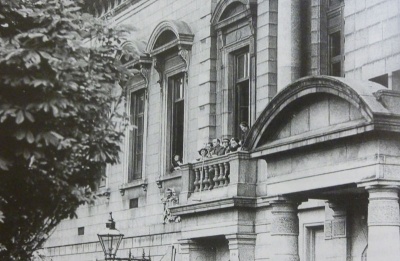 Bailiff Alexander Coutanche addresses the crowd in the Royal Square
 -
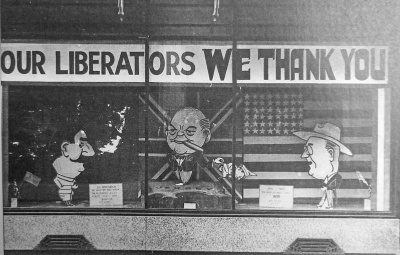 A window display at R M Stores in King Street, thanking allied leaders
 -
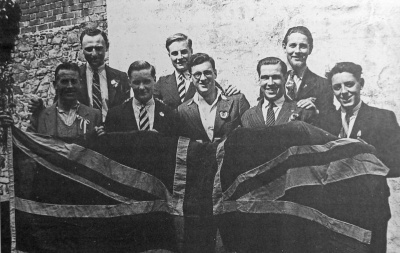 Prisoners released from Newgate Street prison
 -
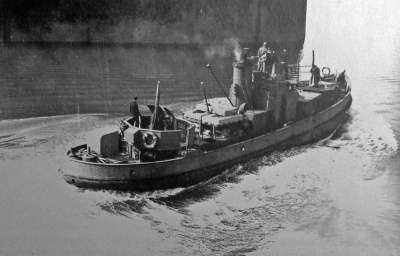 A German vessel heads out to HMS Beagle
 -
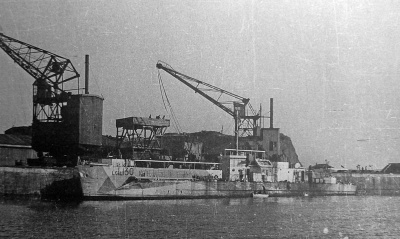 Landing craft on the New North Quay
 -
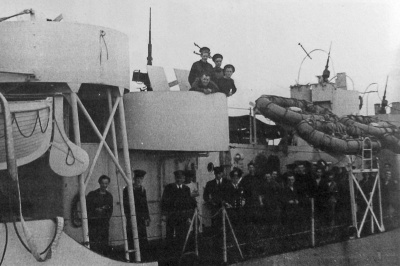 HMS Cosby
 -
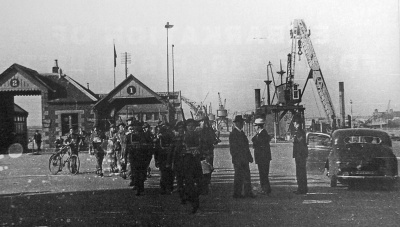 This picture is said to show the Bailiff at the Weighbridge, but we are not certain that he is in the photograph
 -
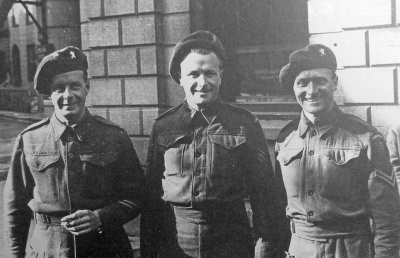 Three Jerseymen selected as part of Force 135 - Privates Ahier, de Gruchy and Mangan


-
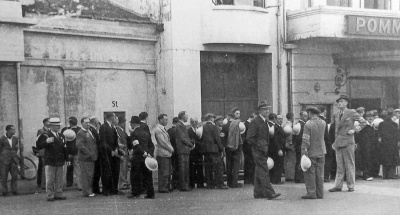 ARP volunteers about to be deployed to keep important routes to the harbour clear for the liberating troops to move equipment
 -
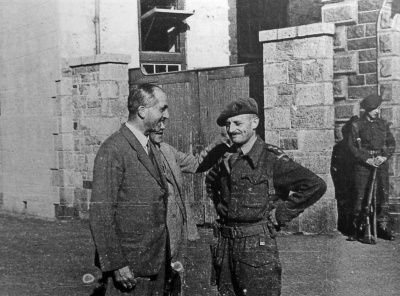 A member of Force 135, Captain Le Brocq, meets old friends
 -
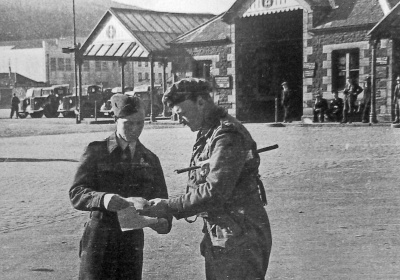 Colonel Robinson briefs a war correspondent
 -
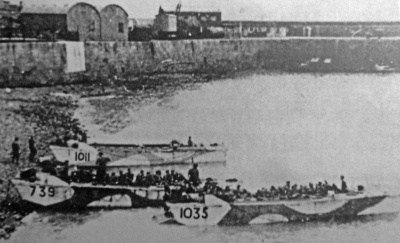 Landing craft in Victoria Harbour
 -
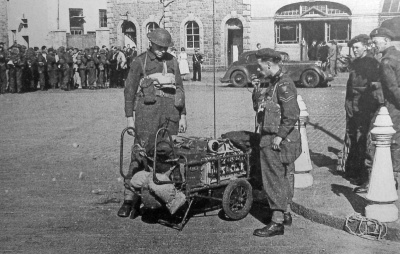 Communicating with the offshore naval vessels from the Weighbridge
 -
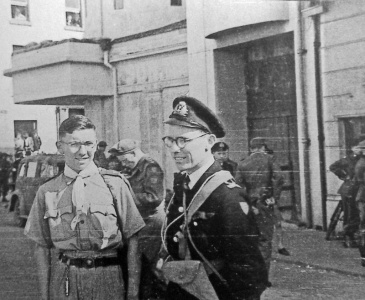 Brothers Kevin and Bernard Le Cocq reunited
 -
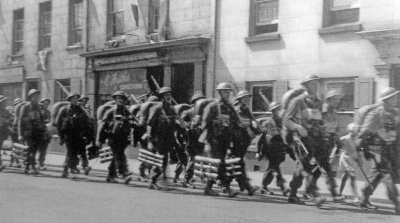 Troops carry mortars as they are deployed to defensive positions
 -
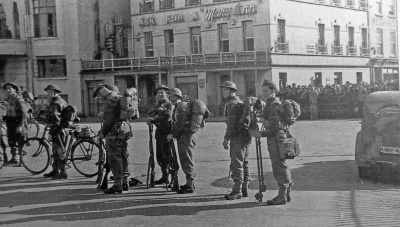 Soldiers wait at the Weighbridge
 -
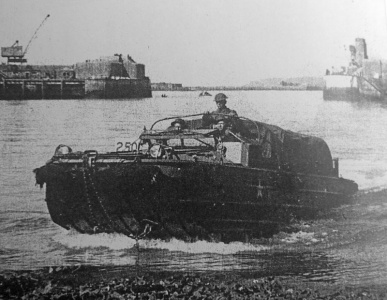 A DUKW arrives with more equipment
 -
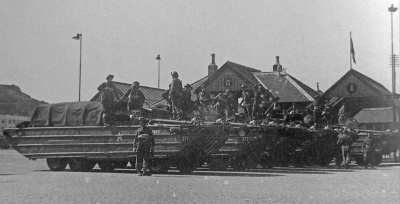 DUKWs lined up at the Weighbridge
 -
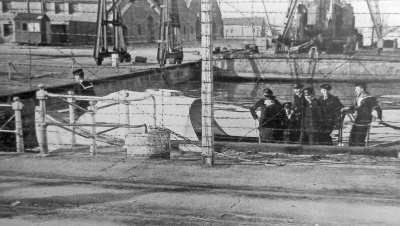 Town pilots return after guiding Force 135 vessels to shore
 -
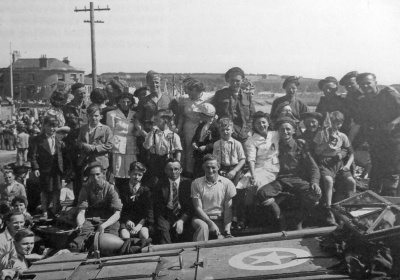 Liberators mix with islanders at West Park
 -
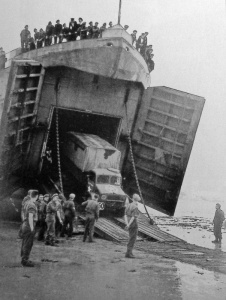 Landing craft
 -
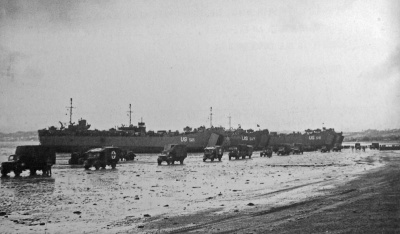 Landing craft
 -
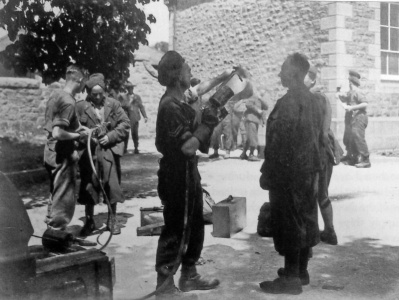 Processing German prisoners at St Lawrence
 -
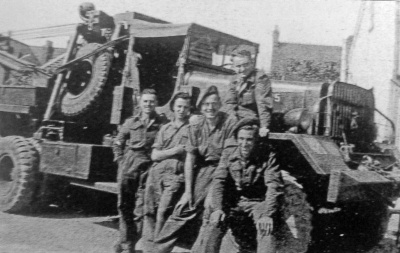 Force 135 members happily pose for a photographer


The big clear-up
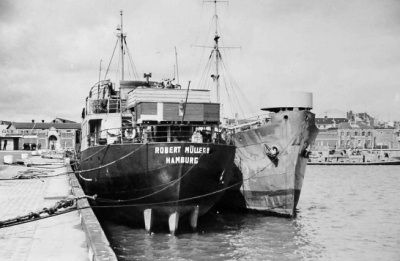
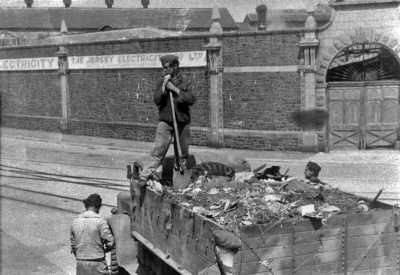
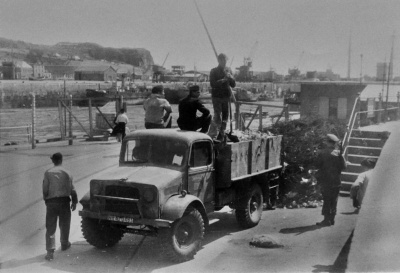
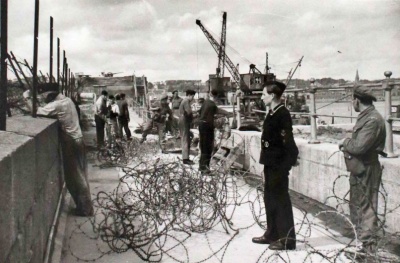
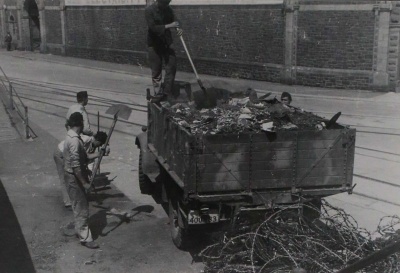
Within a few days of the Liberation German troops were being taken out of the island to prisoner-of-war camps in the United Kingdom, but some remained to start on the work of clearing ammunition, weapons, railway lines, barbed wire and other obstructions

St Helier Harbour
-
-
-
-
-
-
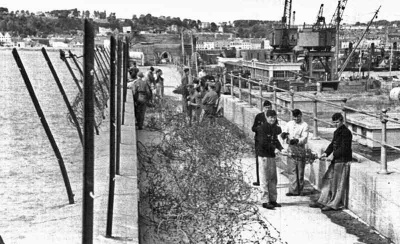 Barbed wire on the Albert Pier is removed
.jpg)


General


-
-
-
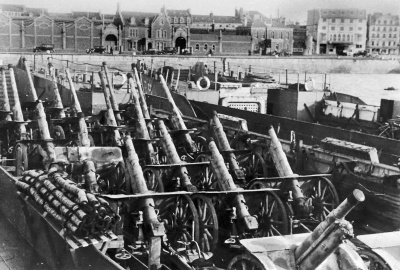
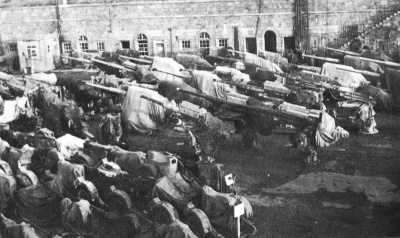 Guns at Fort Regent awaiting disposal at sea
 -
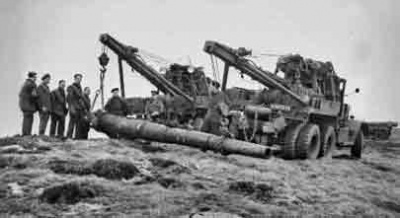 German guns are dumped over the cliff at Les Landes in 1946. Some were recovered some later
 -
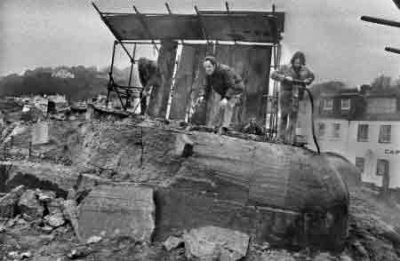 The large bunker at Gorey Harbour was finally demolished in 1972 to create a coach park - Picture Evening Post
 -
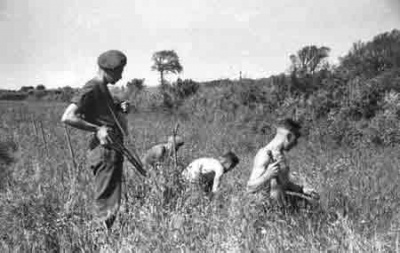 German soldiers were supervised in the clearing of mines after the Liberation
 -
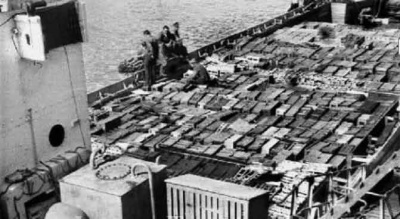 Ammunition being dumped at the Hurd Deep
 -
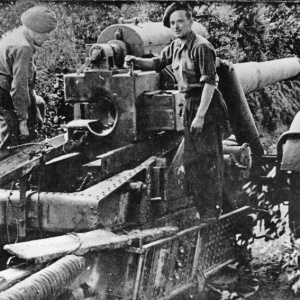 Moving a German gun at St Martin
 -
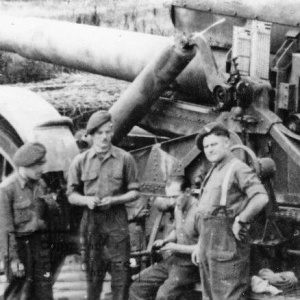 Moving a German gun at St Martin
 -
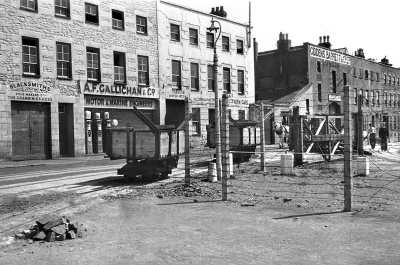 Evening Post picture of the Esplanade in 1945 ...
 -
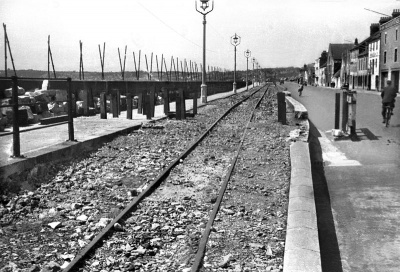 ... the German railway track remains to be removed
 -
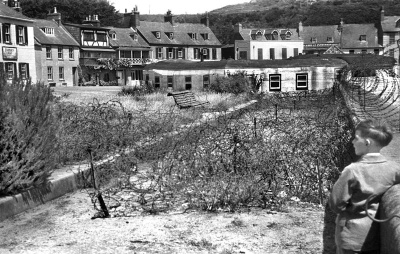 Gorey in 1945 -Evening Post picture
 -
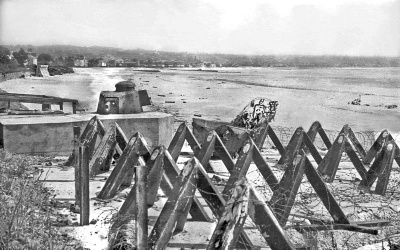 La Haule in 1945 -Evening Post picture
 -
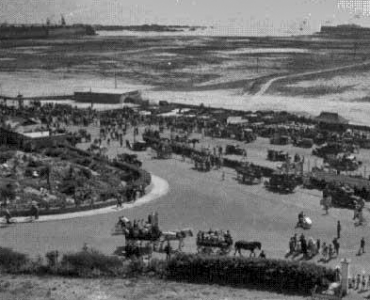 Islanders gather at West Park on 12 May 1945
 -
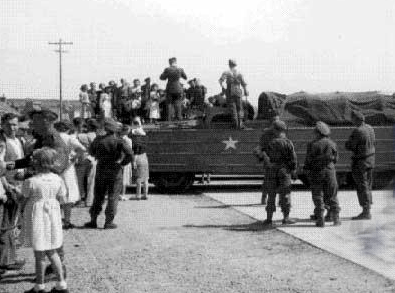 Islanders gather at West Park on 12 May 1945


-
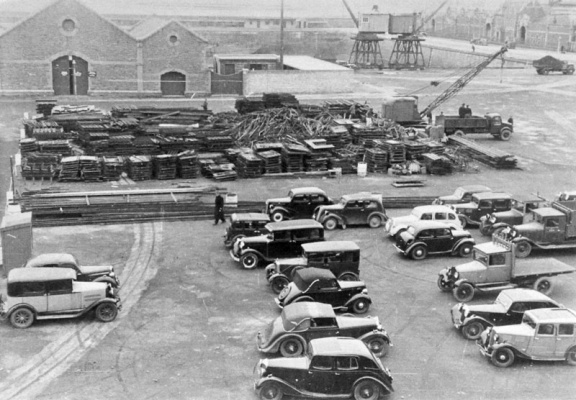 The car park at the top of the Old Harbour was soon back in use and scrap metal has been assembled behind ready to be auctioned
 -
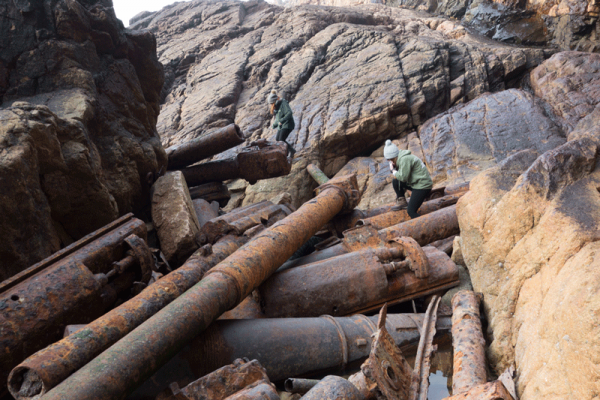 Large guns were dumped over the cliff at Les Landes, from where a handful were recovered many years later


-
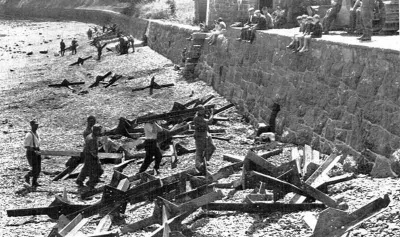 Clearing beach defences at Grouville
 -
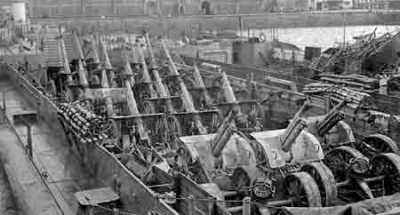 German guns are taken away to be dumped at sea
 -
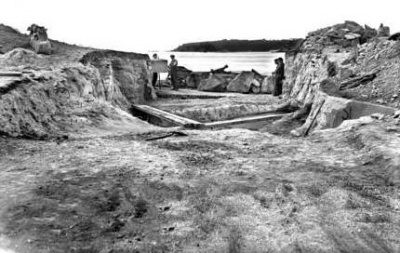 Breaking through the bunker at Bel Royal to open up the slipway again
 -
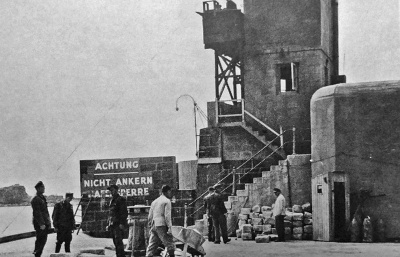 German prisoners removing a defence installation on the Albert Pier
 -
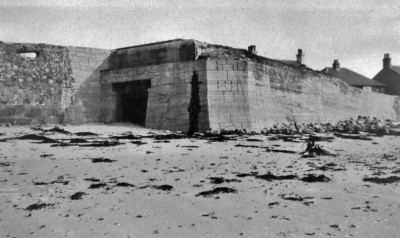 Beaumont bunker
 -
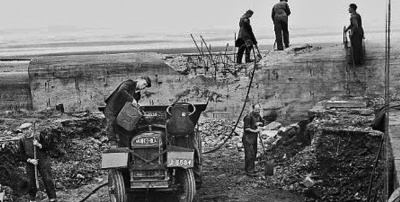 Removing a bunker blocking the slipway at Beaumont in 1946
 -
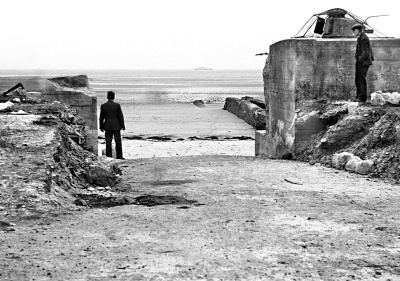 Job complete
 -
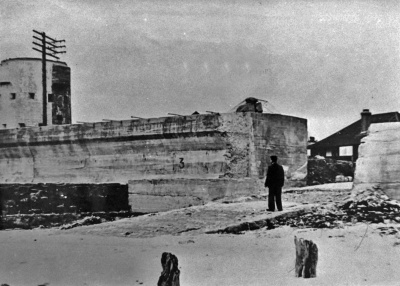 Beaumont slipway
 -
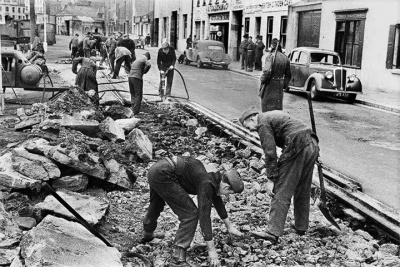 Removing railway track at Commercial Buildings
 -
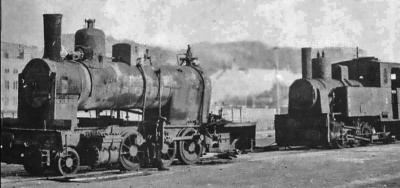 German trains waiting to be shipped out of the island
 -
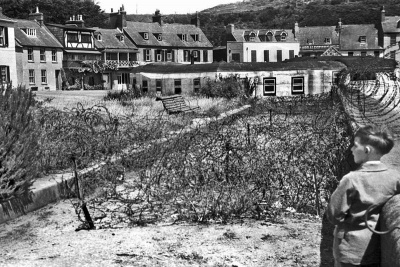 Barbed wire at Gorey
 -
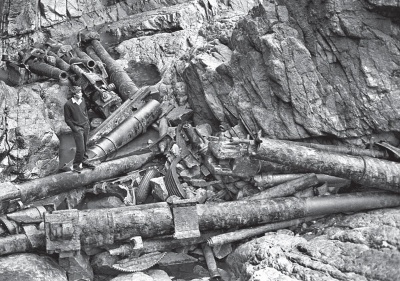 Guns over the cliff
 -
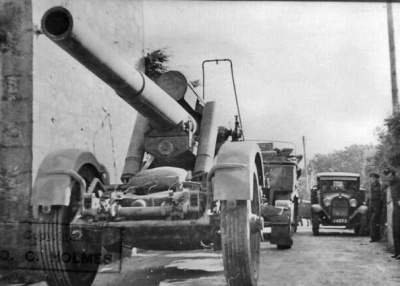 A field gun being moved from St Martin to the Harbour
 -
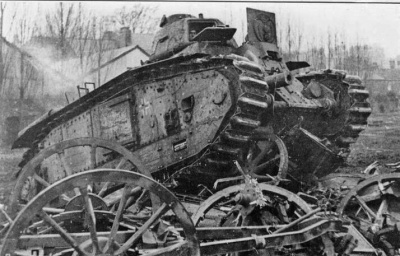 A captured tank being used to crush scrap
 -
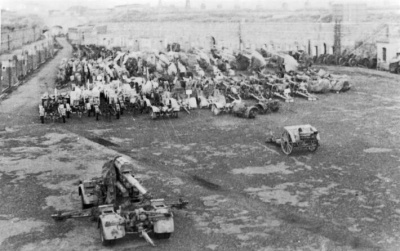 Fort Regent
 -
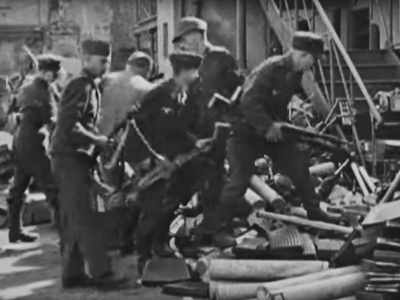 German guns in a pile ready for disposal
 -
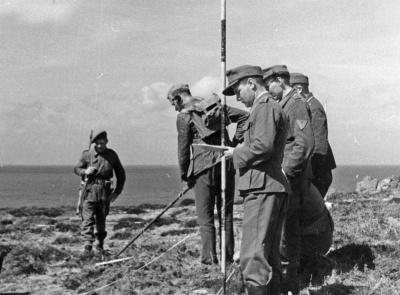 Mine clearance by German prisoners
 -
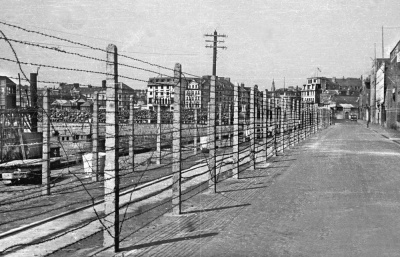 Fencing awaits removal in front of Commercial Buildings in May 1945
 -
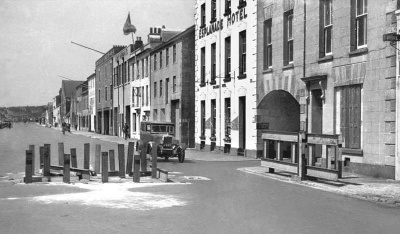 Defensive obstacles yet to be removed from the Esplanade in 1945
 -
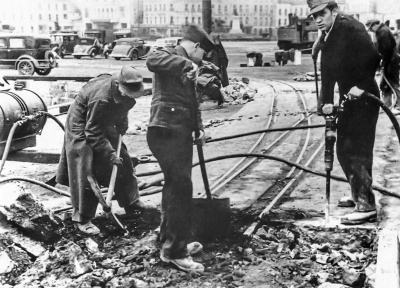 An Evening Post picture of German prisoners removing rail tracks in front of Commercial Buildings at St Helier Harbour in 1945
 -
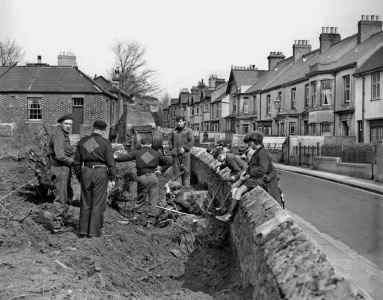 Prisoners put to work in Green Street
 -
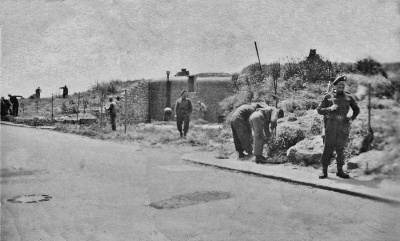 German prisoners put to work clearing coastal defences at Millards Corner
 -
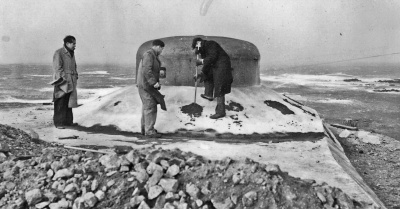 Setting explosives in a gun turret in the early 1950s
 -
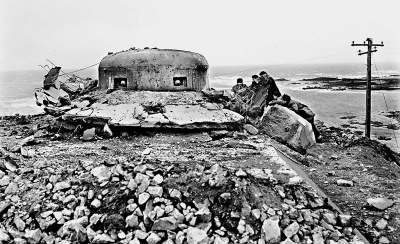 The result of the explosion
 -
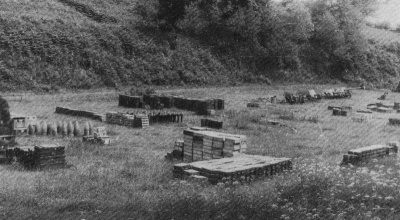 Ammunition collected in Queen's Valley ready for disposal
 -
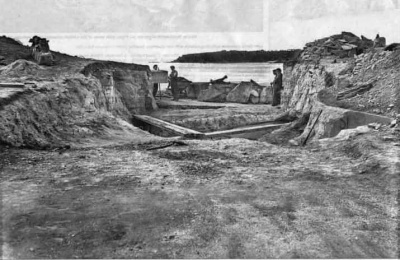 Re-opening of the Bel Royal slipway in 1949
 -
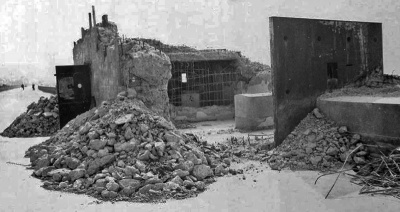 Demolition of the First Tower bunker
 -
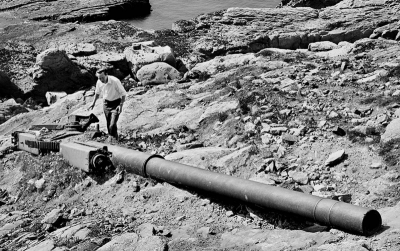 A gun dumped over a cliff


1946 auctions
Much of what the Germans left behind was despised and unwanted, but there were exceptions, and auction sales were held in 1946 to dispose of them. These pictures were taken by celebrated French war photographer Pierre Roughol on a visit to Jersey in 1946 [1]


Life gets back to normal
-
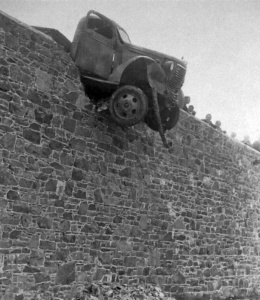 A runaway Army Chevrolet at South Hill
 -
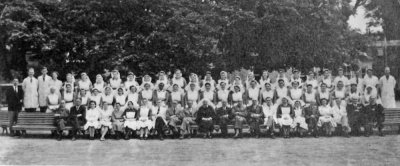
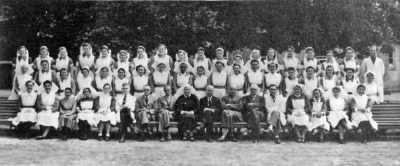
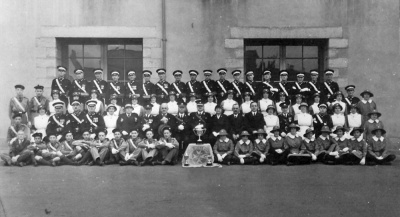 St John Ambulance Brigade in 1945
 -
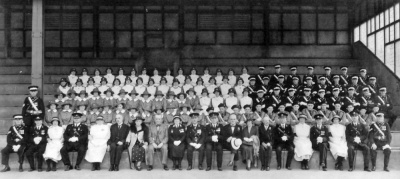 St John Ambulance Brigade in 1945
 -
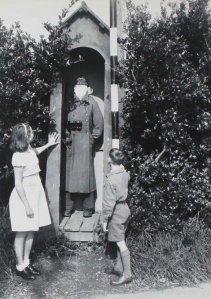
-
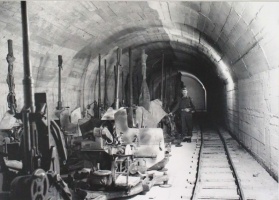
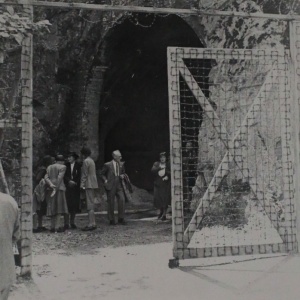 Members of La Societe Jersiaise visit tunnel HO5 in July 1946
 -
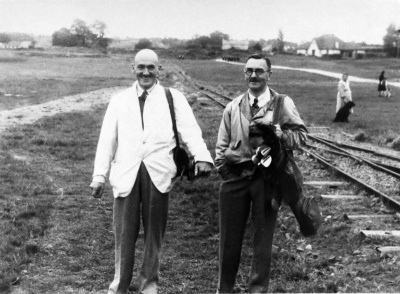 An early round of golf
 -
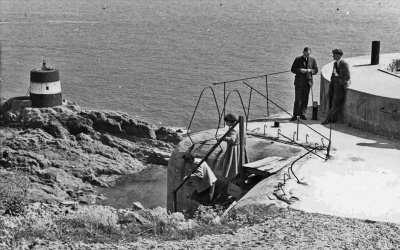 Members of La Societe Jersiaise visit Noirmont
 -
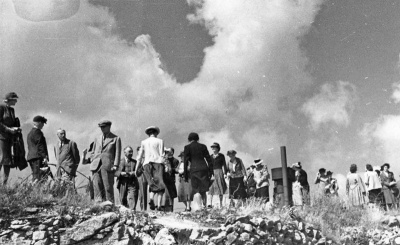 Members of La Societe Jersiaise visit Noirmont
 -
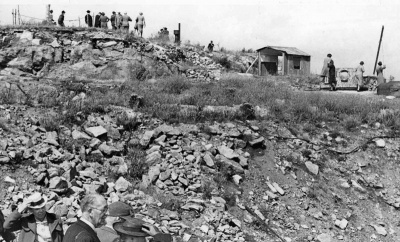 Members of La Societe Jersiaise visit Noirmont
 -
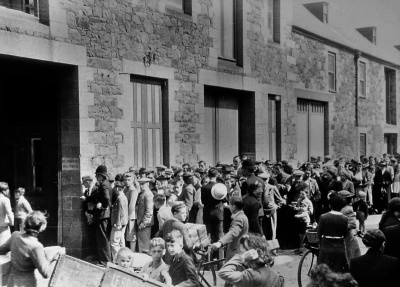
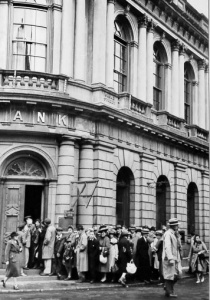 A queue to change German money at Lloyds Bank
 -
-
-
-
-
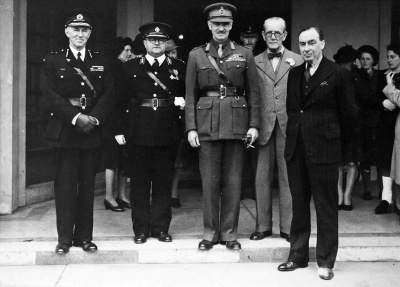 An official visit to St John Ambulance by the Bailiff and Lieut-Governor


-
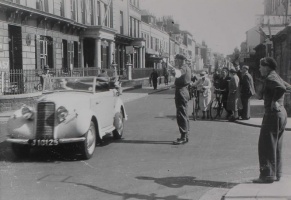 Traffic control in David Place
 -
-
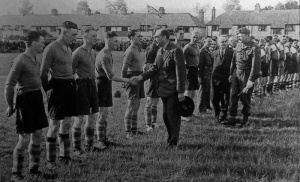 The Bailiff meets participants in a football match on 18 May 1945
 -
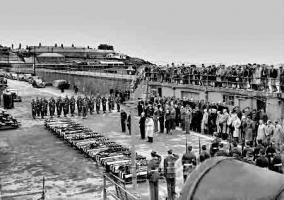 The bodies of US servicemen ready to leave the island in 1946
 -
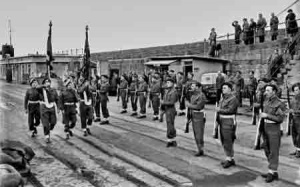 The colours of the Island Militia return to the island in 1946
 -
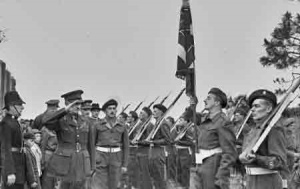 Saluting the returning Militia colours in 1946
 -
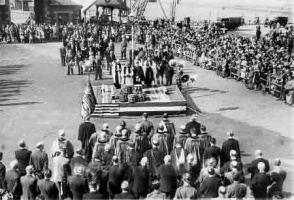 The drumhead service held at the Weighbridge on 25 August 1945 - Picture Evening Post
 -
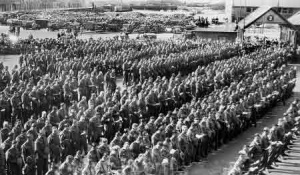 Large numbers of islanders and troops attended the drumhead service held at the Weighbridge on 25 August 1945
 -
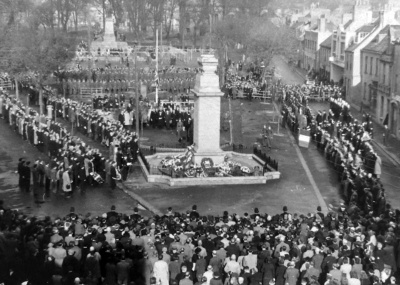
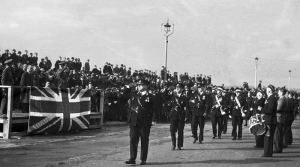 Remembrance Day parade on Victoria Avenue in 1945
 -
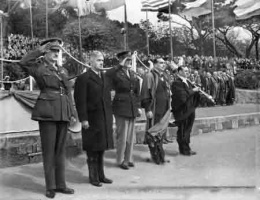 One year on, and People's Park is the venue for Liberation Day celebrations in 1946
 -
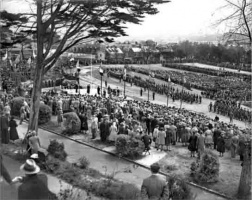 The 1946 celebrations on People's Park
 -
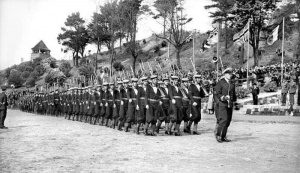 The 1946 celebrations on People's Park
 -
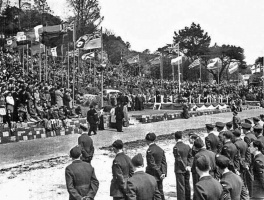 The 1946 celebrations on People's Park
 -
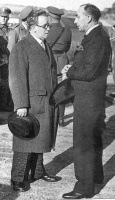 Visit of Home Secretary Herbert Morrison in 1945
 -
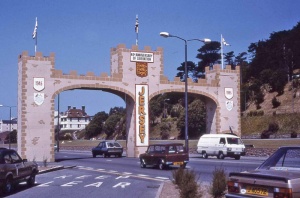 An arch erected on Victoria Avenue for the 40th anniversary in 1985


-
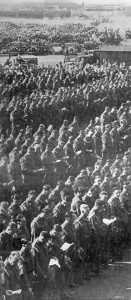 Drumhead service
 -
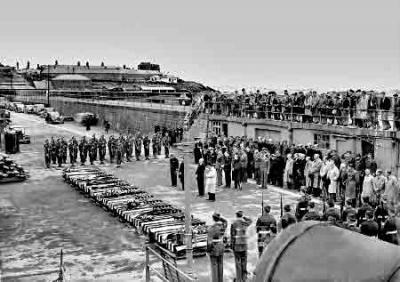 The bodies of US servicemen ready to leave the island in 1946
 -
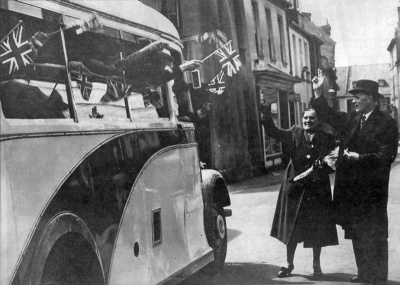 1957 Liberation Day outing
 -
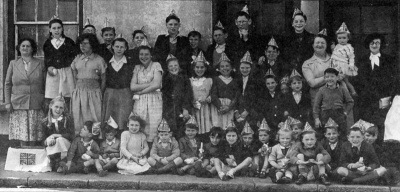 1954 street party
 -
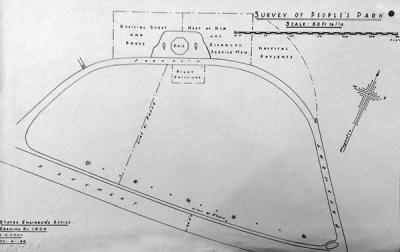 Diagram of layout for first anniversary of Liberation celebrations in People's Park in 1946
 -
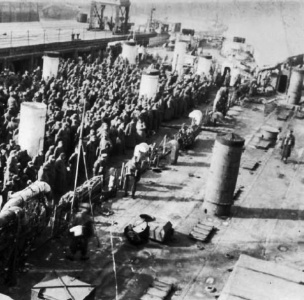 German prisoners of war arrive in Southampton
 -
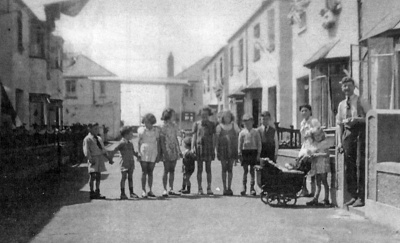 Kingsley Avenue, St Clement, holds a Liberation anniversary celebration
 -
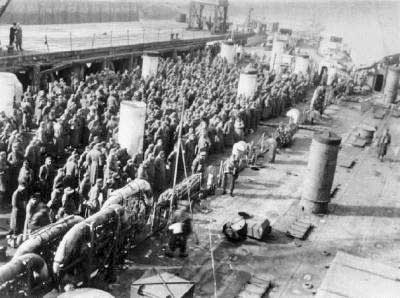 German prisoners of war landed at Southampton
 -
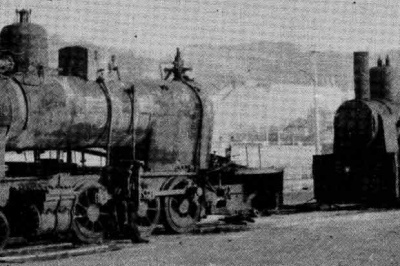 German trains in 1946
 -
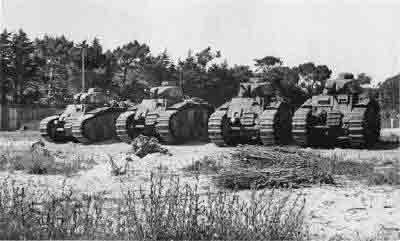 French tanks lined up on the Circus Field at Millbrook, ready to be sent back to France
 -
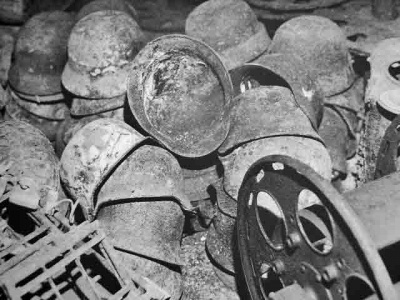 German helmets abandoned in a tunnel
 -
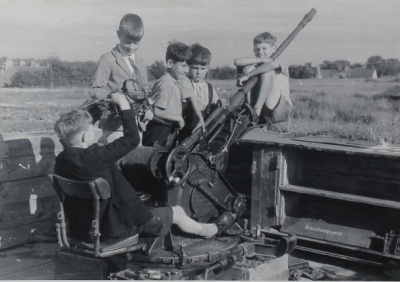
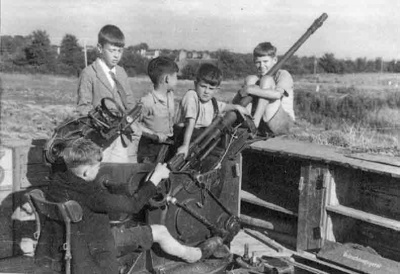 Children playing on an abandoned gun at Mont à l'Abbé
 -
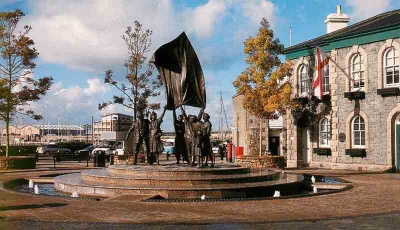 Liberation Square now commemorates the events of May 1945
 -
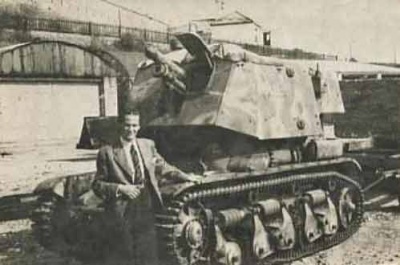 A German tank in 1945
 -
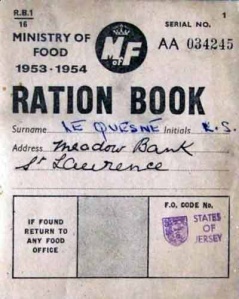 Food rationing continued many years after the Occupation ended
 -
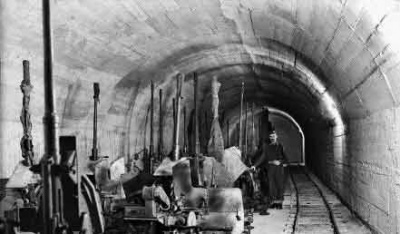 German guns in a tunnel in 1946
 -
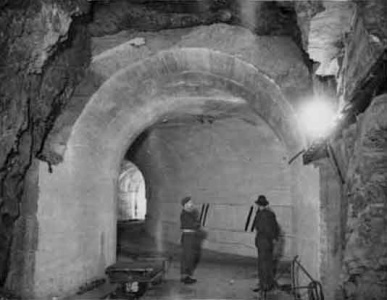 A German tunnel explored
 -
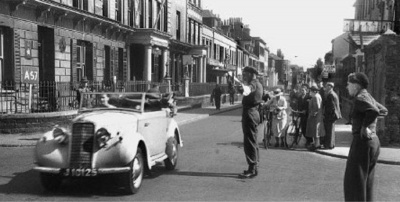 A soldier directing traffic in David Place in 1945
 -
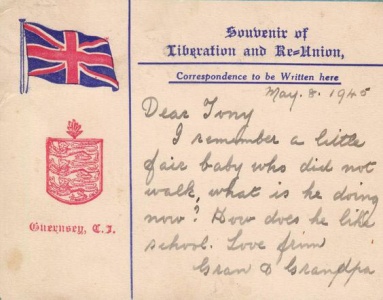 Special cards were quickly produced to allow normal family communications to resume
 -
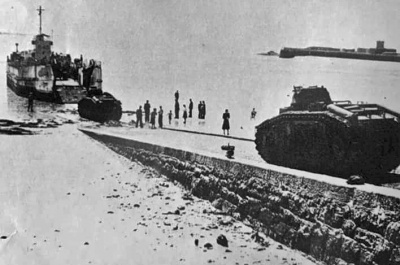 French tanks being loaded at La Haule to be returned
 -
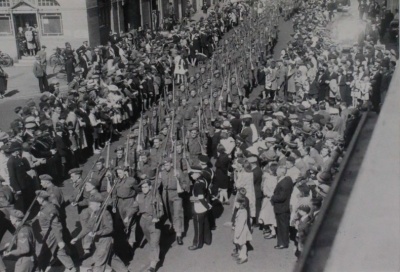
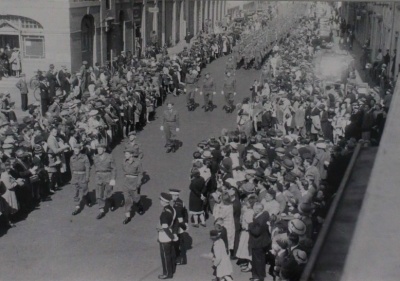
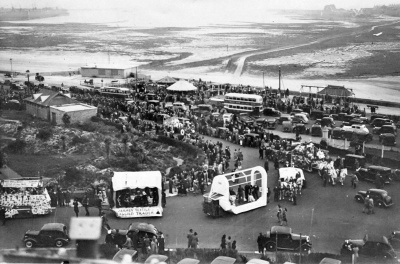 1946 Liberation anniversary cavalcade
 -
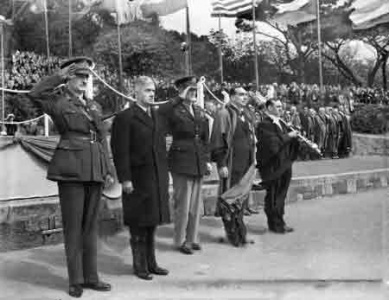 One year on, and People's Park is the venue for Liberation Day celebrations in 1946
 -
-
-
-
-
-
-
-


-
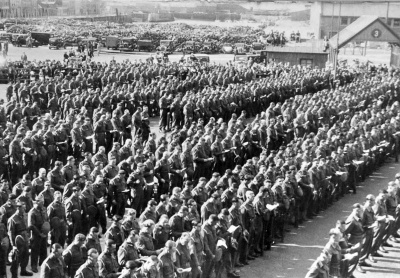
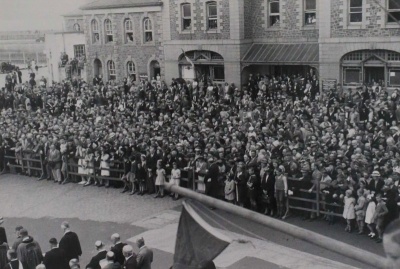
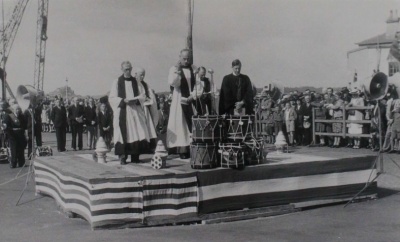
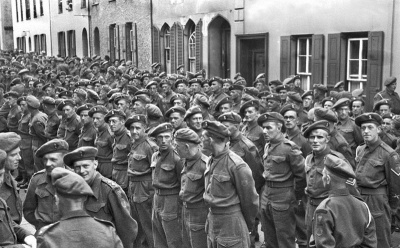 Church parade in July 1945
 -
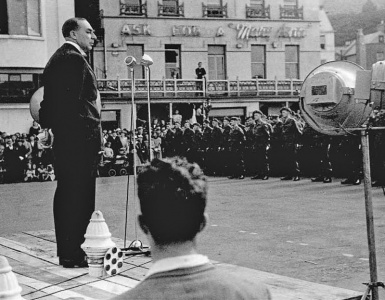 The Bailiff's address
 -
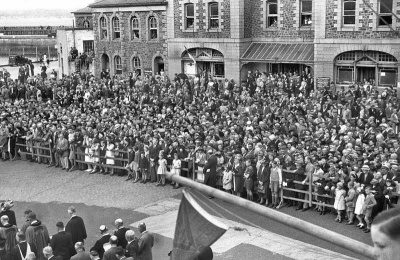 Drumhead service
 -
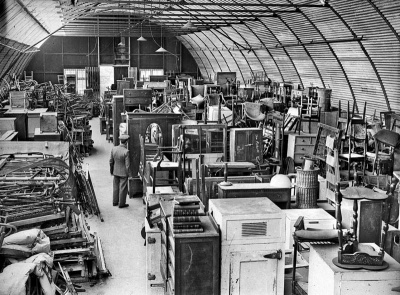 Evacuees property stored awaiting their return
 -
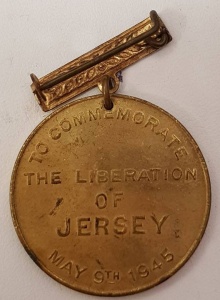 Token issued by the States in 1946 to mark the Liberation
 -
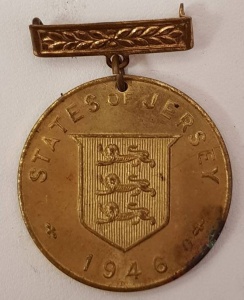 Liberation token


-
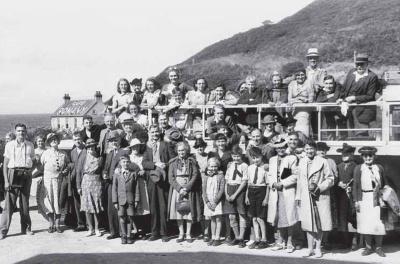 Life quickly returned to something like normality. This was a church outing to Greve de Lecq in summer 1945
 -
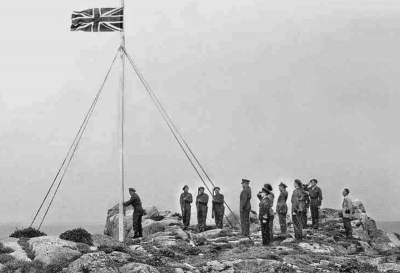 The Union Flag raised on Les Minquiers shortly after the Liberation
 -
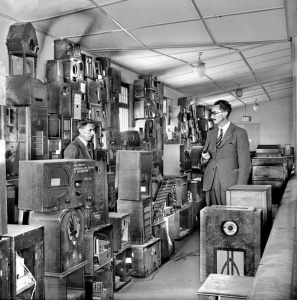 A storeroom full of confiscated radios
 -
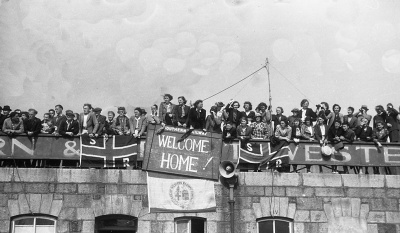 Evacuees welcomed home
 -
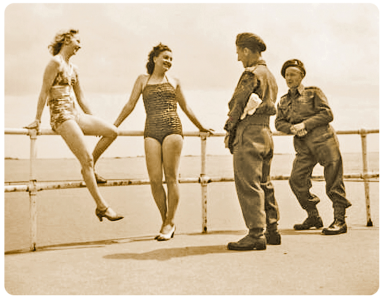 During the Occupation Havre des Pas pool was used almost exclusively by the Germans. Now local girls can relax there and meet the 'tommies' who liberated them
 -
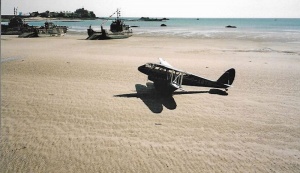
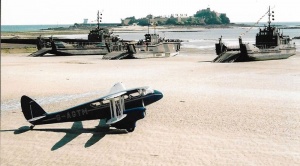
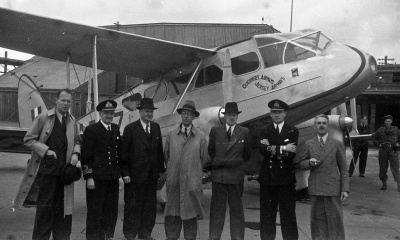 The first post-Liberation commercial flight
 -
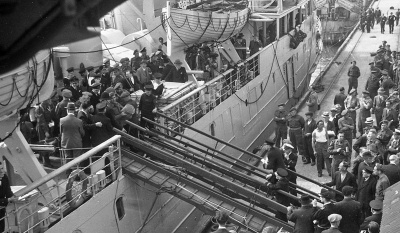 Soldiers return
 -
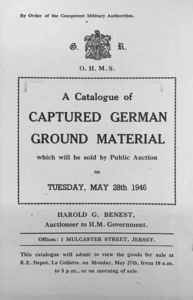 An auction of German equipment in 1946
 -
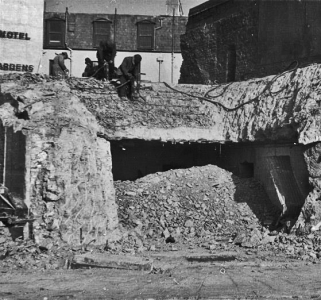 Conway Street air raid shelter demolition in 1956. The site was eventually incorporated into the Pomme d'Or Hotel


-
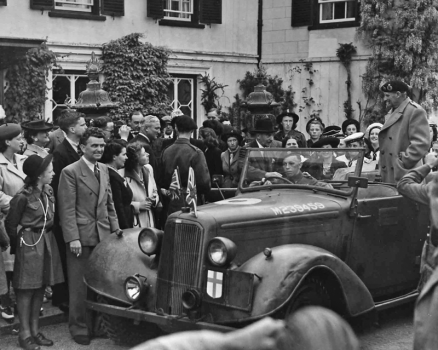 Field Marshal Bernard Montgomery
 -
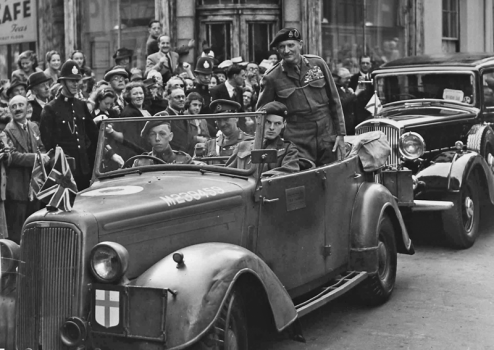 paid an official visit in 1947


-
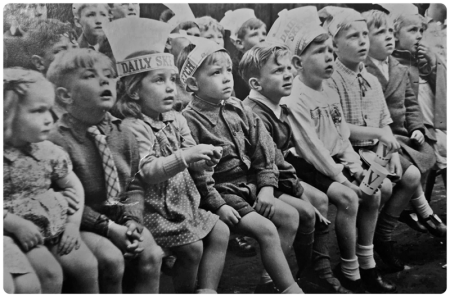 1945 children's Victory Party ...
 -
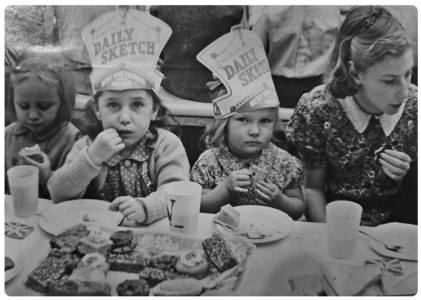 ... hats supplied by the Daily Sketch


Evening Post Liberation supplement


These individual photographs, some of which can be found elsewhere in our Liberation galleries, were taken from a rather faded copy of the supplement
-
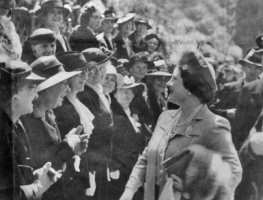 The Queen talks to wives of servicemen
 -
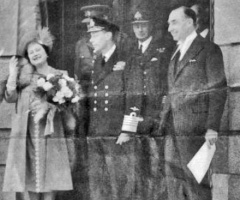 The King and Queen outside the States Building with Bailiff Alexander Coutanche
 -
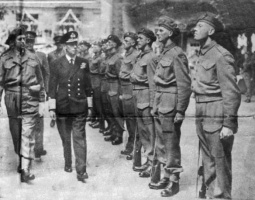 The King inspects a guard of honour of liberating soldiers in the Royal Square
 -
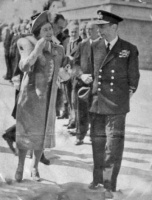 The King and Queen at the Harbour
 -
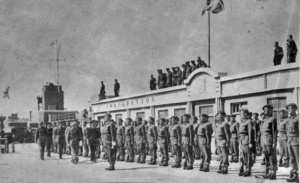 Guard of honour at the Harbour
 -
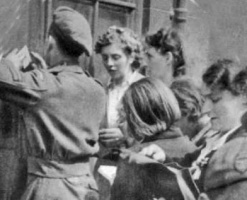 Autographs for eager young ladies
 -
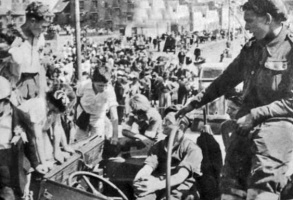 First sight of a jeep for these youngsters
 -
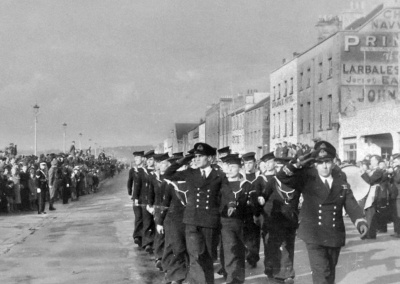
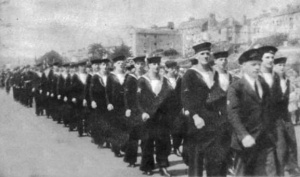 Naval contingent in the Empire Day parade
 -
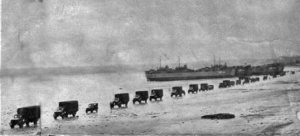 Army vehicles cross St Aubin's Bay
 -
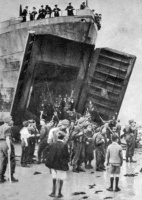 A landing craft attracted curious islanders
 -
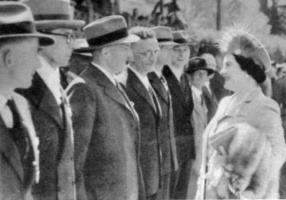 The Queen meets ex-servicemen
 -
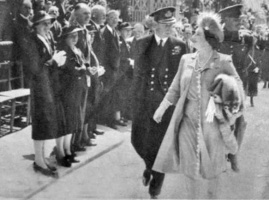 In the Royal Square
 -
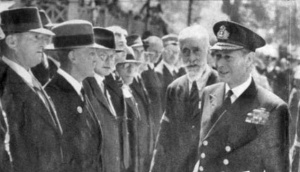 The King meets British Legion members
 -
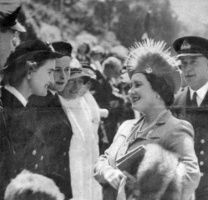 The Queen meets WREN sisters


French North African PoWs
French North African prisoners of war had been housed in a camp at South Hill. They were freed on Liberation Day


RAF posting
His family do not know why, but Flight Lieutenant John Duncan Crombie, DFC, of Bomber Command, was briefly posted to Jersey in September and October 1945. These pictures show him somewhere on the island's coast and on the deck of a landing craft in St Aubin's Bay; and also a photograph of the Airport where he was based, and aerial views of the island he apparently took


Prisoner of war letter
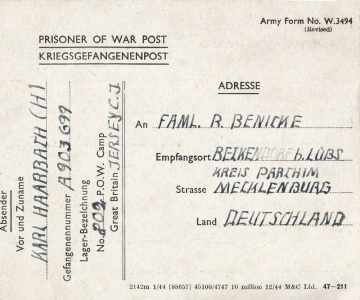
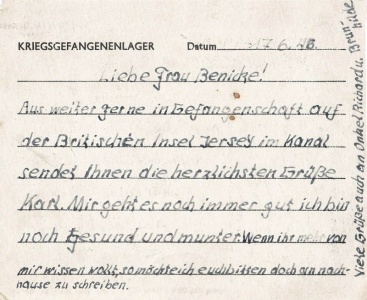
Red Cross letters sent to and from Jersey during the Occupation, and letters from German troops to their families, remain fairly common. This letter sent home by a German prisoner-of-war a year after the Liberation is much more of a rarity.
We are grateful to Malcolm Amy for supplying this information:
- 'St Peter's Barracks became a prisoner-of-war camp (No 802 POW Camp) on 24 May 1945 to house 1,680 German engineers, weapons experts and vehicle mechanics, who were retained in Jersey to remove land mines and other lethal stuff. The POWs soon became a familiar sight as they cleared barbed wire, lifted explosives, disarmed artillery batteries and repaired property. At first they were driven to site under a heavy guard by British troops in Bedford 3-ton lorries. But as the British military presence diminished the Germans drove themselves to site and by the end of 1945 a working camaraderie had developed between the PoWs and their guards, based on their shared aim of release or demobilisation. The last group of five German PoWs left Jersey on 30 July 1946.'
It seems likely that Karl Haarbach, the sender of this card, was one of those five. He wrote that he was 'fine' and 'healthy', but there is no suggestion that he knew that his release was just weeks away.
-
-
-
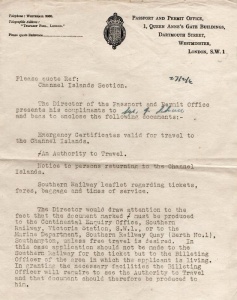 A permit to travel to Jersey. The date is not clear, but was probably February 1946


Rationing continued
-
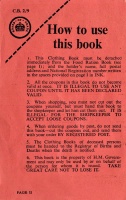
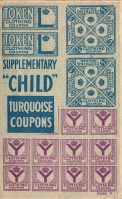
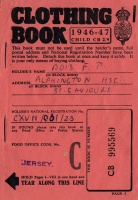 Clothing ration book from 1946
 -
-
-
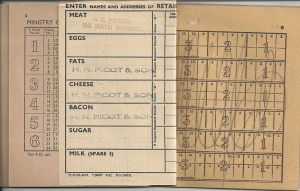 Rationing was still in force long after the Liberation - this book is from the early 1950s


Hoteliers claims for damage
Jersey's hoteliers were keen to get back in business when the war ended, but they wanted compensation for the severe damage done to their properties by the Germans. This letter written to the Bailiff by S D Frain, of the Aberfeldy Hotel, setting out the desire of members of the Jersey Hotels Association to make claims under a number of headings, is part of Jersey Archive's collection of Occupation documents, which can be viewed by subscribers to their online catalogue


Liberation celebrations
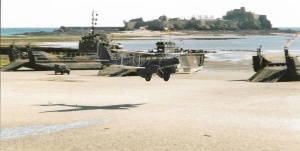
A 21st century Liberation anniversary celebration on the beach at West Park
-
-
-
-
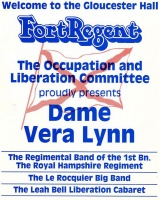 Programme for a celebration concert in 1990


Commemorative stamps
During the Occupation stamps were produced in Jersey from designs by local artist Edmund Blampied. In 1948, to celebrate the third anniversary of the Liberation, the British Post Office released new stamps incorporating Blampied drawings


Notes and references
- ↑ Pierre Roughol was an accomplished French war photographer during the Second World War, documenting the Liberation of Paris in August 1944, life in prison camps and other wartime subjects. His collection has now been digitised by his great-niece, Isabelle Roughol