St Catherine Tower

St Catherine Tower

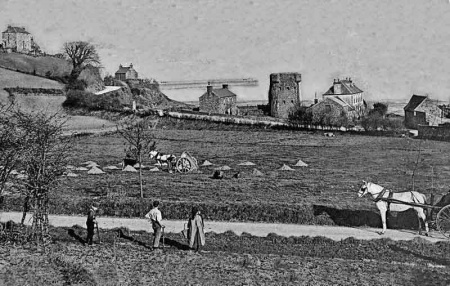
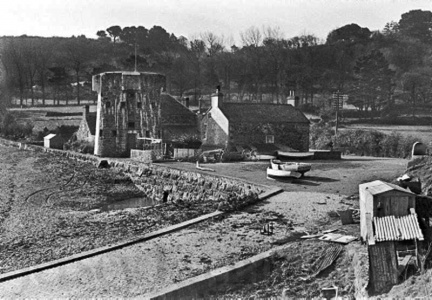
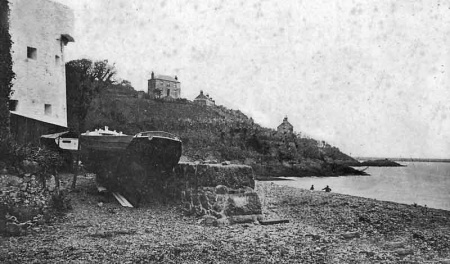
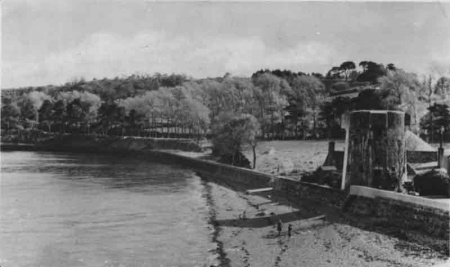
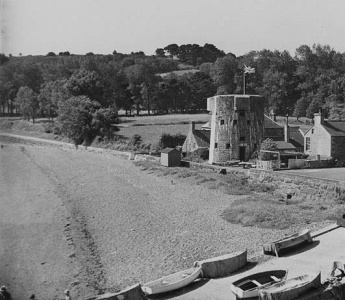
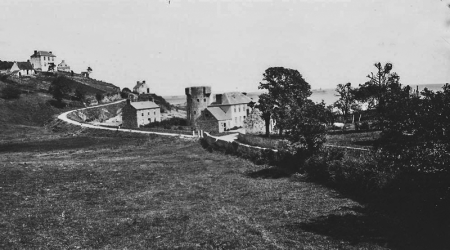
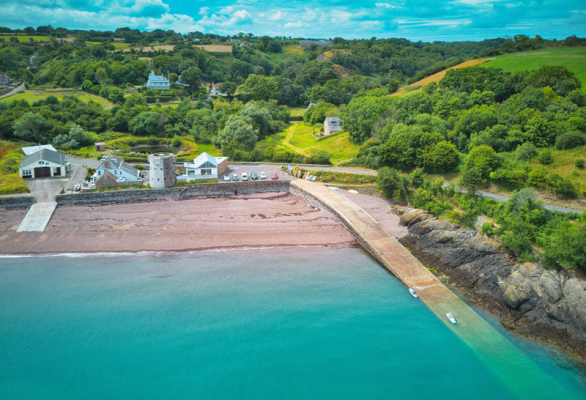
The tower known as St Catherine's Tower stands about a kilometre to the south of the breakwater of the same name, in the north-east corner of the island. The tower is owned by the States of Jersey

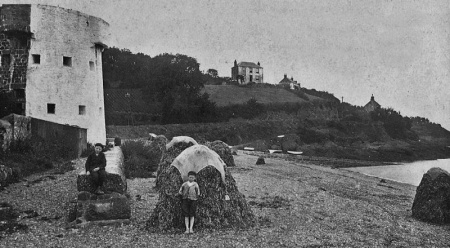
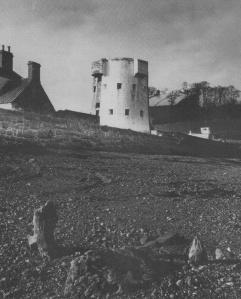
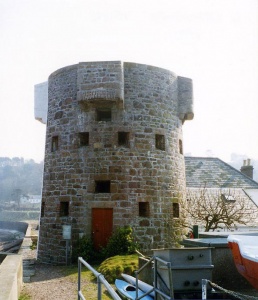
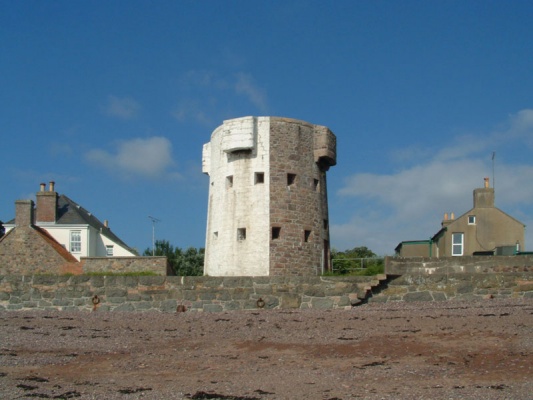
St Catherine's Tower is also known as the White Tower, because it is partly painted white on its seaward side.
It lies half way between the towers at Archirondel and Fliquet. It was originally intended that there would be further towers on either side of these three at Anne Port and Rozel, to form a chain protecting the north-east corner of the island, but permission was not given to Jersey's Governor, General (later Field Marshal) Henry Seymour Conway, who was horrified at the state of Jersey's defences when he first came to the island in 1778, six years after his appointment.
The date of the building of the tower is unknown but it is likely to have been one of the early ones constructed, and was made of rhyolite instead of granite. Unlike other Conway Towers it had a second fireplace on the first floor.
In 1797 it was manned by a sergeant, a corporal, and ten men of the Invalids Company. In 1803 it was manned by a sergeant, a corporal, and nine men of the 3rd Royal Garrison Battalion. This went up to 20 men between 1811 and 1815.
The tower was sold to the States on 26 July 1922 for £50.
It was one of the few of the coastal towers which was not either destroyed by the Germans during their Occupation of the island or converted for their own defensive purposes.
HER statement
Along with all Jersey's other coastal towers and historic fortifications it is a listed building, described as follows in the Jersey Heritage Historic Environment Record website:
- "Built in the 1780s, the tower is significant as an integral part of a group of surviving Conway towers in Jersey that not only illustrates the changing political and strategic military history of the Island in the late 18th and 19th century, but represents a turning point in the history of defence strategy across Europe, and global trends in the history of war. Shown on 1795 Richmond Map.
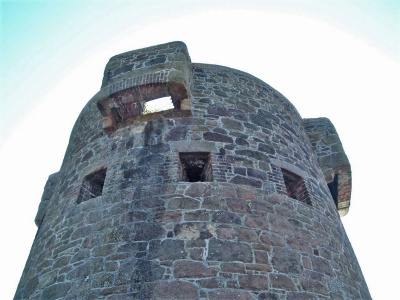
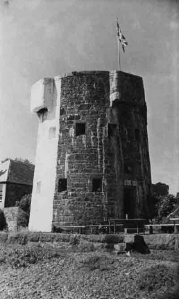
- "St Catherine's Tower is round and tapered, built of regular squared and well-tooled blocks of granite. The upper floors are punctuated with musketry loopholes partially formed in brickwork, with larger granite dressed ventilation windows on each floor and a dressed granite doorway at first floor level (although the modern land surface has been raised behind the sea wall to the level of the door).
- "There are four machicolations at parapet level. The tower is arranged internally on four levels, with a brick vaulted magazine at ground floor, two floors above with circuits of musketry loopholes, and a stone paved roof platform with masonry parapet."

-
-
-
-
-
-
-
-
-
-
-
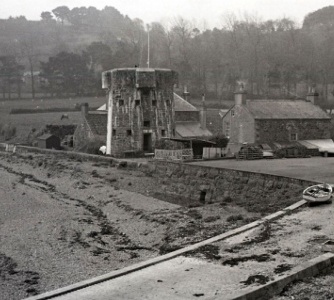 1937
1937 -
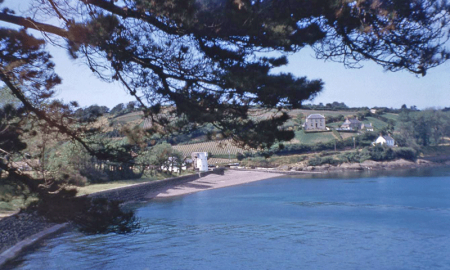 1957
1957 -


-
-
 Picture by Paul Lakeman