Other venues

Entertainment venues

The destruction of the Don Road theatre in1863, as portrayed in the Illustrated London News
The combination of prosperous community and holiday resort has created a strong demand for public entertainment in Jersey since the beginning of the 19th century, and a considerable number of locations have been venues for theatre, music and other performing arts over the last two centuries
Permanent theatre
A demand for theatre started to develop in the last 20 years of the 18th century and there are early references to a Theatre Royal, although there is considerable confusion between various locations given the same name in this era. The first room devoted to the theatre appears to have been in a building adjacent to the opening into the Royal Square near the Town Church.
The first permanent theatre was opened in Regent Road on 4 August 1802 by James Shatford, an actor from Salisbury, who bought a barn which had previously hosted farces and other humourous presentations by visiting groups from England. Shatford built a new theatre with three tiers of seats, and it opened in 1806 as Jersey's first Theatre Royal. He was to die only three years later, leaving his widow Sara to run the theatre for a number of years.

Crescent theatre fire
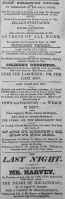
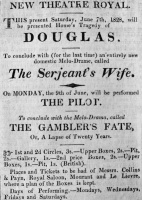
The next theatre to be built was in the centre of Don Crescent on Don Road. It opened on 5 May 1828 but was not a commercial success. Thirty years later the company owning the theatre tried in vain to sell it, and a further five years later, in 1863, a severe blaze totally destroyed the building, which had only been insured for £1,000, a fifth of what it cost to build.
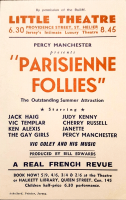
The theatre was never to be rebuilt and the next move was the construction of a new venue in Gloucester Street, also called the Theatre Royal and today known as the Opera House. It has been the island's main theatre ever since, despite two disastrous fires. Other theatrical venues have included the Little Theatre, which closed in February 1959, and the Playhouse, which opened in 1937 and lasted less than 50 years. There was also a venue called the Union Jack Club in the late 19th century. An 1881 photograph can be found in the gallery below.
The Playhouse was just starting to build a good reputation when the Germans arrived in 1940, having seen two performances by up-and-coming actor Donald Pleasance the previous year.
Music venues
In the second half of the 20th century music was the form of public entertainment most in demand, and dozens of venues small and large played host to dance bands, jazz ensembles and then the pop groups spawned by the new developments in music in the '50s and '60s.
Throughout the 20th century the main venue for such entertainment was West Park Pavilion. This venue started life a a simple hangar-like structure with a corrugated iron roof, and was known by most as the 'Tin Hut'. It was rebuilt in 1931 and over the years it was also known as Behans' and the Inn on the Park, before it finally closed to make way for a block of flats.
Three other large dance halls were built before the Second World War to cater for the numbers of young people whom the Pavilion could not accommodate at the weekend. There was a large ballroom at Springfield Stadium, which was the venue for many pop concerts in the 'sixties, including performances by The Beatles in 1963 and the Rolling Stones the following year.
The Plaza ballroom was part of the Wests Cinema building on the corner of Bath Street and Beresford Street and the Rainbow Room at Georgetown eventually shared its building with the New Era Cinema. The Forum Cinema which opened in Grenville Street in 1935 had a large stage and was designed as a multi-purpose venue, but after the German Occupation, which saw it as the main cinema for German troops, its use was largely confined to the screening of films, until it was eventually demolished to make way for an office complex. It did host some stage shows in its early days, and one of the performers was a very young Julie Andrews.
Other large venues included the Greve de Lecq Pavilion, which burned down in the 1980s and was rebuilt at Caesar's Palace, a cabaret venue targeted at holidaymakers. It was popular to begin with but a decline in visitor numbers and the diminishing interest in traditional seaside resort cabaret led to its demise and eventual replacement by housing.
Outdoors
Some of the earliest musical concerts were staged outdoors. A bandstand in the Triangle Park at West Park was a very popular venue, and if the weather was inclement performance could always move indoors at the nearby Tin Hut.
There is still a covered bandstand in Howard Davis Park, mainly used for performances by visiting military bands.
In the early years of the 20th century the Chalet Hotel, Pontac (now La Fontaine) had its own bandstand and staged concerts throughout the summer. The proximity of Pontac Station made this a popular venue for people travelling from St Helier or Gorey at the other end of the line.

Hotels
Entertainment facilities in hotels before the Second World War varied from bars with a small stage for a pianist or duo, to full-blown dancehalls, which offered entertainment for holidaymakers and island residents. Among those which had large ballrooms were the Ritz Hotel; Aberfeldy Hotel; La Moye Hotel, a very popular venue for dance bands; Woodville Hotel; Palace Hotel, destroyed by fire during the Occupation; and the Merton Hotel.
As hotels expanded, ground floor space was often at a premium for dining rooms and guest lounges and the larger ballrooms began to disappear. Several hotels, however, still retained entertainment rooms which were used in the second half of the 20th century for the very popular cabaret shows which were a feature of many British seaside resorts.
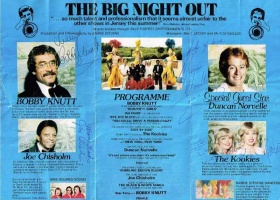
Among the most popular cabaret venues were Swanson's, the Sunshine Hotel, the Demi des Pas Hotel, and stand-alone venues including Sands, the Tropicana, the Watersplash, Caesar's Palace and the Hotel de France.
The larger venues had their own shows and many performers became very popular and returned year after year. Other venues hosted travelling cabaret shows, which moved from one establishment to another, sometimes peforming three shows a day.
Discos and clubs
Part of the reason for the decline in live music and cabaret was that, for those wanting to dance, the advent of the discotheque presented a much more cost-effective source of music. Discos and nightclubs abounded, popular venues including the Skyline Disco at the Hotel de France; Les Arches Hotel; the Deep; the Blue Fox; the Royal Hotel, David Place; Lord's; the Hotel de L'Europe; Adrian's at L'Etacq, formerly the Bal Tabarin and, before that, La Mare du Mont. The days of live music in the Ritz Folk Club, Wolf's Caves (country music), the Corner House at Charing Cross, La Tonnelle at St Helier House Hotel and Tam's Pantry, to name but a few, were a thing of the past.
Fort Regent
Finally, no history of entertainment venues in Jersey is complete without the largest of them all, Fort Regent. Developed from an abandoned military fort into a multi-purpose sports and entertaiment centre in the 1970s, it has a large auditorium, the Gloucester Hall, under the roof of the centre rotunda, which has hosted some the top stars of popular and classical music and other entertainers over some 35 years, although major events have become less frequent as the tourism industry has declined.


-
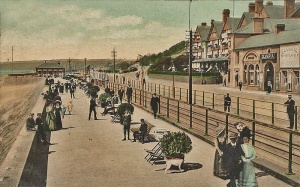 The Olympia was on the Esplanade
 -
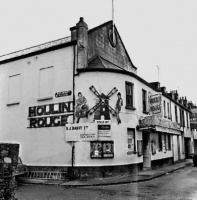 The Moulin Rouge, Belmont Place
 -
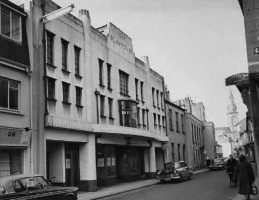 Playhouse Theatre
 -
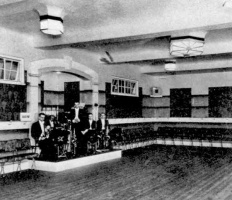 Aberfeldy Hotel ballroom
 -
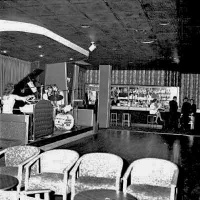 The Continental, St Saviour's Road in 1970
 -
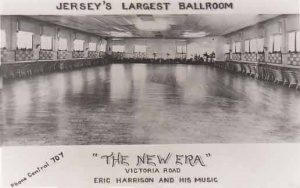
-
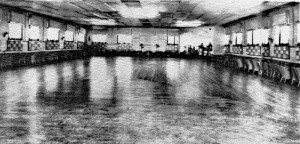 New Era ballroom, Jersey's largest at the time
 -
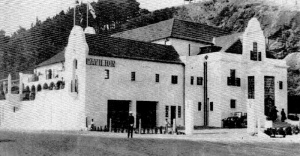 The new West Park Pavilion in 1921
 -
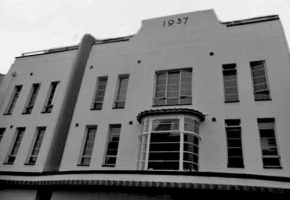 The Playhouse building
 -
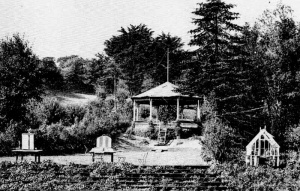 Pontac House Hotel's bandstand
 -
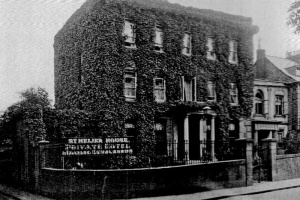 St Helier House in La Motte Street
 -
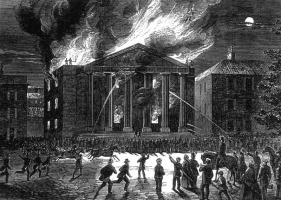 The fire at the Don Road theatre from the Illustrated London News
 -
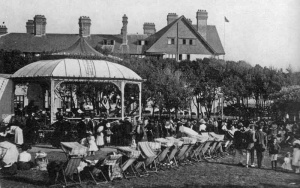 Triangle Park bandstand
 -
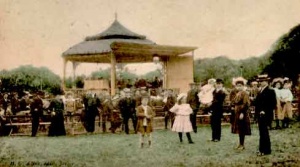 Triangle Park bandstand
 -
The Playhouse
-
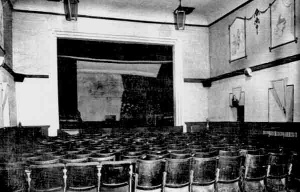 Playhouse interior
 -
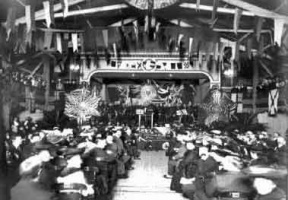 The Union Jack Club in 1881
 -
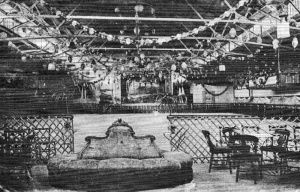 The Olympia Ballroom was at the British Hotel in Broad Street
 -
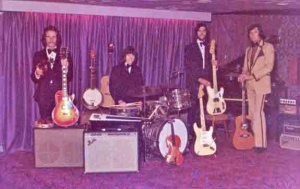 Simon Raverne at Les Arches
 -
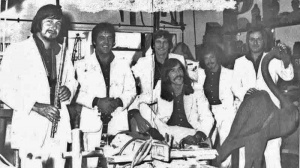 The Days at L'Etacq Hotel


-
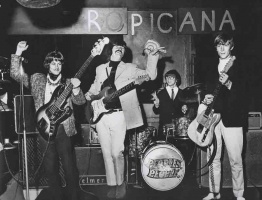 The Tropicana in the 1970s
 -
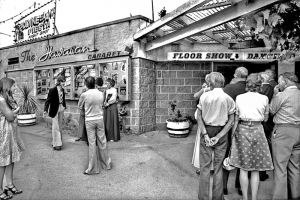 The Hawaiian Bar was a popular cabaret venue
 -
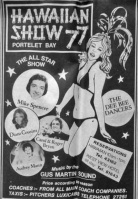 Advertisement for the Hawaiian bar
 -
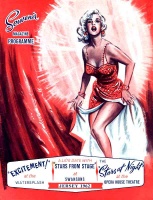 1962 cabaret programme
 -
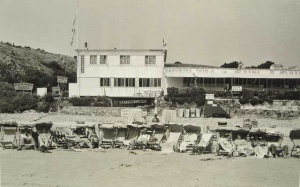 Tams
Tams -
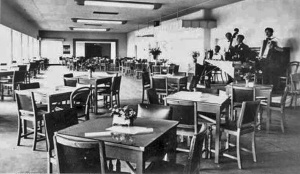 A group rehearsing at Tam's
 -
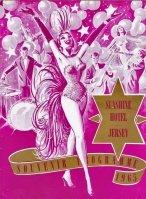 A 1965 Sunshine Hotel cabaret programme
 -
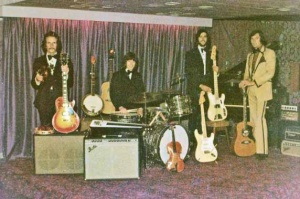 Simon Raverne at Les Arches in 1972. From left to right: Richard Melhuish (now in Modesto, California), Martin Samuel (now in Fort Lauderdale, Florida), Taffy Edwards, Simon Raverne (Jersey).
 -
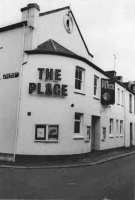 The Place was 'the place' to be seen in the 1970s
 -
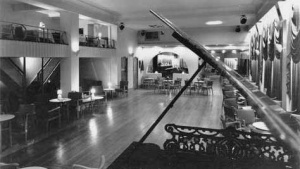 The interior of the Watersplash
 -
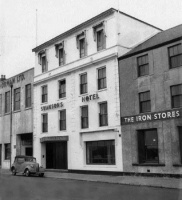 Swansons in 1955
 -
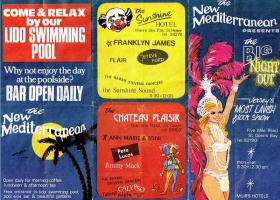 New Mediterranean leaflet
 -
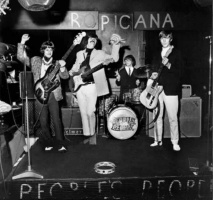 People's People at the Tropicana in 1968
 -
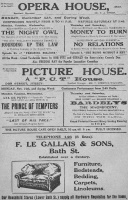 Entertainment adverts in 1927
 -
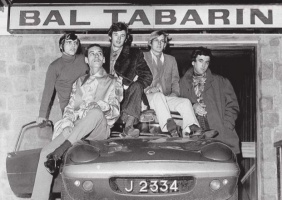 Bal Tabarin, 1968
 -
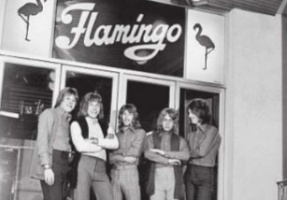 The Flamingo, 1971
 -
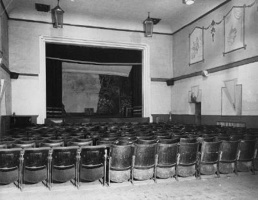 Playhouse, New Street
 -
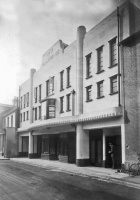 Playhouse 1938
 -
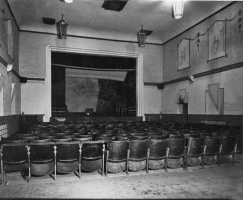 Playhouse 1962
 -
-
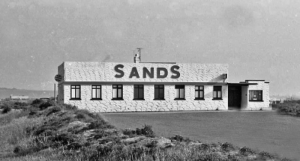 Sands
Sands -
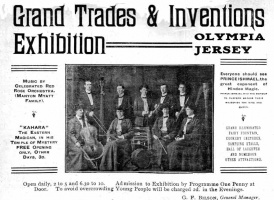


-
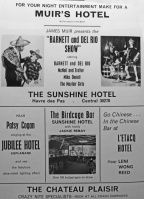 1960s cabaret shows
 -
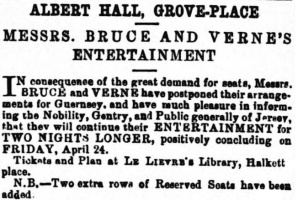 1874
1874 -
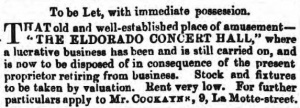 1860
1860 -
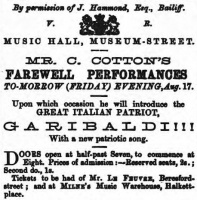 1860
1860 -
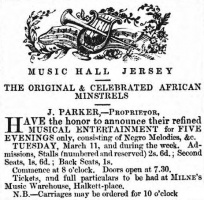 1862
1862 -
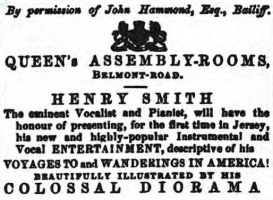 1858
1858 -
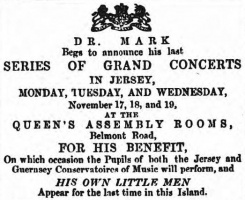 1862
1862 -
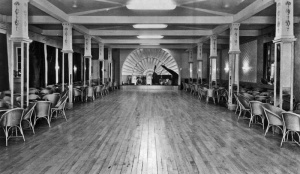 Flamingo ballroom
 -
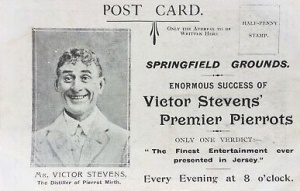 A postcard advertising the Pierrots at Springfield
 -
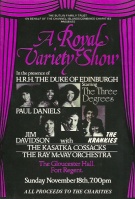 Fort Regent 1978
 -
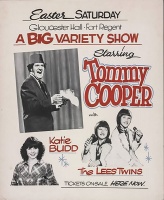 Fort Regent 1981
 -
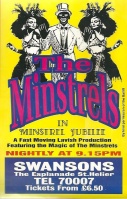 Minstrels at Swansons
 -
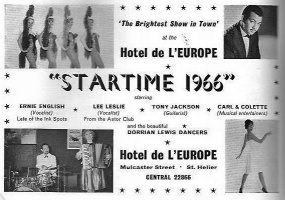 Hotel de l'Europe, 1966
 -
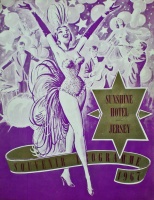 The Sunshine Hotel was famous for its cabaret shows in the 1960s
 -
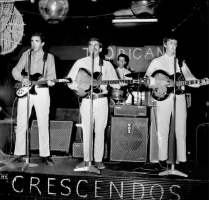 Crescendos were a popular resident group at the Tropicana
 -
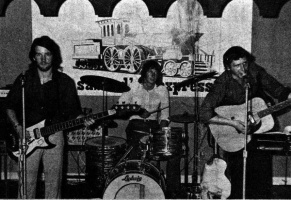 Bandanna at Sable d'Or
 -
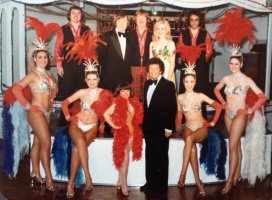 Cabaret cast at the Mediterranean in 1978
 -
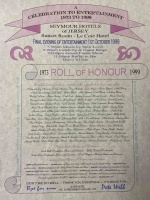 A list of entertainers who performed at Le Coie Hotel
 -
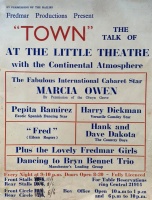 A poster for the Little Theatre
 -
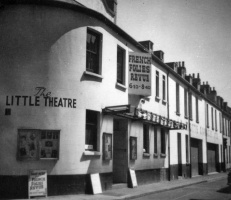 The Little Theatre in 1956
 -
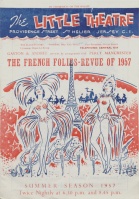 Little Theatre 1957
 -
-
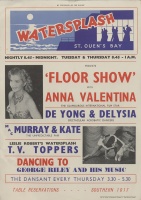 Watersplash poster
 -
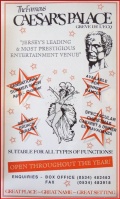 Caesar's Palace, Greve de Lecq
 -
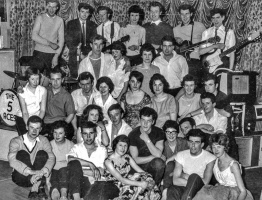 The Rainbow Room Jive Club
 -
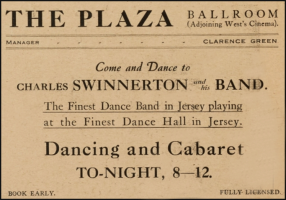 Advert from Jersey Leader, 1935
 -
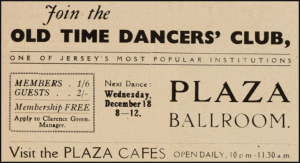 Advert from Jersey Leader, 1935
 -
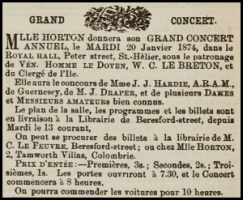 Royal Hall, Peter Street, 1874
 -
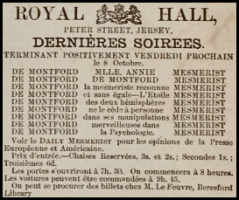 1880
1880 -
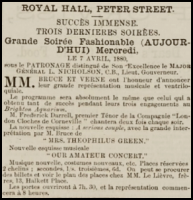 1880
1880 -
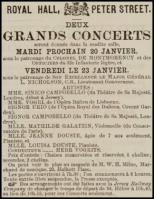 1880
1880


Jersey Amateur Dramatic Club performances during the Occupation


Theatre Royal advertising
-
 1828
1828 -
 1828
1828 -
 1829
1829 -
 1829
1829 -
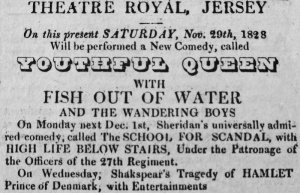 1830
1830 -
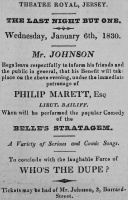 1830
1830 -
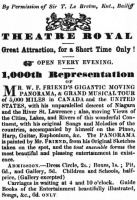 1855
1855 -
1828
-
1828
-
1829
-
1829
-
1830
-
1830
-
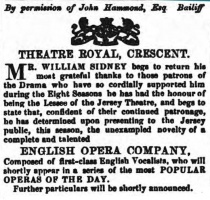 1858
1858 -
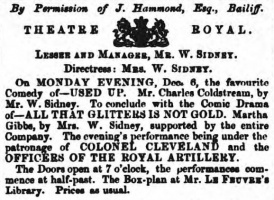 1858
1858 -
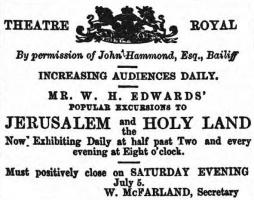 1862
1862 -
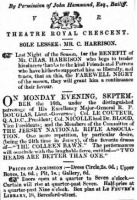 1862
1862 -
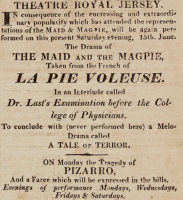 Theatre Royal programme for 1816
 -
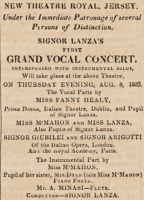 Signor Lanza’s first grand vocal concert was held at the New Theatre Royal on 8 August 1833
 -
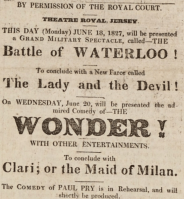 1827 advert in Loyalist
 -
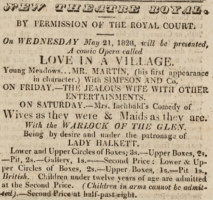 1828 advert in Loyalist
 -
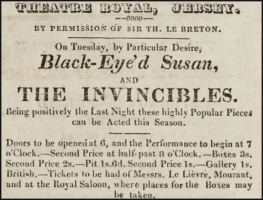 Theatre Royal advert in Loyalist in 1829


Sources
A Century of Music in Jersey by Chas E Larbalestier